by Annik LaFarge
on February 13, 2011
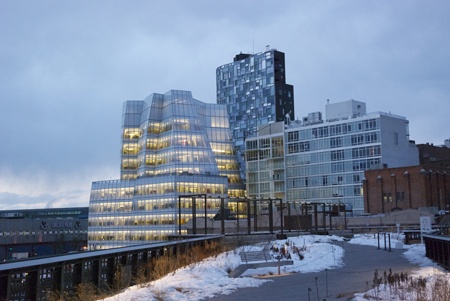
Lately the High Line has been particularly magical at night. These frigid evenings seem to bring out only the hardiest of souls, and so the place is wonderfully lonely. As the sun sets the lights in the park pop on, but as you’ll notice they are all below eye level, so the light doesn’t really announce itself, and it never gets in your eyes. It shines a glow on the sleeping plants and grasses, dances shadows through the art deco rails, and provides just enough brightness to light your path. The High Line designers clearly spent as much time contemplating light in the park as they did everything else.
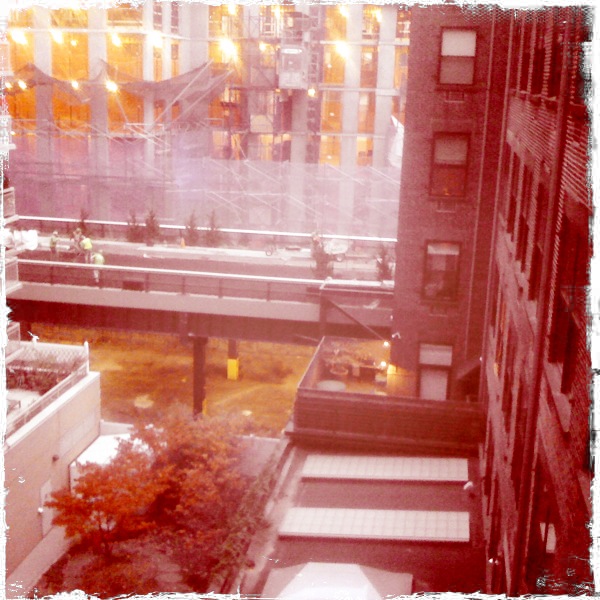
One thing I realized on a visit last week is that the Jean Nouvel building — the one just to the north of the IAC “sail building” — still has very few tenants (or maybe they all live in Paris and Oslo), so the windows remain dark. Which lends the IAC building pride of place, at least for a little longer. I love both of these buildings and think they work gorgeously together: the combination of smooth, seemingly rounded glass surfaces of the IAC against the cut glass, recessed, multi-colored spectacle of the Nouvel. It’s one of those happy flukes of architecture when two very different, modern, buildings go up side-by-side and the beautiful and startling results appear to have been planned precisely in advance.
The architectural viewscape of the High Line changes constantly, month by month — as new buildings go up — but also hour by hour with the orbit of the sun. If you spend some time walking the park at dusk you’ll see what I mean, and be sure to walk in both directions because the view is quite different heading north and south. If you get up there soon, before the weather warms up (if it ever does) you might find yourself alone, as I did, fingers frozen against the camera shutter.
At the southern end, near the Gansevoort steps, you have a treat in store as you walk through the grove of birch trees. It’s like a little gallery in an art museum: one room filled with handsome young trees, lit just so. But unlike a museum, if you come back the next morning it’ll look completely different. The park is always lovely at night, but these windy, freezing, winter evenings offer up all kinds of new views and discoveries.

{ }
by Annik LaFarge
on February 3, 2011
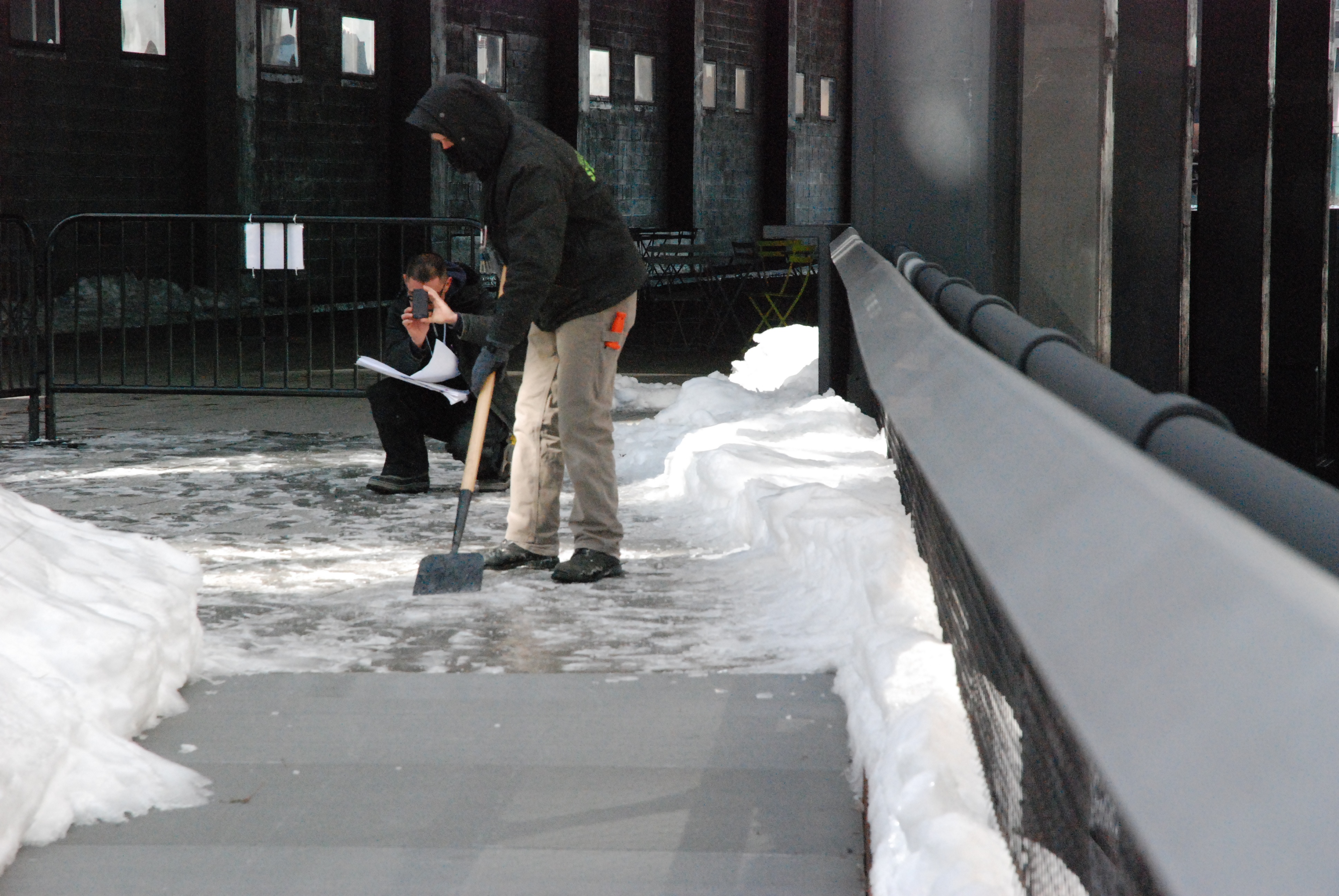
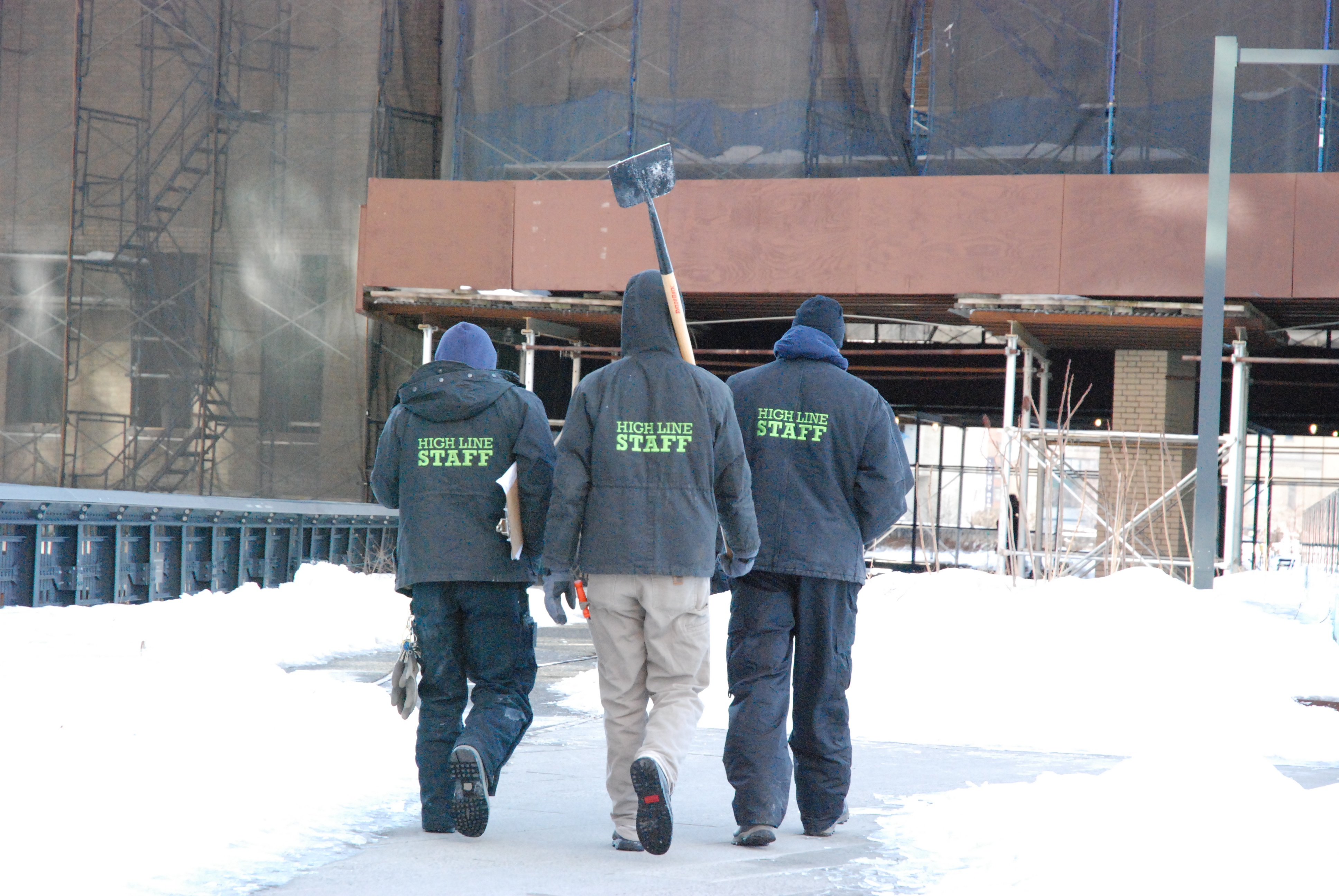
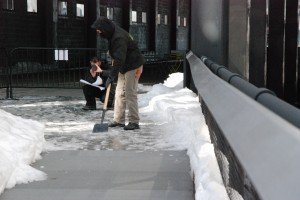 Here’s something new I learned today about the High Line: they don’t use commercial salt products to melt ice on the pavements. It’s easy to understand why: the surface of the park is carefully crafted from stone, cement, asphalt, wood and steel: all surfaces that would quickly degrade in the presence of chemicals, to say nothing of all the plants, frozen though they may be. (To paraphrase Bob Dylan: they ain’t dead, they’re just asleep…) This is why the park was closed this morning until about 11:00 am: the staff was up there hacking away at the ice.
The first worker I spoke with told me “we don’t use salt,” which is a bit of an exaggeration because I did see what looked like rock salt on the pathways. What she meant, I think, is they don’t use that dreadful chemical product that is now ubiquitous all over New York City and comes in tiny white pebbles made of calcium chloride, potassium chloride, and sodium chloride. It works quickly, sparing businesses, homeowners and superintendents the need to break a sweat, but it turns the streets into black, oily, fields of gloom. Some day deep in the future we’ll learn that these chemicals, leached by the acre into the Hudson River, killed multiple species of fish and plankton and who knows what else.
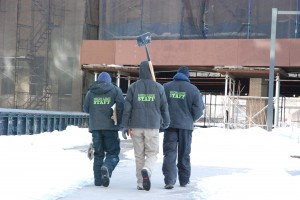 Meantime, our friends up on the High Line are doing it the old-fashioned way: by hand, with tiny amounts of rock salt and sand to help ensure that people don’t fall and break their necks. It was worth missing a morning stroll. This is real husbandry of a public space, wonderful to see, even if it means we have to wait a few hours for the privilege.
And if you can, get there today or tomorrow so you can see the frozen waves of snow that are caught in ice. They cast a sheen that varies in color depending on where the sun is sitting and it’s positively gorgeous. Just take it slow and steady.
{ }
by Annik LaFarge
on January 21, 2011

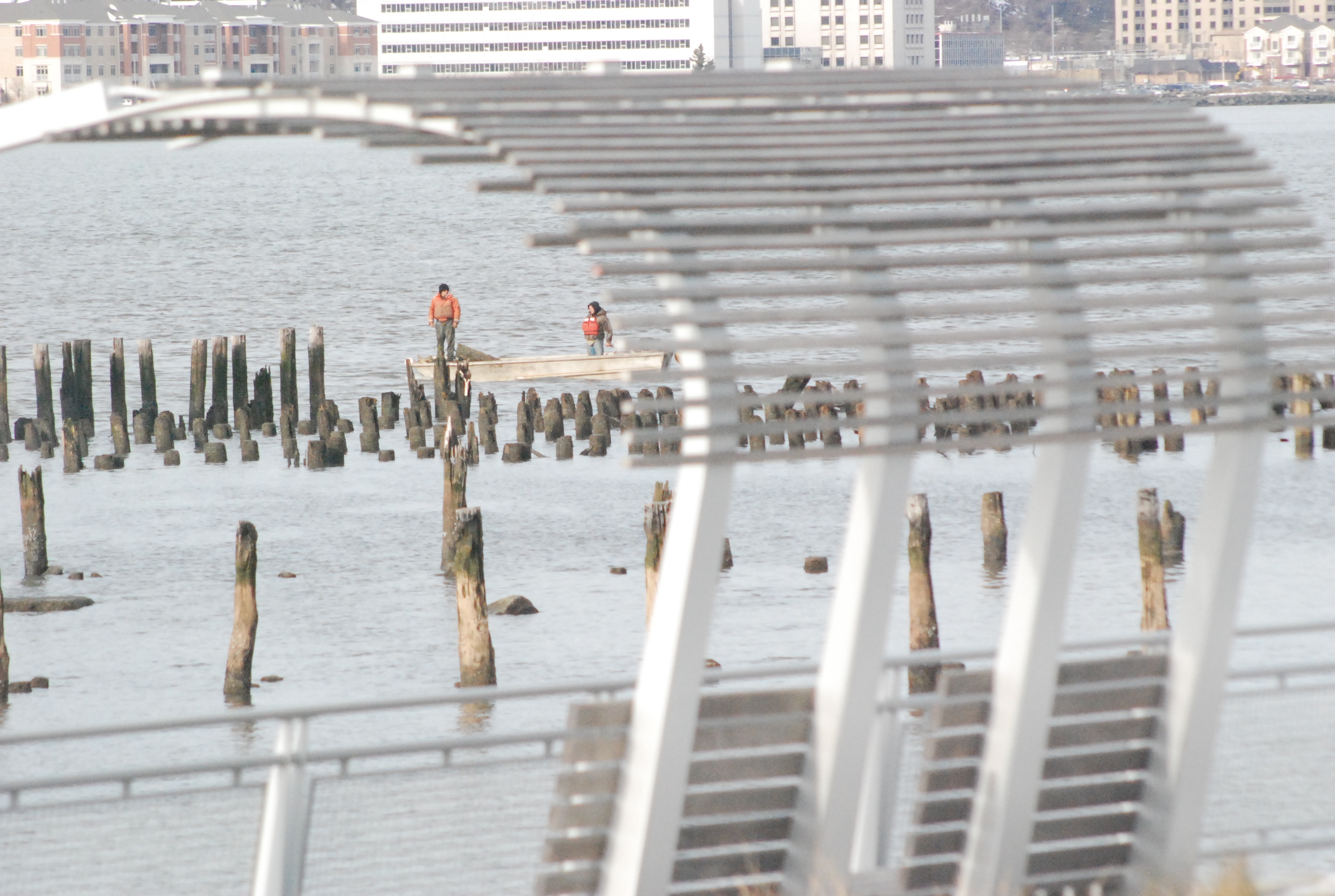
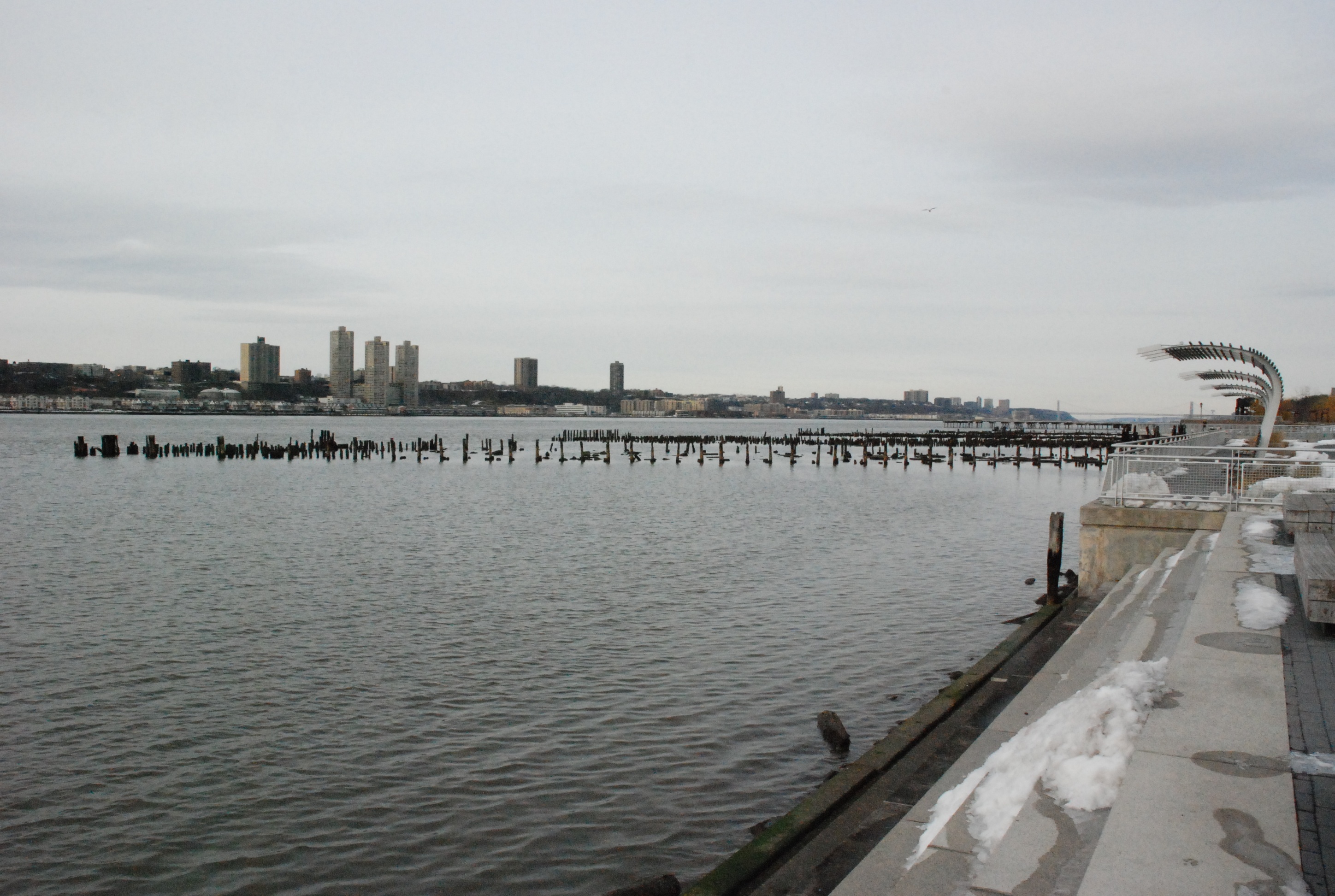
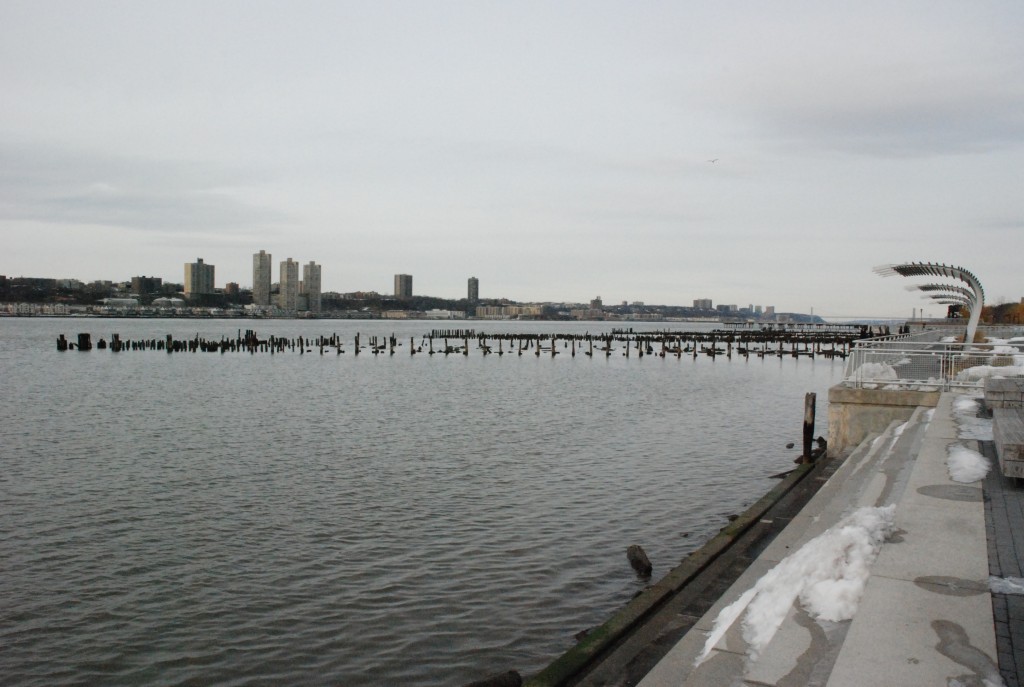
Driving down the West Side Highway last Sunday we met with a sad surprise as we approached 64th Street: Pier D was in the process of being dismantled. It was an icy day and several boats and a large crane were at work taking apart the old wreck. The Times ran a story with a photo on Tuesday and I managed to get uptown on Thursday to catch a few glimpses of the very end of the process. There were several tugboats and even a skiff carrying two men. It was so cold I could barely click the shutter; one can only imagine what it was like for those guys, hour after hour, clanking around old pieces of iron on a tugboat in the Hudson River.
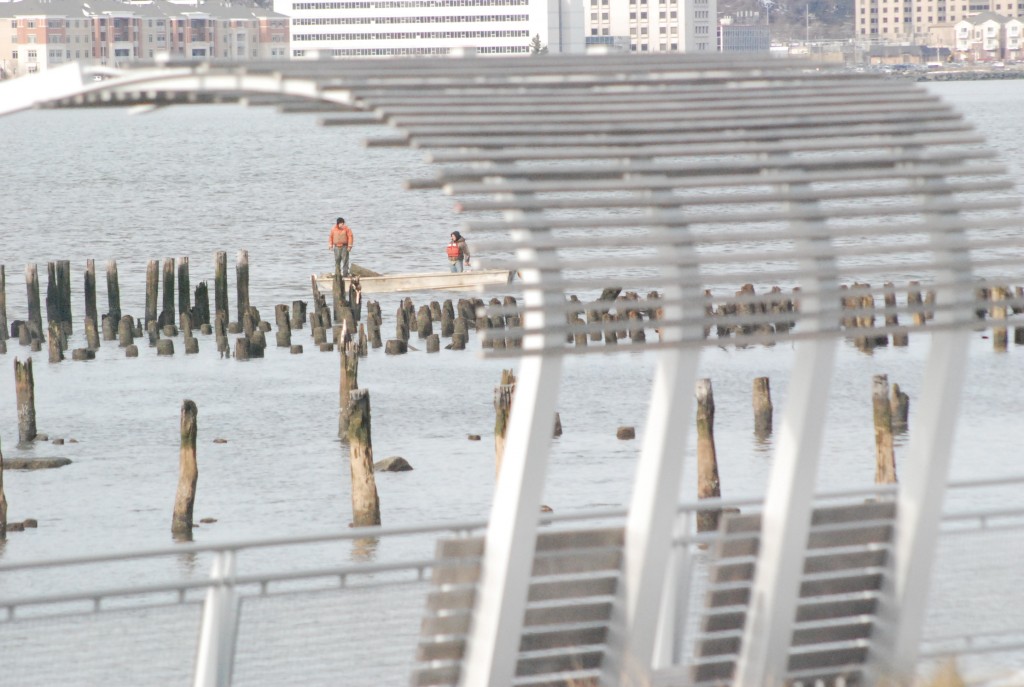
This blog is devoted to the High Line, which begins a mile and half south of Pier D, but last May I ventured north to pay tribute to the architects and designers who so beautifully incorporated the dilapidated vocabulary of the rusting piers and remnants of the old shipping industry into the renovation of the waterfront parks. That post is here, along with photos of Pier D. The City says that the old pier was dangerous and posed a hazard to boats on the River today, so it had to go. Here it is back in May:
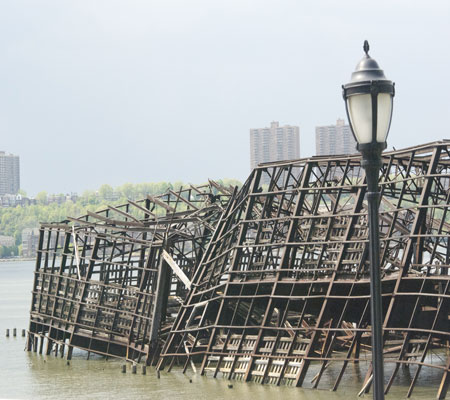
And here it is today. We can remember it fondly, and again thank the folks who had such vision for the City’s waterfront as they reconceived it for a 20th century visitor. Farewell old friend.
{ }
by Annik LaFarge
on January 7, 2011
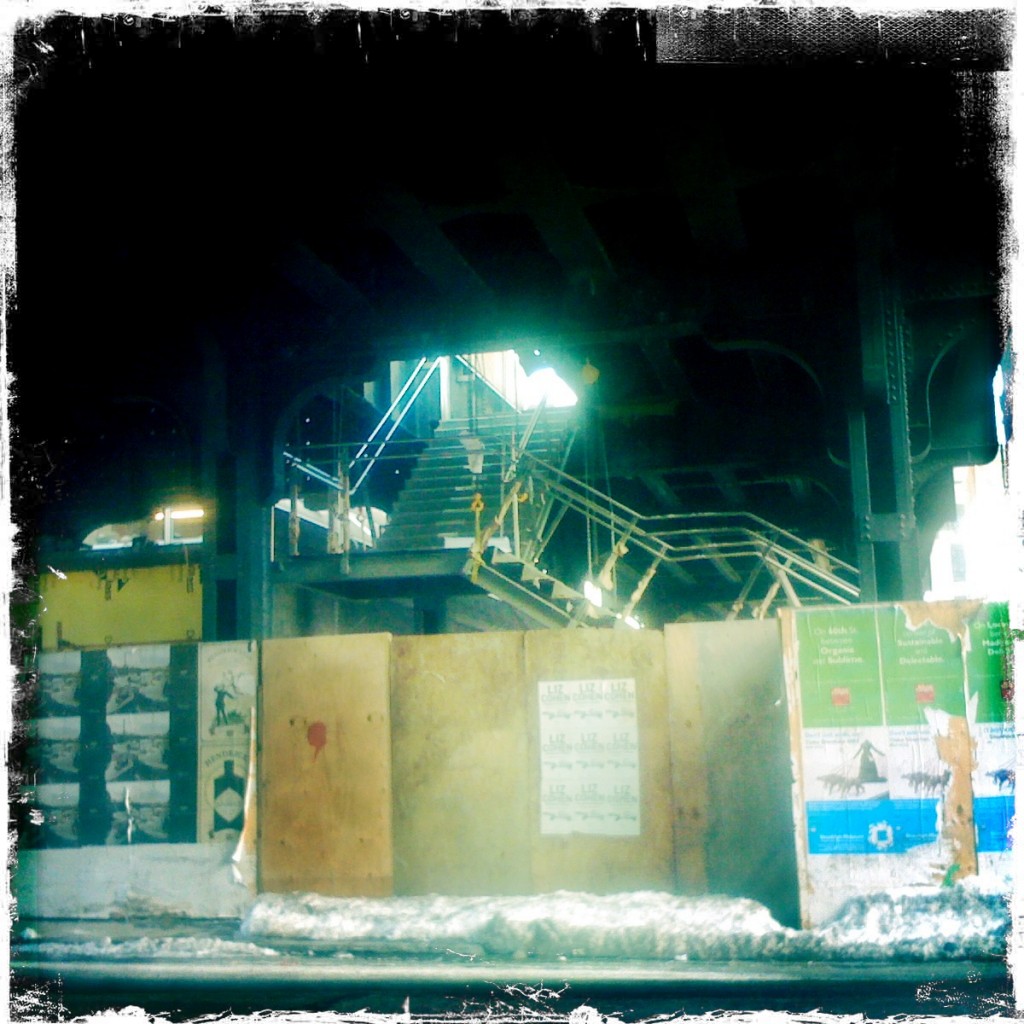
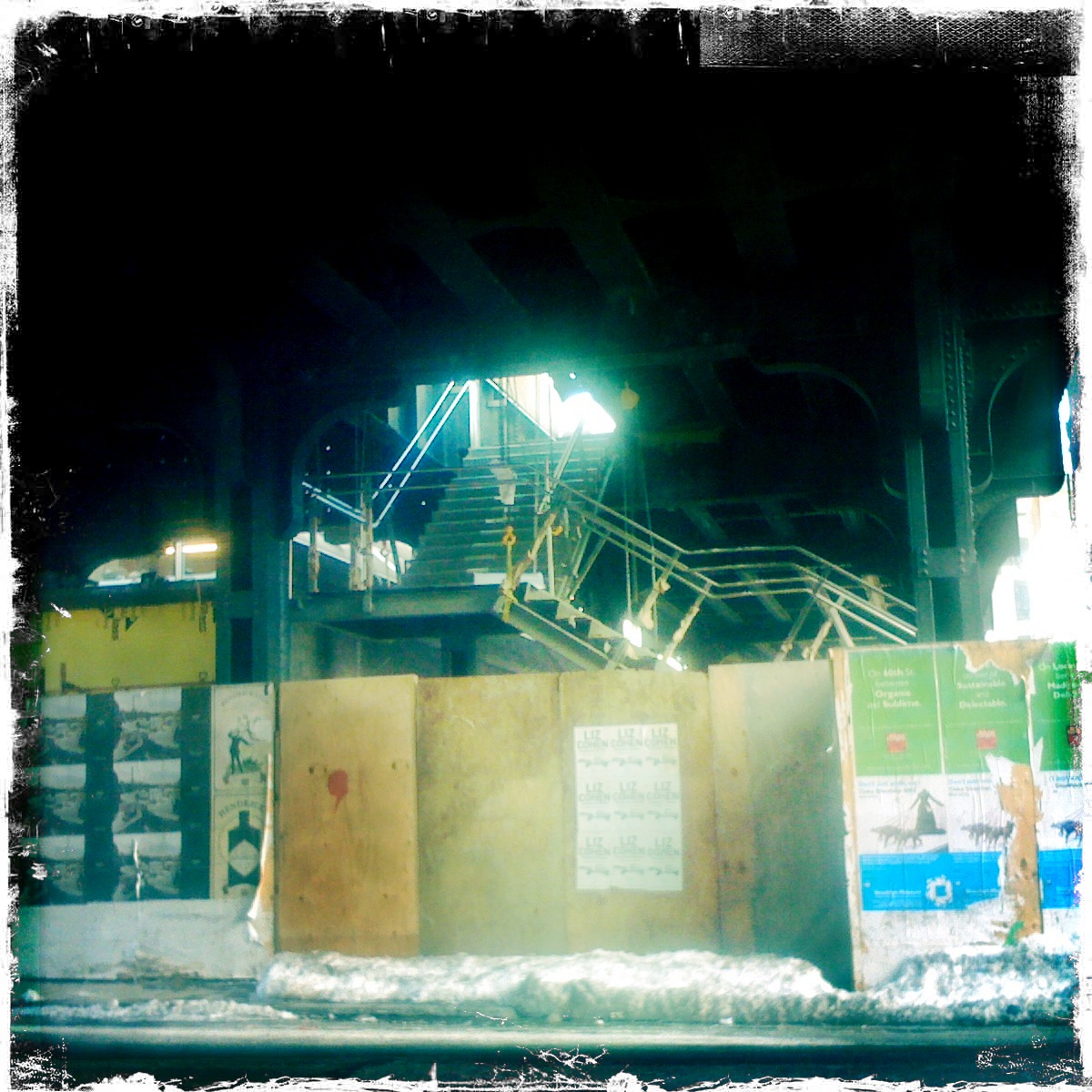
This picture conveys little of the romance and glory of the High Line, and that’s all right with me. Soon — spring? — it will be cleaned up and elegant: a stairway to our little piece of heaven in Manhattan. But today it’s a work-in-progress, barricaded by plywood boards with Bills Posted. If you stand in the spot where I did when I took this photo — 23rd Street between 10th & 11th, on the south side of the street just under the High Line — and you wriggle your head in just the right way you’ll get a swell surprise. I won’t spoil it for you, but fellow fans of Charles Kuralt will recognize it immediately. Hint here.
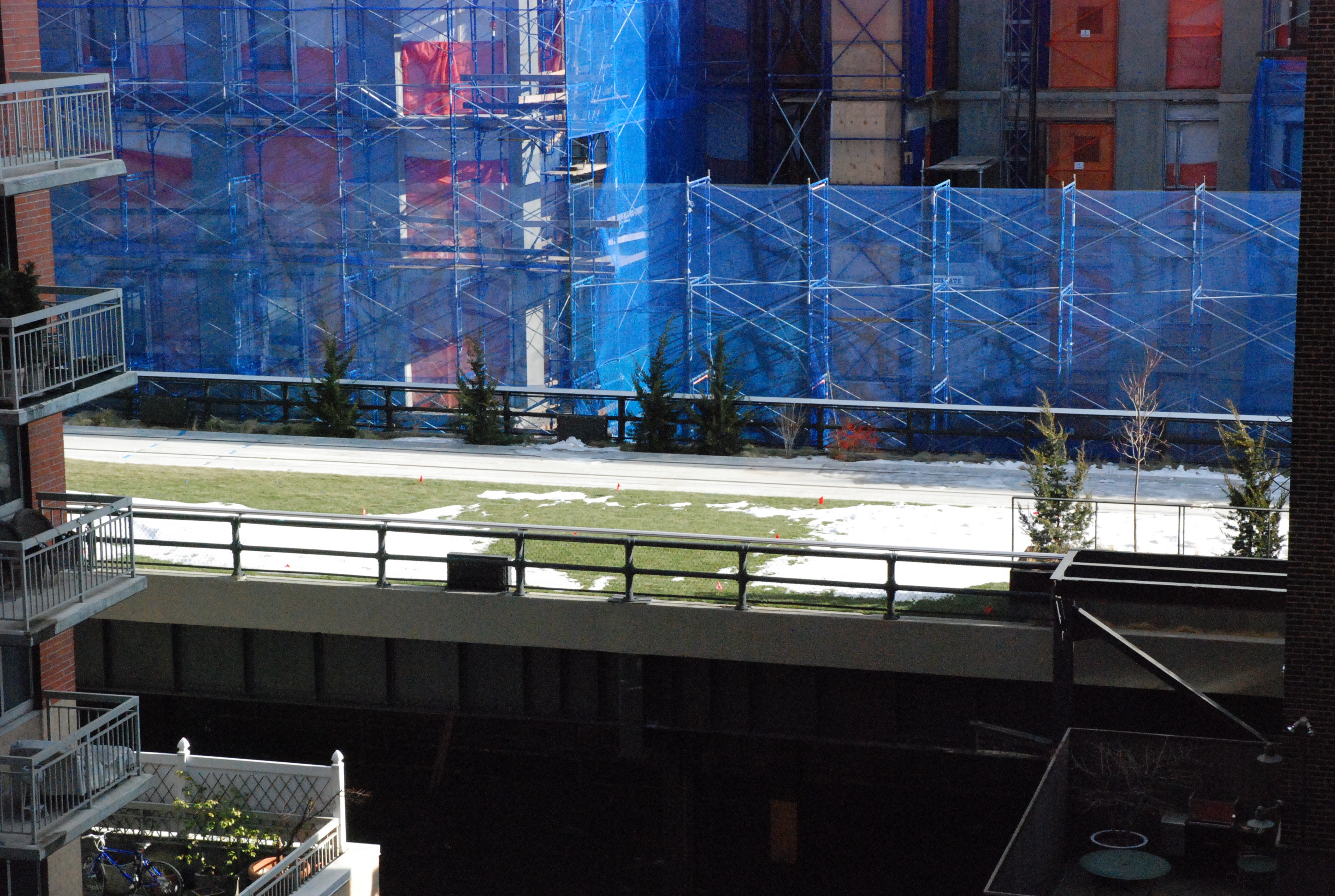
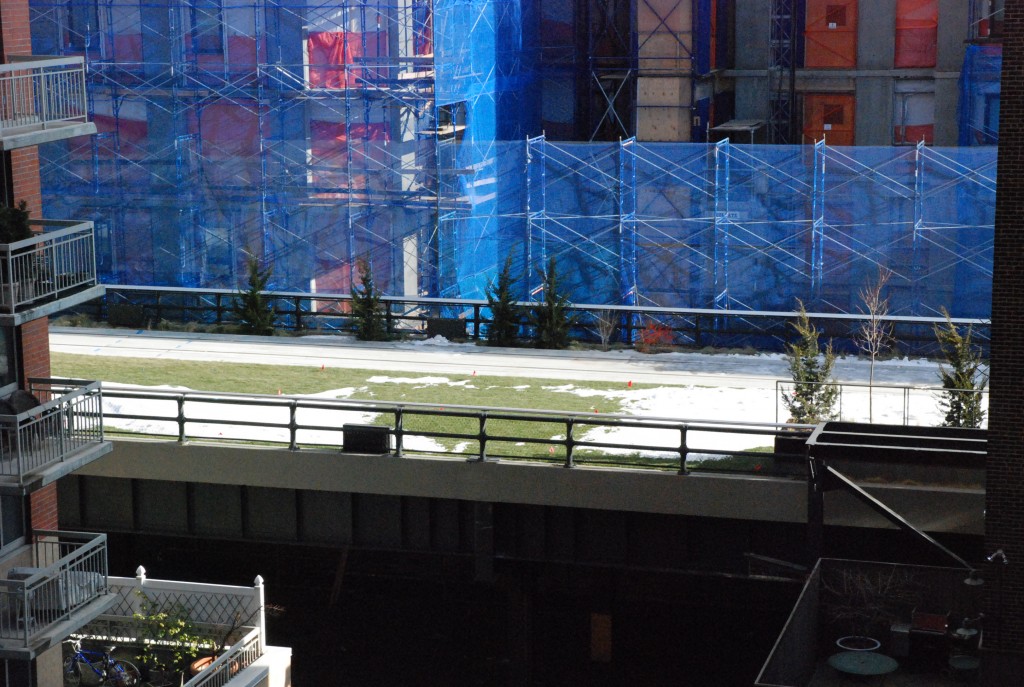
And what do we have to look forward to? A lovely patch of lawn has appeared outside my window. Many of you will have read the stories in the Times about the northern stretch of the High Line and how its design is so different from the southern part. There are photos here and also on the official High Line blog, where they actually show a photo of my building taken from the new lawn (ours is the one with all the graffiti). Here’s my view, taken today during Snowstorm #2:
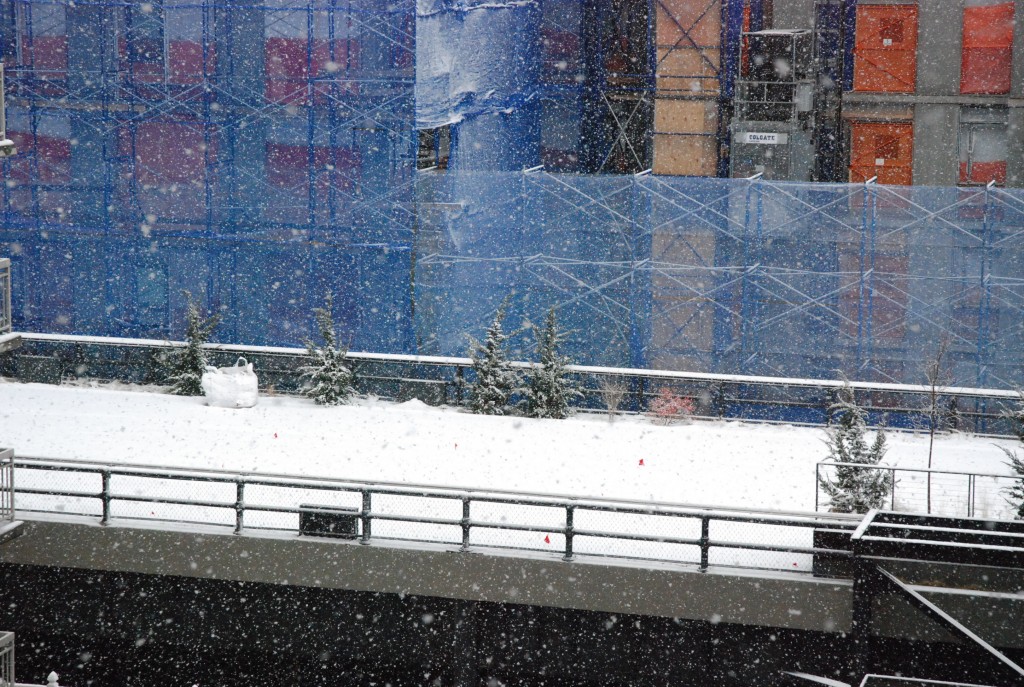
And here it is between storms, looking more lawn-like. I can just picture the lounging folks who will crowd that soon-to-be green carpet during the summer, sipping cups of coffee and reading their books. I look forward to the sound of a lawn mower outside my city window.
But for now it remains a quiet, deserted spot, a lawn-to-be. I’m treasuring these moments.
{ }
by Annik LaFarge
on November 28, 2010
 I’ve been thinking a lot lately about how the act of taking a picture — I don’t want to call it “photography” since what I’m doing is so much below the standard of art and more a gesture of observation and record-keeping — can engage a person with a subject. This has been on my mind since I encountered the Hipstamatic app (thanks to photographer Scott Mlyn) which puts a moody scrim around a photo. You never know what the picture will look like because the app itself is moody: it changes from snap to snap, so it’s quite unpredictable. It results in a much more voicey photo because the app expresses its voice alongside yours.
The New York Times just published a photo essay by Damon Winter of pictures taken of the war in Afghanistan with the iPhone and Hipstamatic app. In the Intro. they talk about how gear shouldn’t matter — “few people care about what kind of typewriter Hemingway used” — but Winter chose to use his phone for good and interesting reasons, and the photos are gorgeous. If you haven’t seen them check out the Lens blog. Four of them made the front page of the printed paper — above the fold. (Side note: I’m actually quite passionate about typewriters too, and on another occasion will write about manual Smith Coronas and new-fangled IBM Selectrics.)
Anyway, I just love Hipstamatic, so have been shooting with it every day for a couple of weeks now. That in turn unleashed an ambition to mix things up again, so I co-opted Ann’s Leica M-8 and began shooting in black & white. The Leica relies on a split-image focus mechanism, something I’m familiar with from using my dad’s old Leica IIIf, and that itself is a big change. (Hipstamatic, of course, has no focus; my Nikon D80 — which I’ve used for many of the photos on this blog — has an autofocus, which I now think I rely on too much.)
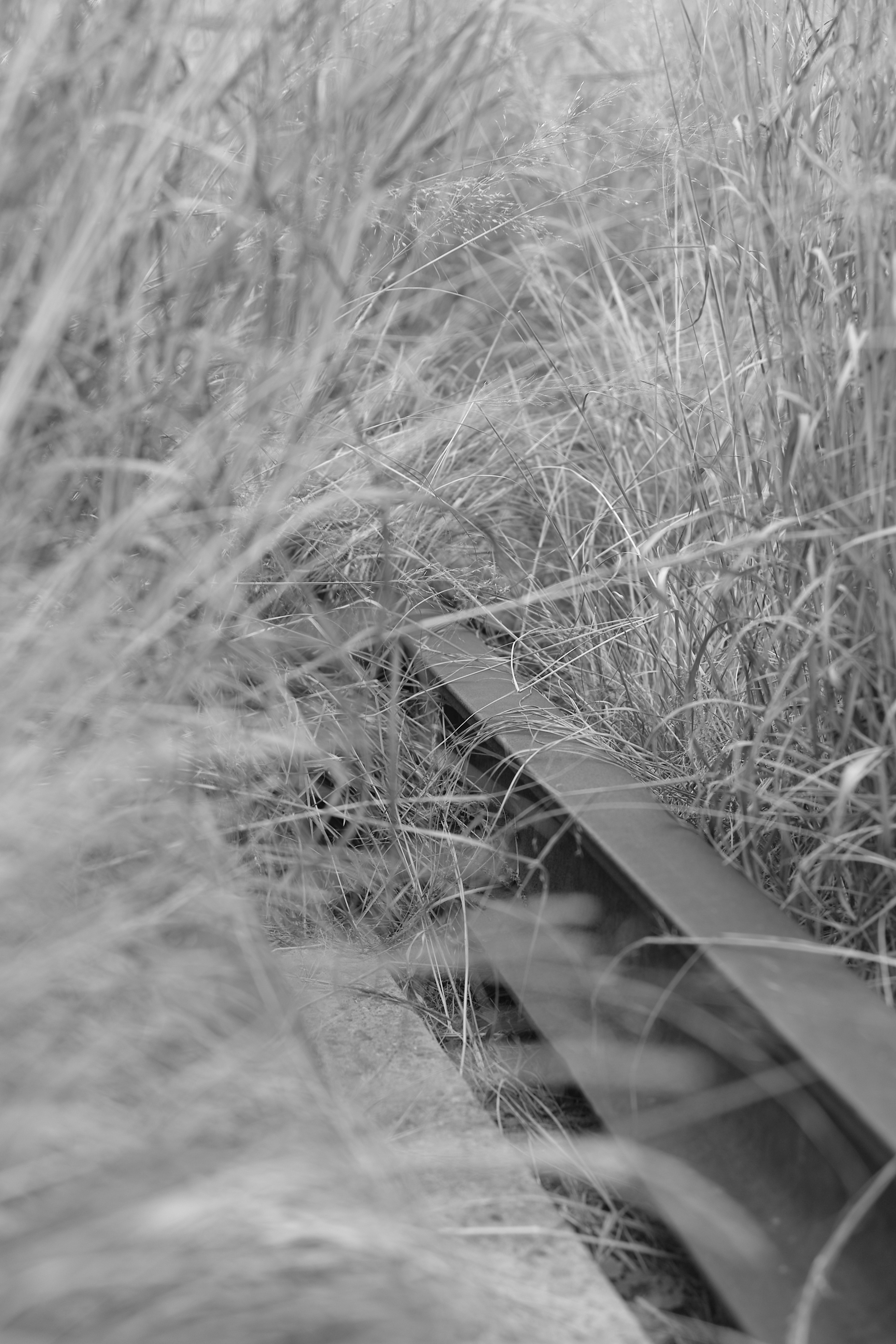 I don’t know what it is about black & white but I’m finding that it makes everything look more elegant. Maybe it’s because everything in our culture is so loud, bright, and colorful. Black & white is like the mute button, and it encourages us to contemplate from another, quieter, perspective. In its own way — through unpredictable distortion — Hipstamatic also provides another angle to see and observe.
The High Line is a great place to test out these ideas and play around with them. If I were a better photographer the results would be more satisfying, no doubt. But the technology — the old and the new — opens doors for me, which is ultimately what I love about technology.
{ }
by Annik LaFarge
on November 17, 2010

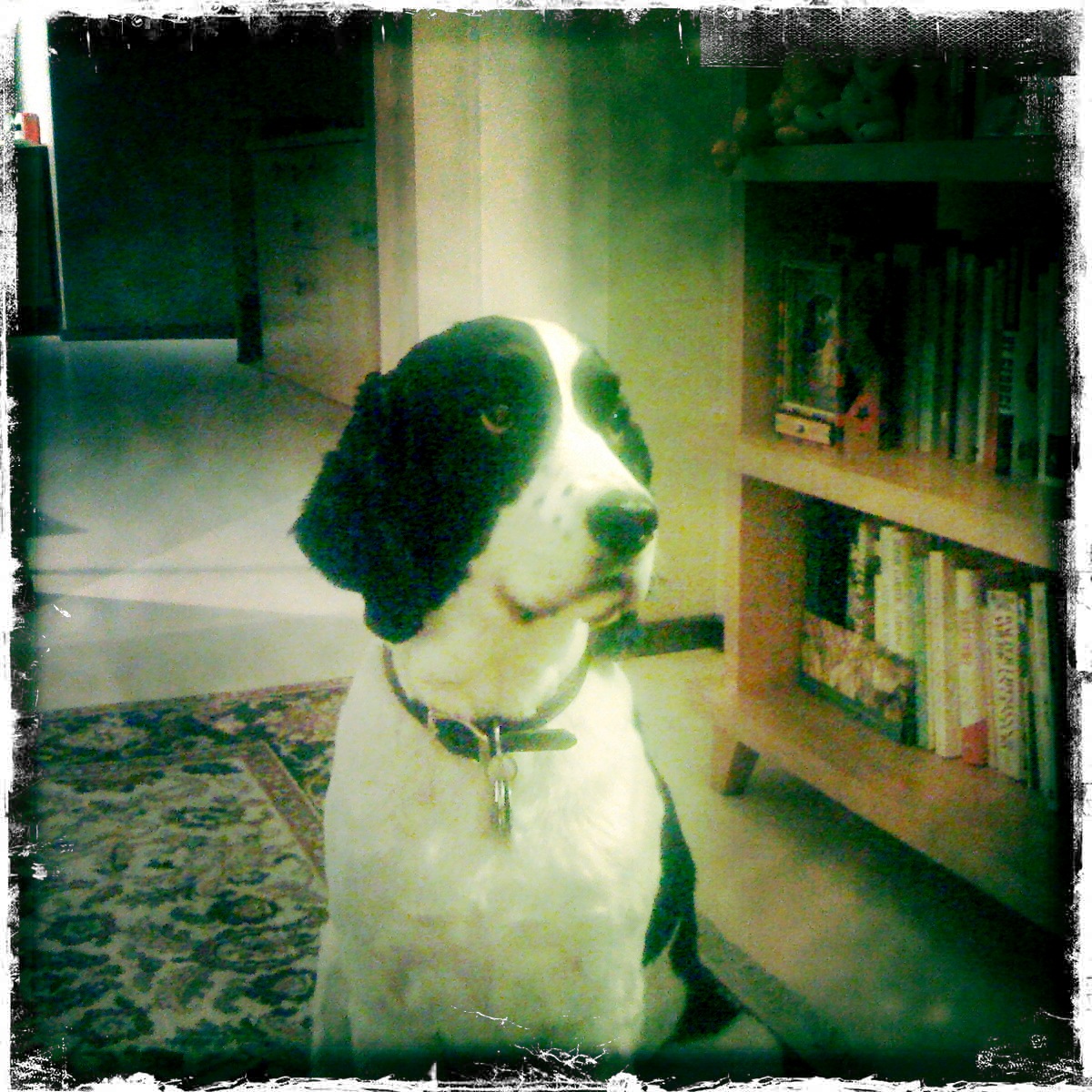
I’m not the only one who stares out the window and dreams of walks to come. Bucky joins me, and I know he’s as buoyed as I am by the language on the signs that are posted by each entrance to our matchless elevated park: “No Dogs on the High Line….Yet.”
All it takes is one little word to put a spring (or a Springer) in our collective step.
(For more dogs on the High Line see here.)
{ }