≡ Menu

High Line Architecture: The Spears Building

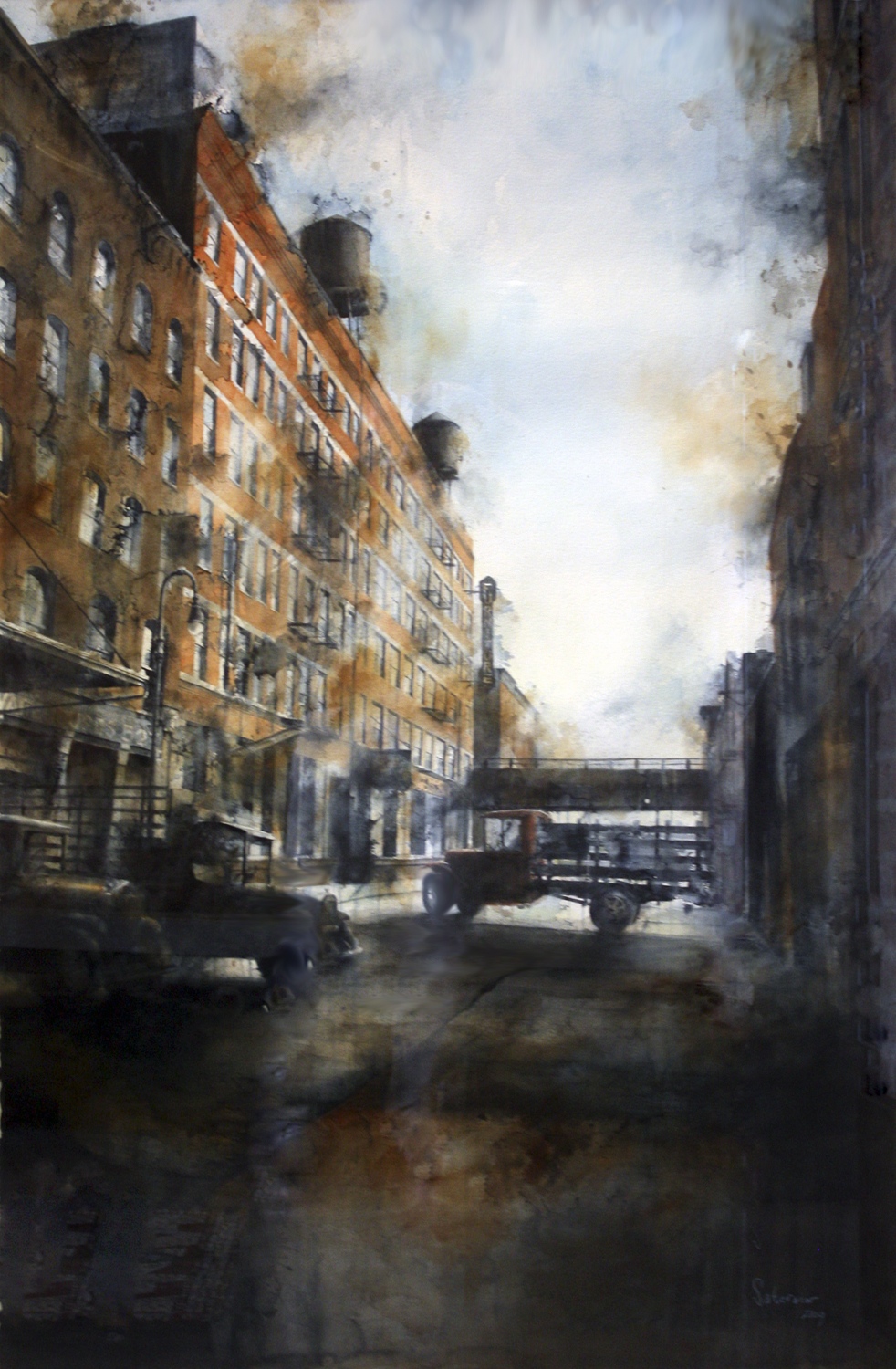
Tim Saternow Furniture Exchange Warehouse, 525 West 22nd Street, 1940 (Spears Building), 2010 Watercolor on paper, 60x40”

Tim Saternow, Furniture Exchange Warehouse, 525 West 22nd Street, 1940 (Spears Building), 2010 Watercolor on paper, 60×40”

The fourth entry in the High Line Architecture series is the Spears Building at 525 West 22nd Street.

Once a furniture warehouse operated by Spear & Co., this sprawling, handsome brick building was constructed in 1880 by Kinney Brothers and used as a cigarette packing factory. Kinney was a unit of the giant American Tobacco Company, and until it was broken up by antitrust laws it controlled more than 90% of the tobacco market in the USA. Kinney had a large operation on 22nd Street, capable of putting out 18,000,000 cigarettes each week. 600 people worked in the factory complex, which consisted of several other buildings on the block.

In 1892 a five-alarm fire gutted the entire factory, destroying tens of millions cigarettes. Thankfully the fire started early in the morning and no one was injured, but damage was extensive.  This sad event prompted one of my all-time favorite New York Times headlines, which ran on October 7, 1892: “One Fiend Beats Another: Fire Smokes Forty Million Cigarettes in Short Order.” Imagine that: the smoke from 40 million cigarettes burning just above the lawn on today’s High Line….

By the time Robert Moses was envisioning an elevated freight railroad in the 1920s, the warehouse had been taken over by Spear & Co., and instead of cigarettes it was filled with furniture.  In 1931 a section of the complex on the east-facing side was torn down to accommodate the High Line. Tim Saternow’s marvelous painting (above) captures the street scene of the 1940s, including the old street lamps and iconic water towers that still sit atop the building.

Like the R.C. Williams wholesale grocer a few blocks to the north, Spear & Co. installed loading docks along the side of its warehouse so trains could expeditiously load furniture onto box cars for distribution around the country. (Today, the stadium-style “seating steps” of the High Line cover the area where the rail sidings were.) Spear & Co.’s headquarters were in Pittsburgh and they operated several retail stores in Manhattan, including a large one on 34th Street next to the Empire State Building, one in Brooklyn, and the cool Art Deco building that appears in the photo below on Jamaica Avenue in Queens. The company motto, “We give you time,” appeared prominently on its storefronts; on the Queens store, it wraps around the clock on the building’s facade just below the company name. [For more about the Spears furniture business see this excellent article in Brownstoner.]
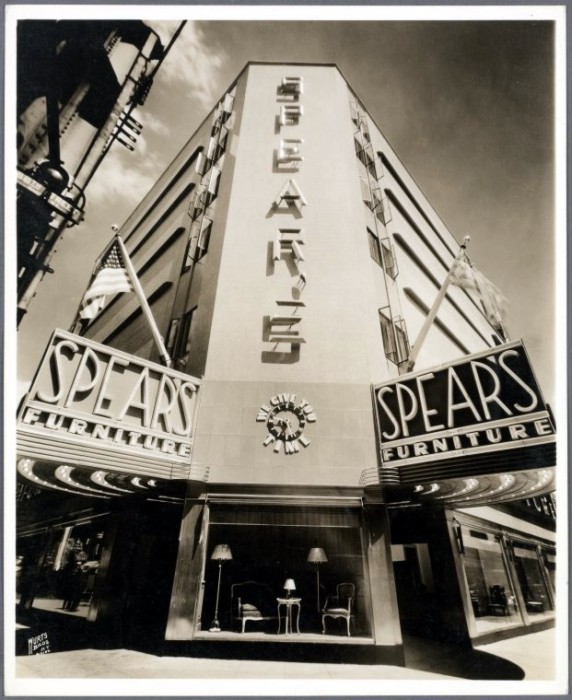
Spear's Furniture retail store in Queens. Photo: NY Public Library

Spear’s Furniture retail store in Queens. Photo: NY Public Library

Saternow’s painting depicts a familiar scene on the industrial West Side during the early decades of the 20th century: the mix of rail and trucks that moved goods around the city and the country.  In an odd coincidence, the general manager of Spear & Co., Arthur S. Guggenheim, died on a train en route from his home in Pittsburgh to Penn Station; it was the same year that Tim Saternow’s painting depicts: 1940.

The b&w photo below was taken in 1934  from the newly opened freight viaduct, looking north from 21st Street. It shows the Spear & Co. warehouse on the left, and the Guardian Angel School (right foreground) which was originally located on 23rd Street. The New York Central Railroad paid the church to move to its current location, on Tenth Avenue and 21st Street, since it was blocking the path of the viaduct — a reminder that this neighborhood has always been a work-in-progress.
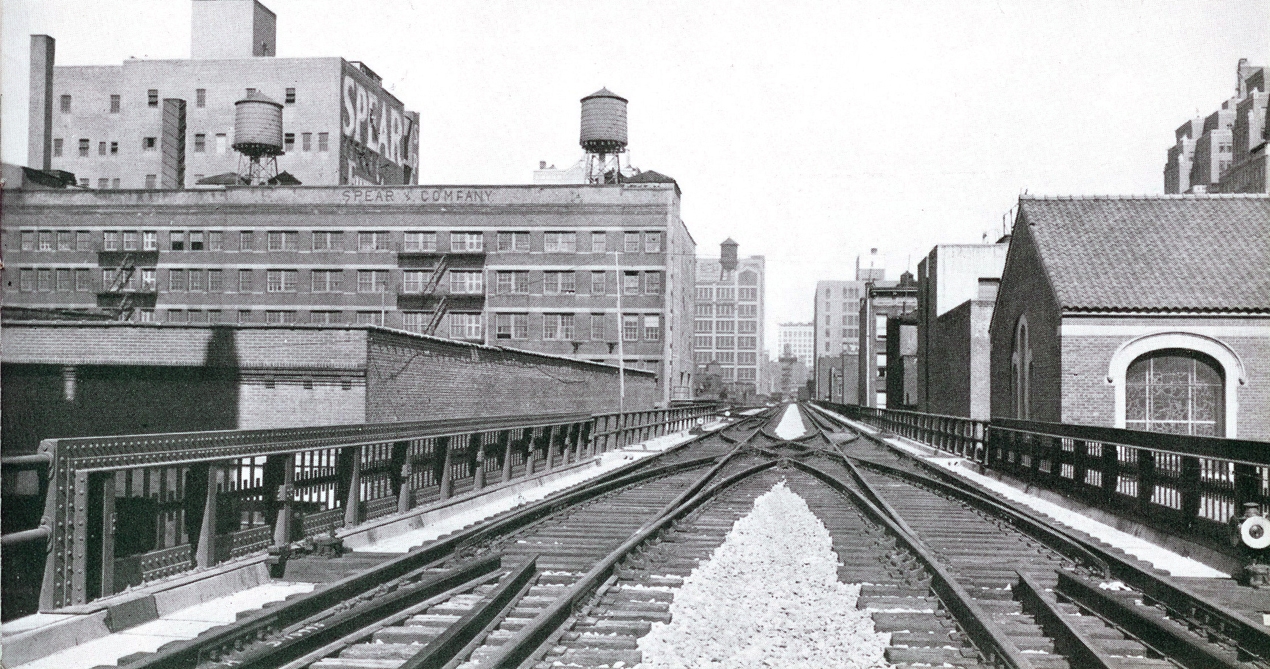
Spear & Company furniture warehouse, from the High Line, 1934. Courtesy West Side Improvement Project brochure

Spear & Company furniture warehouse, from the High Line at 21st Street, 1934. Courtesy West Side Improvement Project brochure

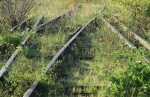
After the last train ran along the High Line in 1980 the viaduct was abandoned, and over time transformed into an invisible (at least from the street) spontaneous garden. Rick Darke’s photo (below) shows an intriguing little path made by trespassers — precursor to the more popular one that would replace it some three decades later — plus a few birds sitting like notes on a musical staff, looking down on a peaceful wild garden in the middle of the city.
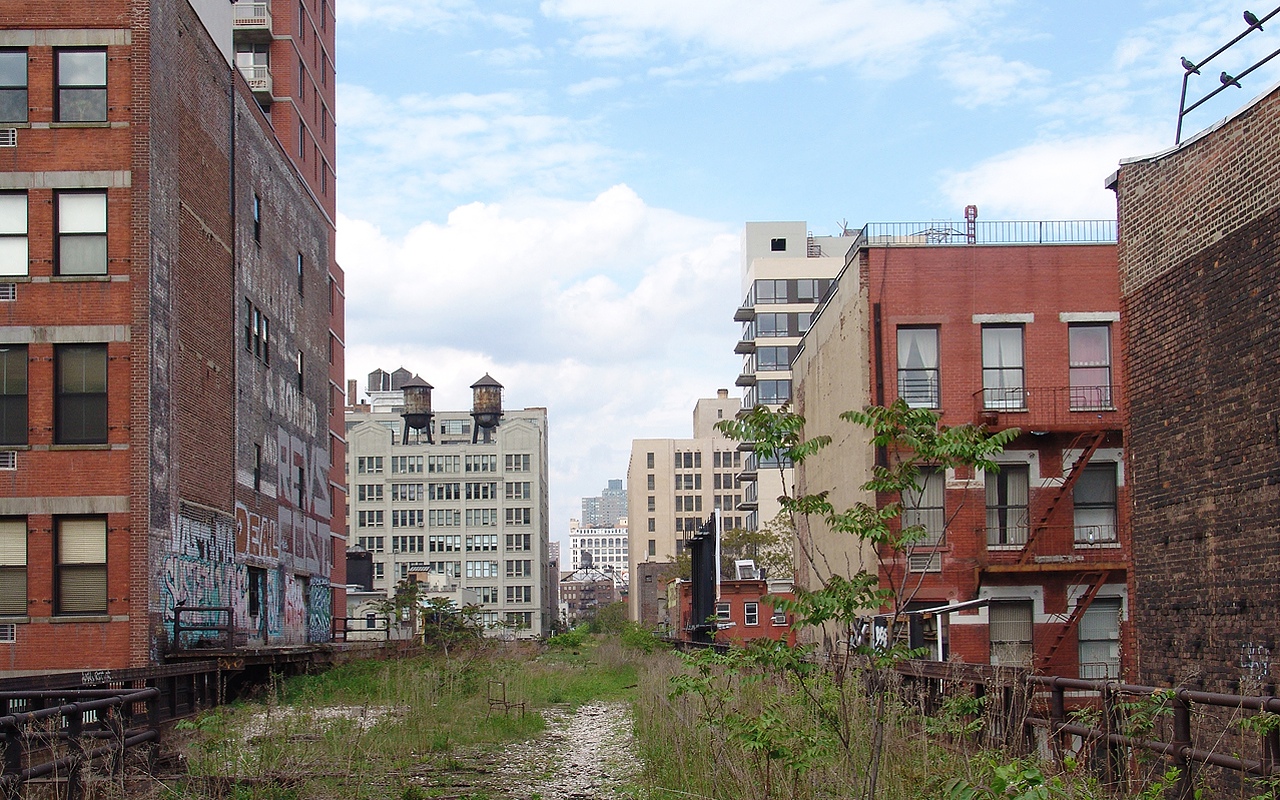
The Spears Building, looking north from 20th Street. Photo by Rick Darke.

The Spears Building, looking north from 20th Street. Photo by Rick Darke.

The photo below shows the abandoned loading dock along with a multitude of graffiti that once covered the building. The NYC graffiti police removed most of the graffiti from the High Line during remediation, but on the Spears Building they left the famous REVS COST tag along with faded remnants of a few others. Running down the southeast corner of the building (far left in the photo below), you can also see the faded letters that spell out TOWER’S, the apparent successor to Spear. Tower operated bonded warehouses in locations throughout the city, including along the west side of Manhattan; according to one source the company operated a warehouse at 511 W. 22nd Street building, which was once part of Spear’s factory complex, between 1955 – 1971. These ghost signs are common around West Chelsea; just a bit west, at 532 W. 22nd, are the faded letters of a long-gone lumber company. But as development rampages through the neighborhood they are disappearing fast. New construction begun in 2017 will most likely block the lumber ghost sign within a year or two.
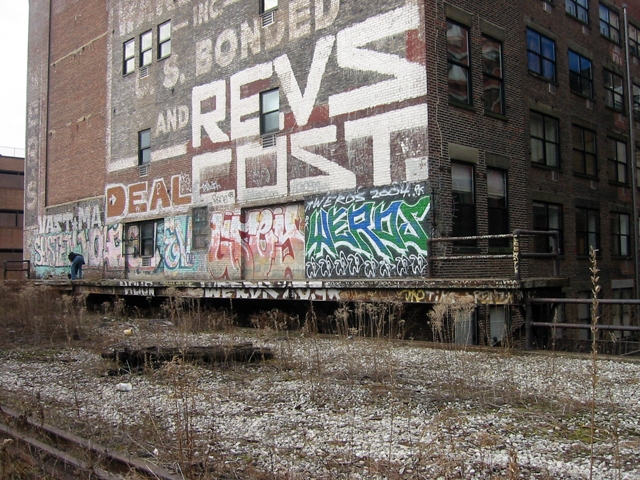
Spear & Co. loading dock on the abandoned High Line. Photo by Tim Saternow

Spear & Co. loading dock on the abandoned High Line. Photo by Tim Saternow

The Spear & Co. factory was converted into a condominium in 1996, and while many unit owners renovated away the details of the building’s industrial past, some of the lofts retain the original wooden plank ceilings, iron castings, and support beams that recall the old factory. Long ago, some worker hammered a series of nails into a pattern displaying the initials “F.A.,” which are now part of a loft on the 5th floor. Was he a cigarette packer or a furniture maker? No one knows.

In 2012, when Section Two of the High Line opened, the Spears Building became the backdrop for the “seating steps,” a popular hang-out for people-watching, snacking, smooching, and the occasional wedding ceremony. The High Line Art program uses the wall of the building just opposite the seats to project films or display art works, like Ed Ruscha’s mural in 2014. So this place has also become an outdoor auditorium/art gallery as well.
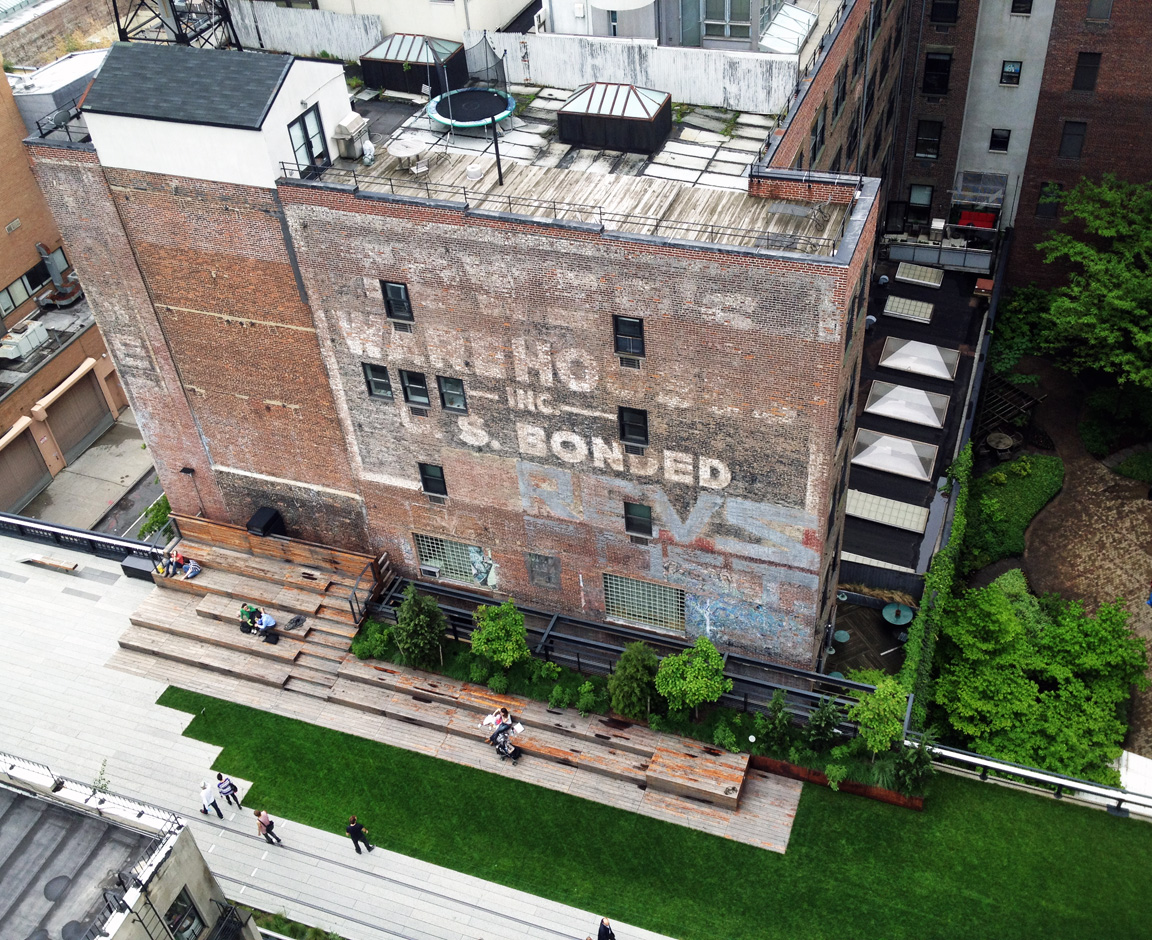
Spears Building and High Line lawn

Spears Building and High Line lawn

Almost exactly 120 years after the devastating fire of October 1892, the Spears Building was hit by another fiend: Hurricane Sandy. The “superstorm” ravaged New York City On October 29 during a full moon, when tides are at their highest. Worse, the storm surged coincided with the approaching high tide along the Atlantic Coast. The Hudson River, a tidal estuary, rose a record 8 to 9 feet in Lower New York Bay, and on 22nd Street the river exceeded the 4′ level, flooding the basement and lobby of the Spears Building. The photo below was taken by Haider Gillani during the storm; click here to see a photo from the same place taken in July 2014 and here to see the Sandy high water mark emblazoned (still) on 22nd Street.
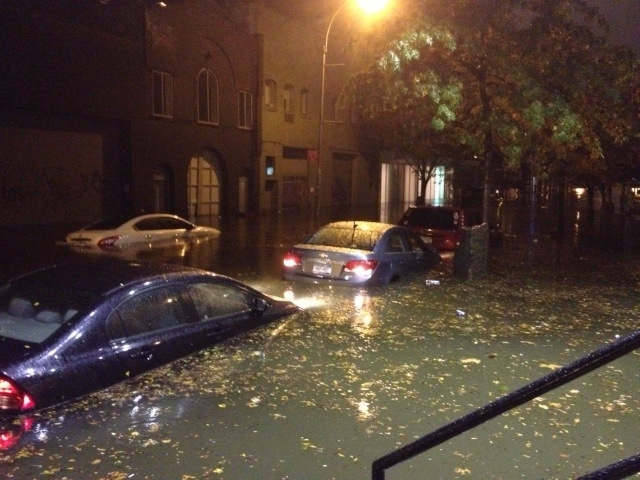
22nd Street, just outside the front door of the Spears Bldg., during Hurricane Sandy. Photographer unknown.

22nd Street, outside the front door of the Spears Bldg., during Hurricane Sandy. Photo by Haider Gillani.

Tim Saternow’s painting, which he graciously allowed me to use here, has been hanging in the Spears lobby since 2009 — the same year the High Line opened — and it’s a much-loved fixture by the building’s residents.  It was almost a casualty of the hurricane, but luckily the water didn’t rise quite high enough to reach it. Tim was able to rescue the painting the day after the storm, and once the lobby had been repaired it was returned to its rightful place.

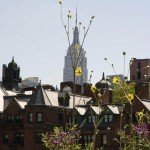
The other distinctive element of the Spears Building is the pair of “silent sentries” that have stood on its roof for more than a century. New York City is filled with water tanks, what beloved CBS newsman Charles Kuralt described as “the hoops and staves of the Middle Ages.” As our neighborhood reinvents itself with modern architecture and 21st century urban greenways made from post-industrial ruins, the water towers on the old cigarette-packing-factory-turned-furniture-warehouse-turned-condominium are like anchors of the past. They help us better appreciate the long — and ongoing narrative — of this wonderful place. Here are some photos I’ve taken over the years in different seasons:
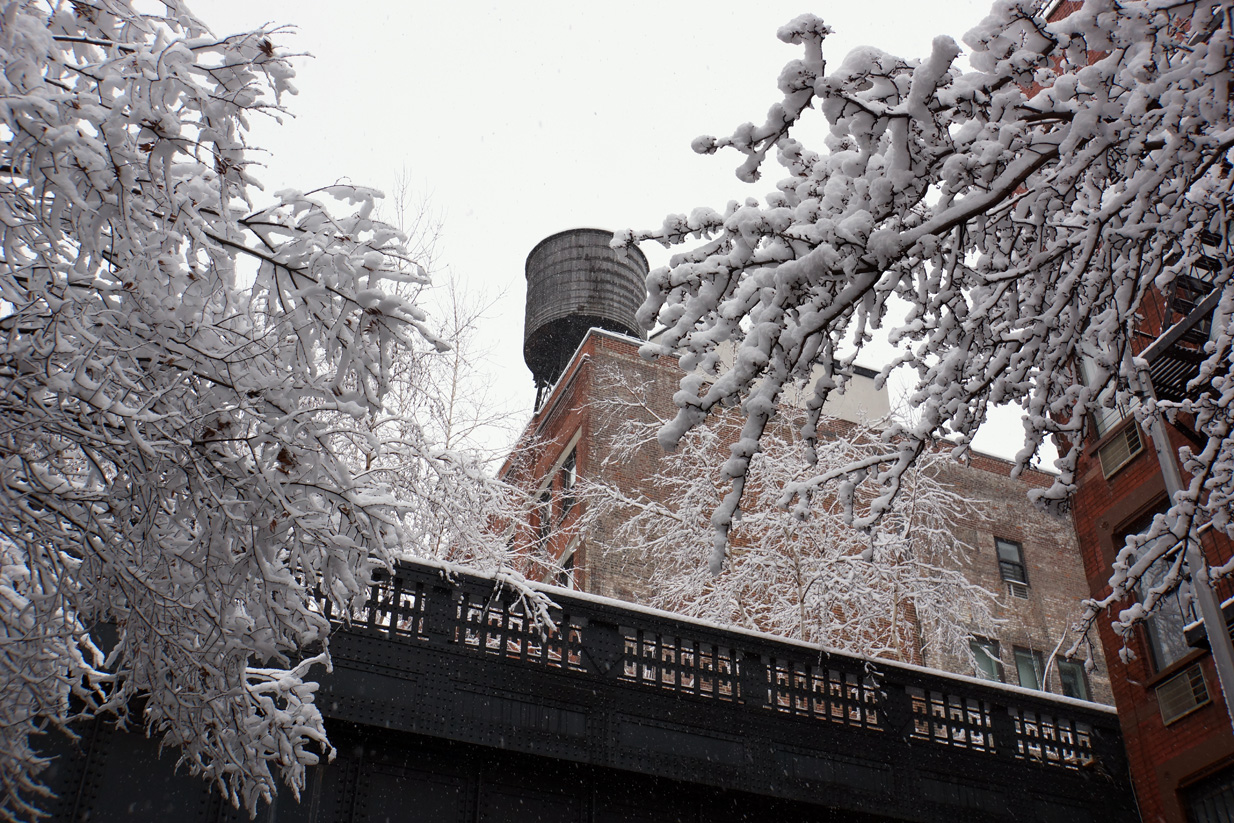
Spears Building water tank, February 2, 2014
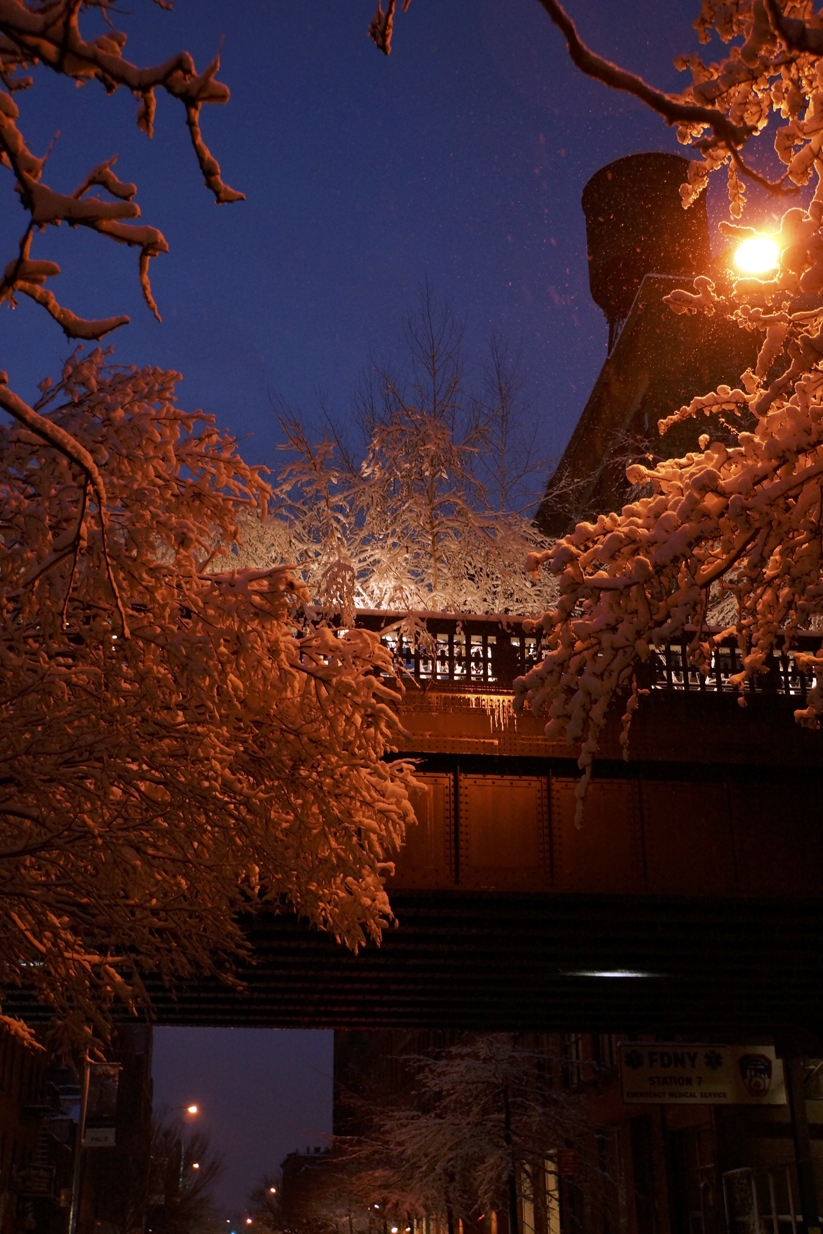
Spears Building water tank, February 2, 2014

Spears Building water tank, February 4, 2014
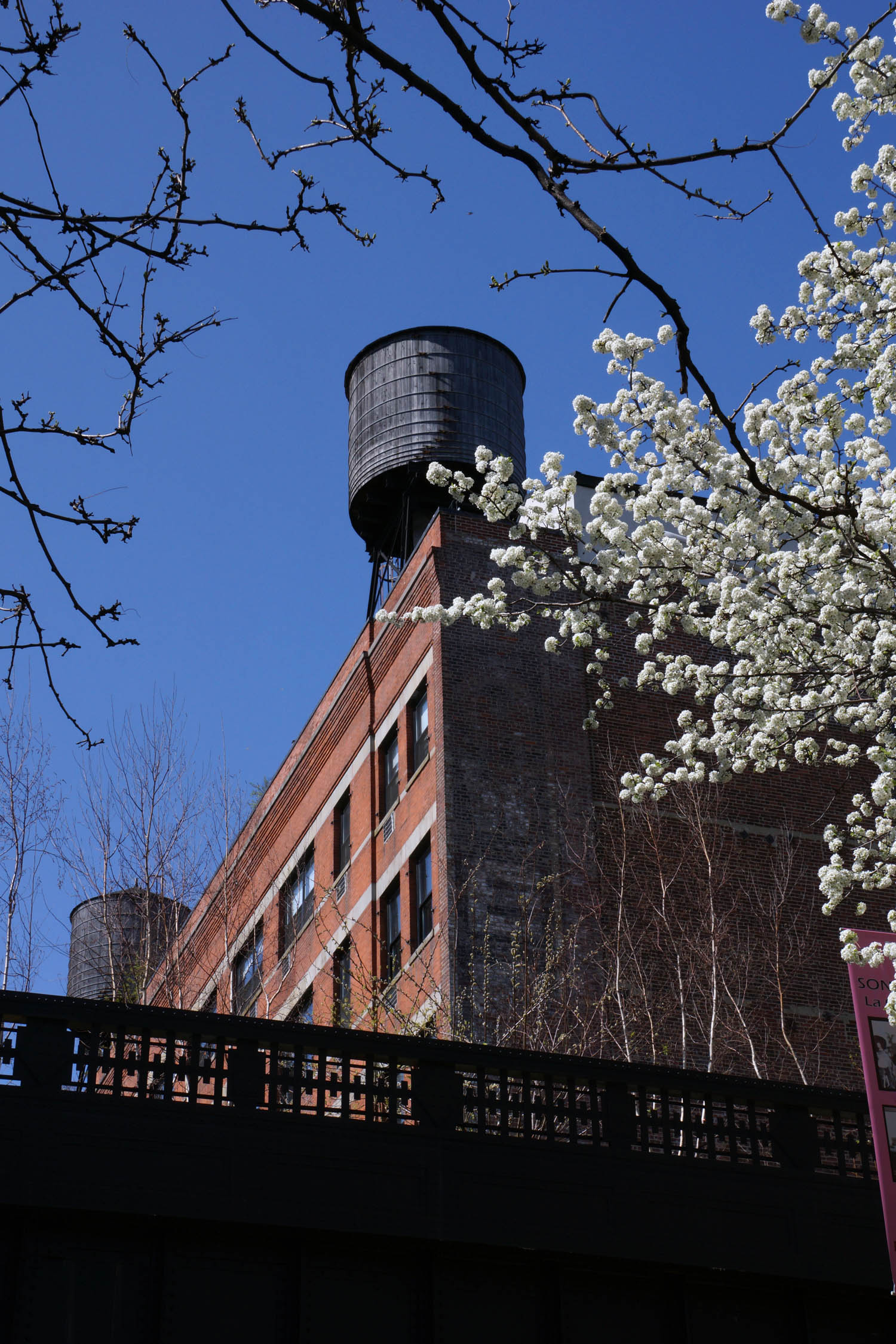
Spears Building water tank, February 4, 2014

Spears Building water tank, March 27, 2014
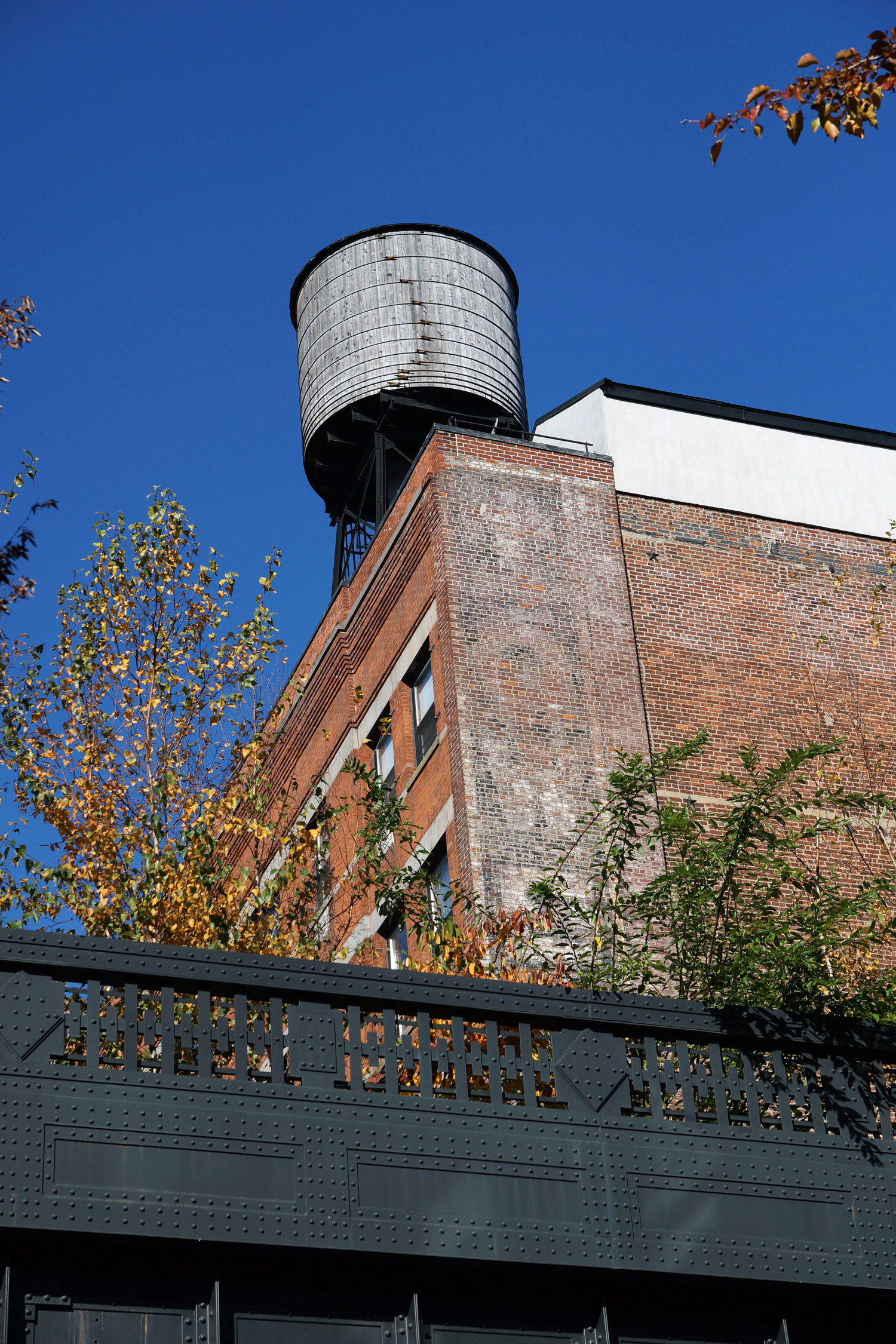
Spears Building water tank, March 27, 2014

Spears Building water tank, November 18, 2011

Spears Building water tank, November 11, 2011
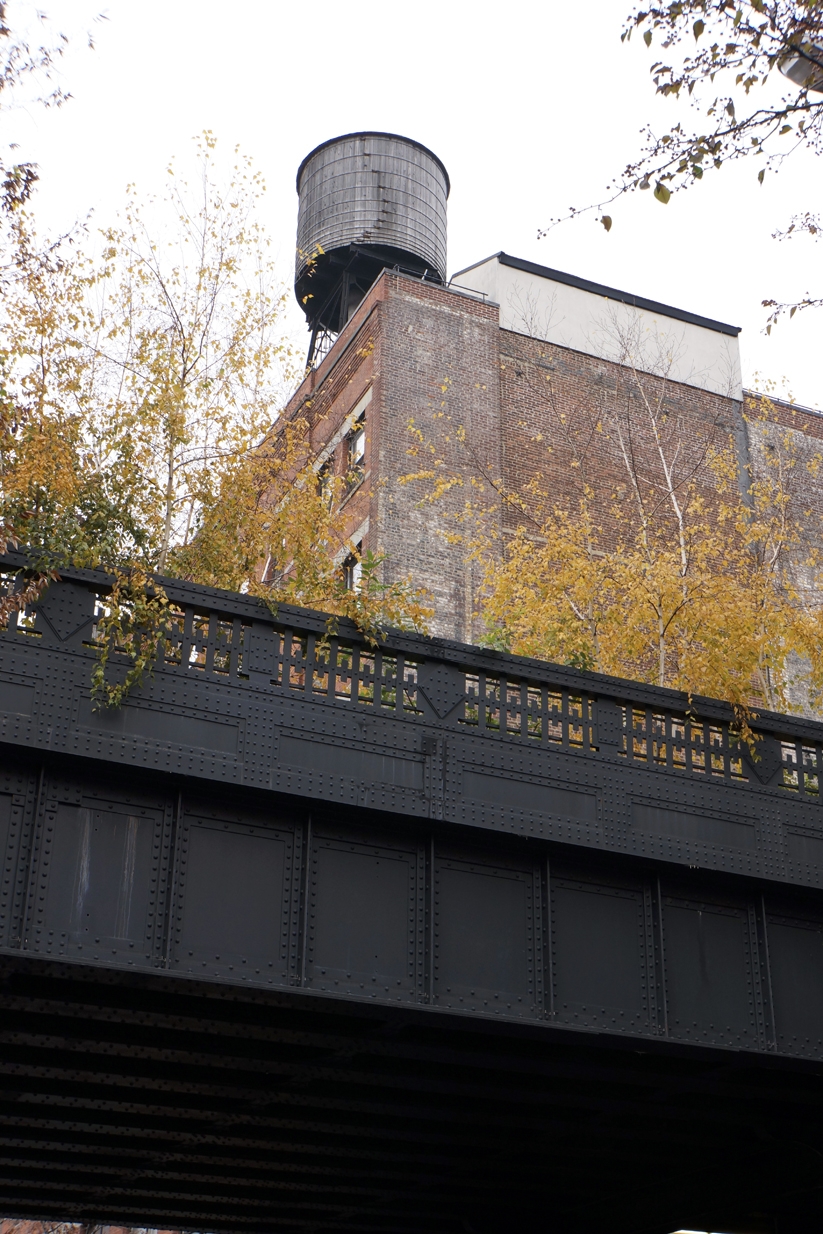
Spears Building water tank, December 2, 2013

Spears Building water tank, December 2, 2013

Note: special thanks to Livin’ The High Line readers Bruce Ryan and Susan Spear for their feedback and insights.

HIGH LINE ARCHITECTURE SERIES

Morgan General Mail Facility – Tenth Avenue between 28th – 30th Streets

Westyard Distribution Center – Tenth Avenue between 31st – 33rd Streets

R.C. Williams Warehouse / Avenues School – Tenth Avenue between 25th – 26th Streets

Spears Building – 525 West 22nd Street



Share
{ 1 comment }

Meatpackers, Your Steak Dinner & the High Line

Peter Lugar at J.T. Jobaggy on Washington Street

Peter Lugar truck at J.T. Jobaggy on Washington Street

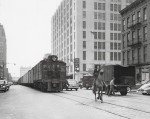
When I was a kid, back in the days when freight trains ran along the High Line, we used to trek to Brooklyn for very special occasions: a big steak at Peter Lugar’s. Until this morning, when I happened to pass by a van loading up sides of beef at the J. T. Jobaggy meatpacking plant, it never occurred to me that my special dinner had traveled down the old New York Central line on a viaduct now packed with more than 100,000 plants and even more humans.

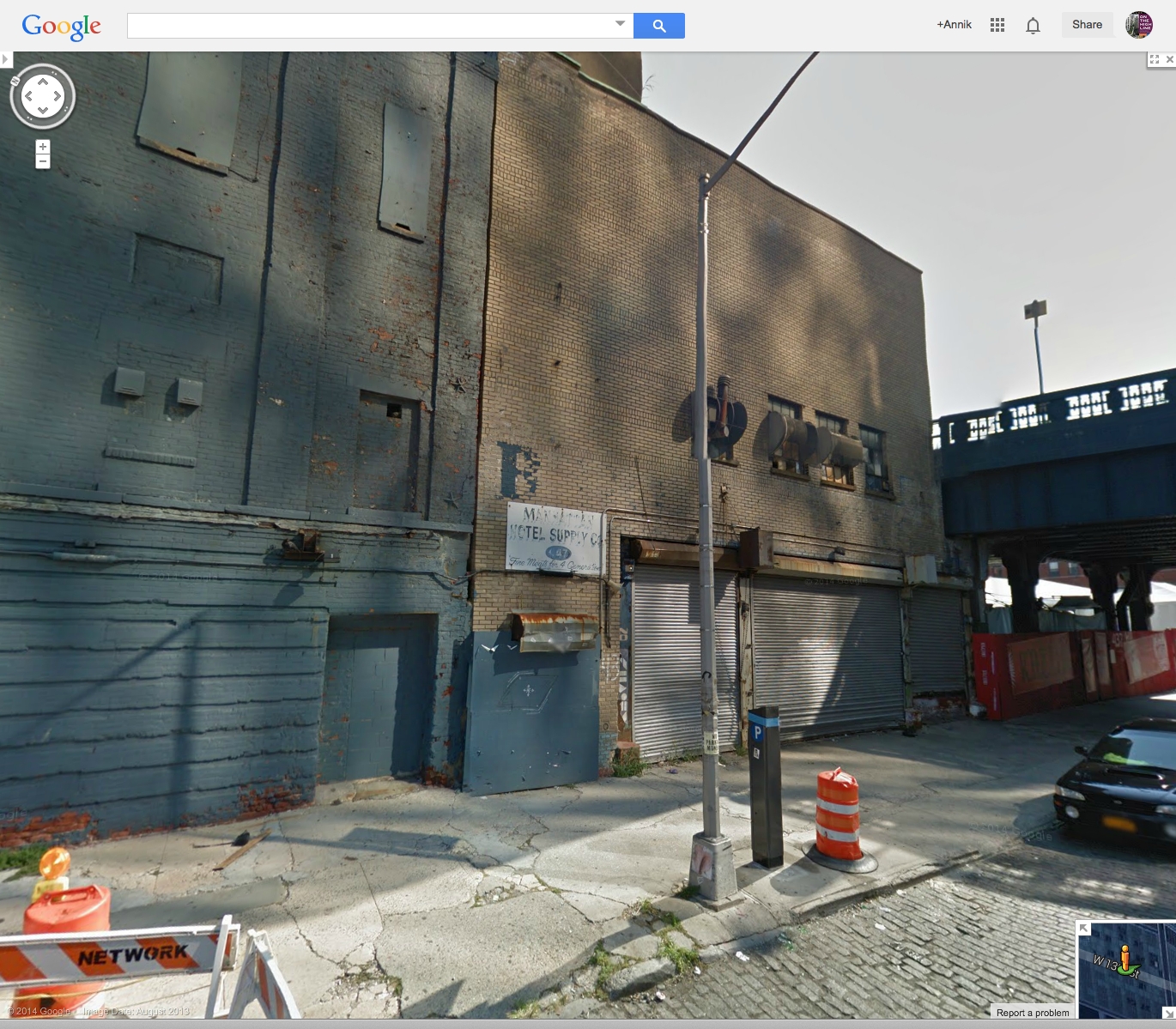
The old dance continues, but today it all happens by truck. The Meatpacking District surely ain’t what it used to be — witness the fashionable woman strolling past the Peter Lugar van below — but the butchers are still here, continuing the work that’s been ongoing on Washington Street for more than a century. The last remnant of the meatpacking business still in place on the High Line is the series of meat hooks hanging from a conveyer belt below the Standard Hotel. That building — once the warehouse of the Manhattan Hotel Supply company, whose motto was “Fine Meats for 4 Generations” (italics included) — will surely be torn down soon and replaced with something new, but for now it stands as a fine reminder of the business that gave this neighborhood its name. [continue reading…]

Share
{ 0 comments }

Dreaming in Philadelphia

Over the past few days I’ve been taking booksellers in town for Book Expo America on walking tours of the High Line. As part of my preamble, I always find myself talking about High Line: The Inside Story of New York City’s Park in the Sky, the 2011 book by Friends of the High Line co-founders Joshua David and Robert Hammond. I re-read this book every year because it puts me in a good mood and makes me feel optimistic about cities. The High Line faced such formidable resistance on so many fronts that it truly is a miracle that the thing exists at all. But in fact it now is inspiring other communities all over the world to believe in the possibility of creating innovative, people-friendly green spaces from post-industrial sites.

Which brings us back, once again, to the great Paul VanMeter, a driving force behind The Rail Park in Philadelphia. That project began with a dream to create a three mile urban greenway, part of which will be part elevated, like the High Line, and part of which will be submerged, in tunnels created more than 100 years ago by the Philadelphia & Reading Railroad. Paul died in February, but the project lives on. This week PBS Digital Studios released a short film about Paul and the Rail Park as part of its Unusual Spaces series. It’s an inspiring reminder that these unique, miraculous, places begin with someone’s passionate dream, and then take a decade or more to realize. The High Line is testament that it can be done, and the short film below bears witness to the dream unfolding. Give it a watch and you’ll see what I mean. To read more about Paul, click here.

http://vimeo.com/96593704

Share
{ 0 comments }

The grass is always greener….

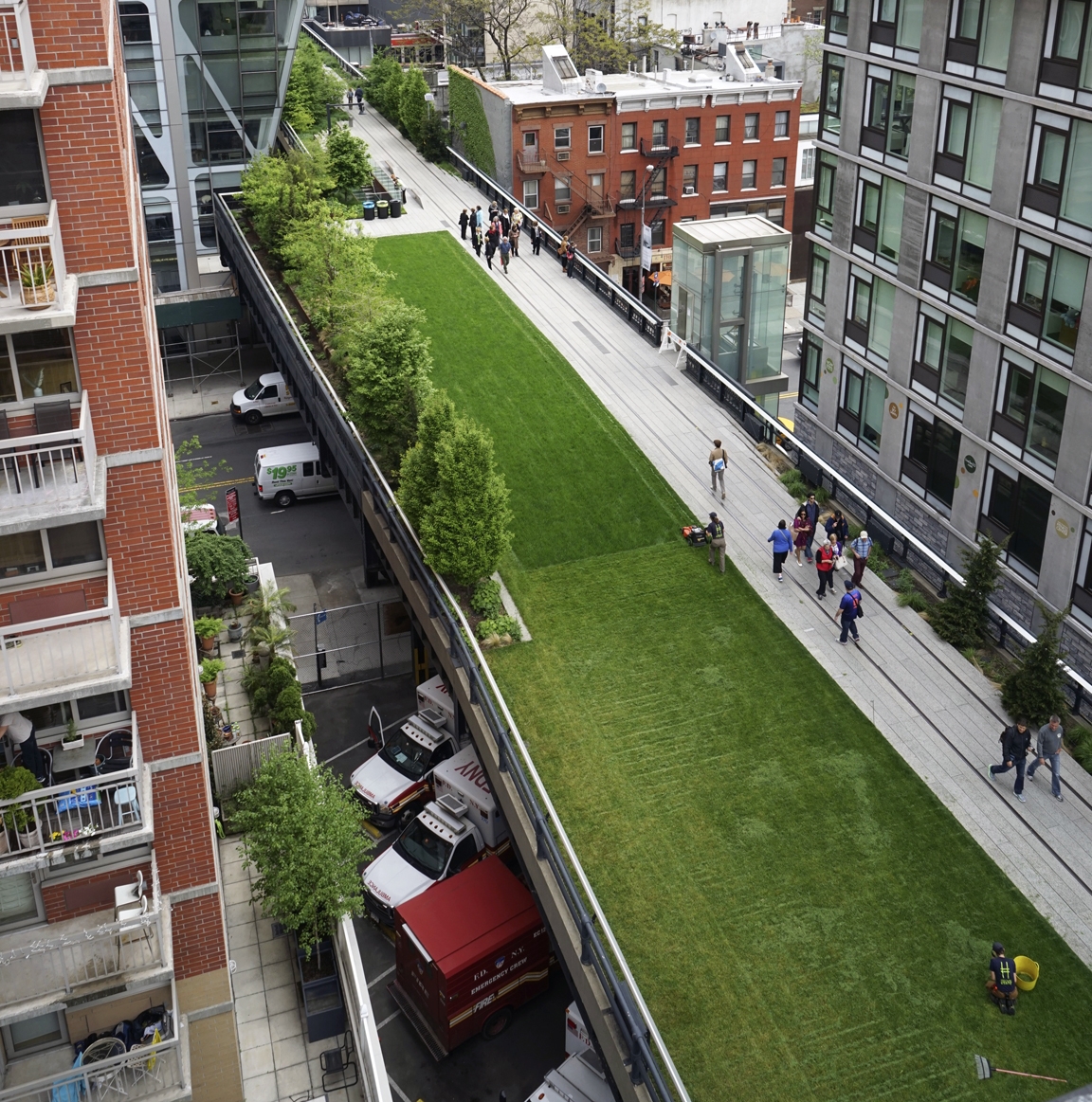
Friends of the High Line gardening crew gets the lawn ready for summer

Friends of the High Line gardening crew gets the lawn ready for summer

The sound of a lawn mower on 22nd Street always jolts me to attention. Of course, the mower has to compete with the unending cacophony of construction, but the smell of freshly cut grass does waft up and shimmy through the open windows, so if even if you can’t hear it, you know the High Line is getting its weekly haircut. It’s just a tiny sliver of lawn, and within a couple of weeks it’ll show the impact of the hundreds of visitors who use it as a beach during summer weekends. But right now it’s very green and very plush, so catch it while you can.

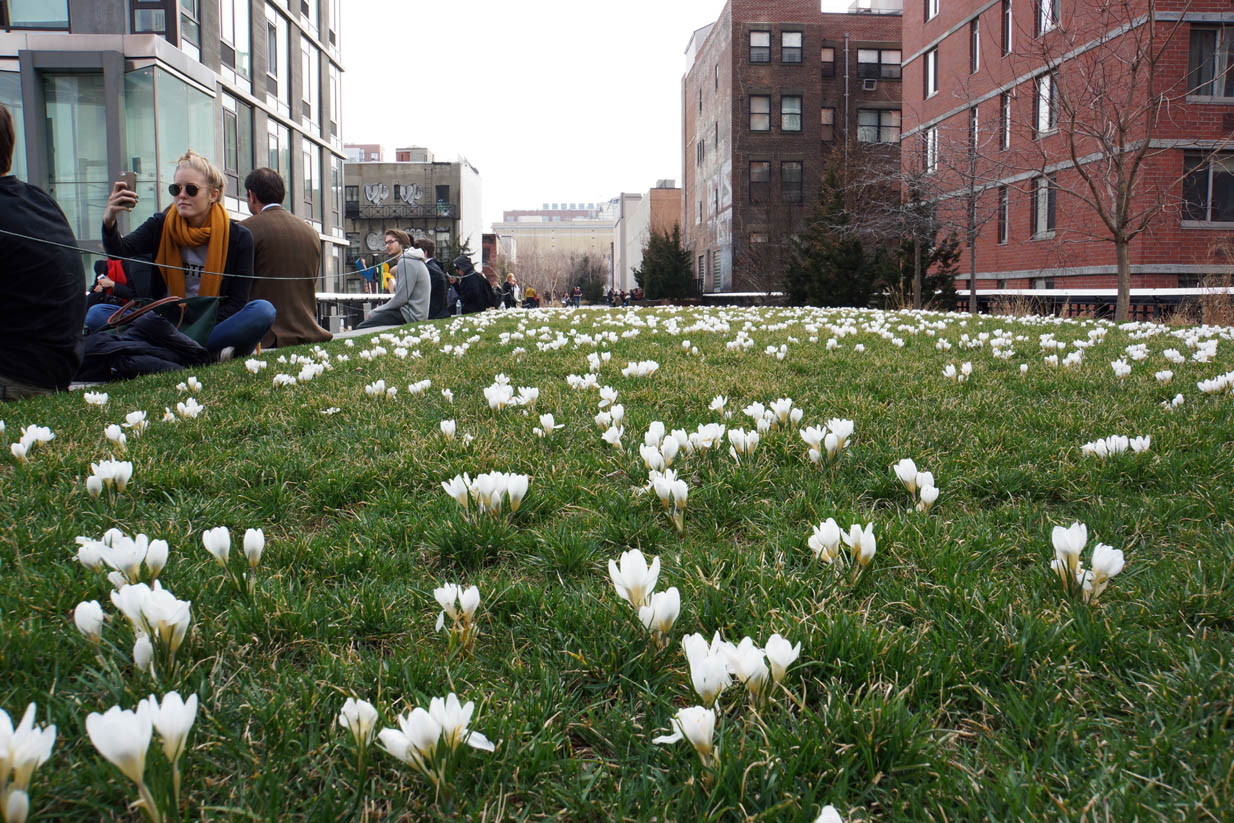
For the 2014 season, the High Line gardeners planted a surprise that emerged just as our brutal winter came to an end: a showy crocus that goes by ‘Miss Vain.’ In early April, this lovely little crocus inspired a woman to take a selfie….

Crocus biflorus ‘Miss Vain,’ new to the lawn in 2014

Crocus biflorus ‘Miss Vain,’ new to the lawn in 2014

If you want to enjoy some quiet on the High Line’s lawn, do it now, because the kids are coming….

Story hour on the lawn, August 2012

Story hour on the lawn, August 2012

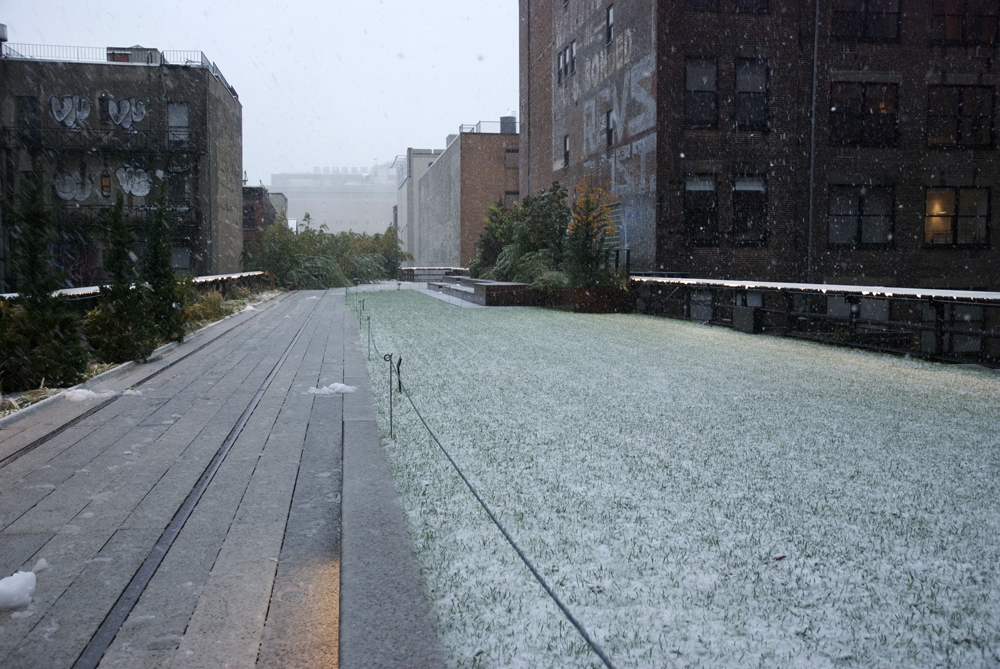
And then, in a heartbeat, it’s over, and winter returns.

The lawn in winter

The lawn in winter

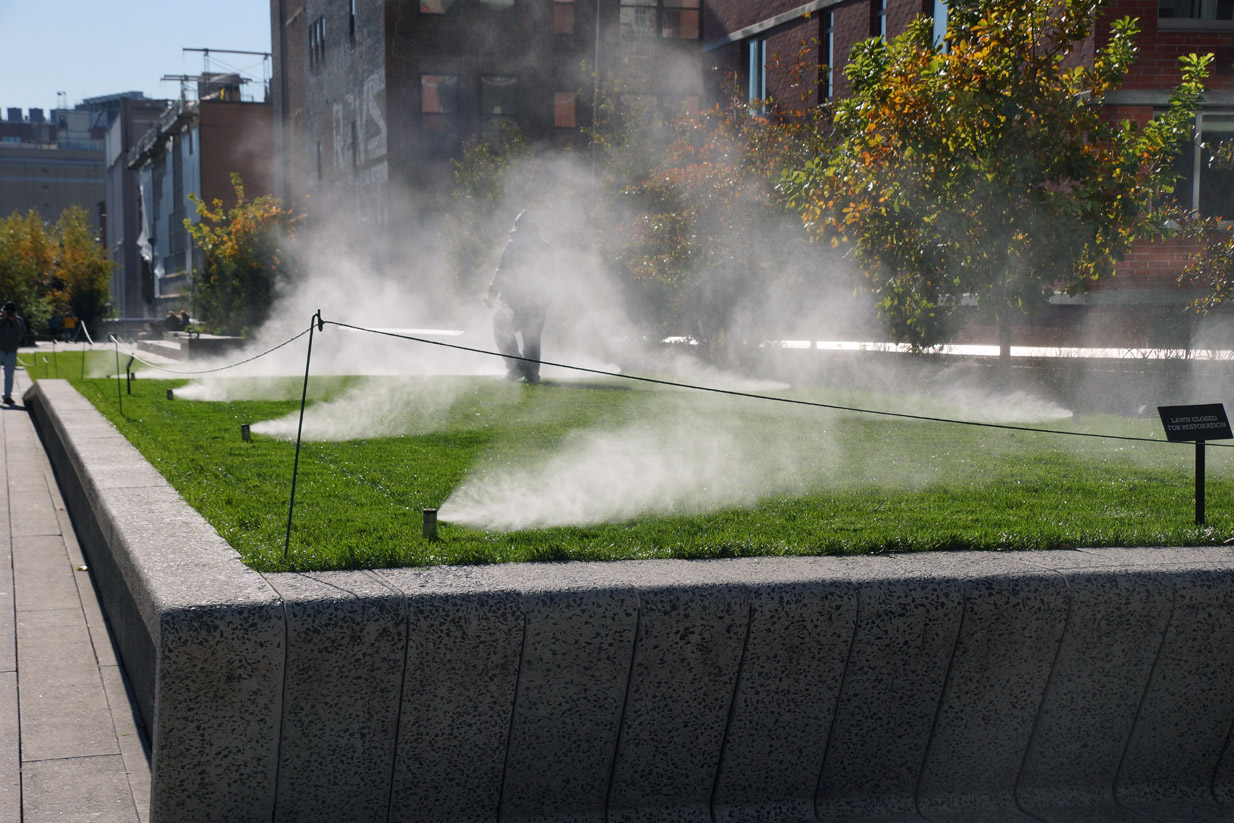
I just want to pause for a moment and tip my hat to Maeve Turner, who took such wonderful care of the lawn — a formidable task — for five years until just recently, when she left Friends of the High Line for the herb garden at the Brooklyn Botanic Garden. That’s a pretty fabulous place too, and well worth a visit. We miss you, Maeve!

DSC06449

Gardener in the mist

Share
{ 1 comment }

Ancient Footfalls Beneath the High Line

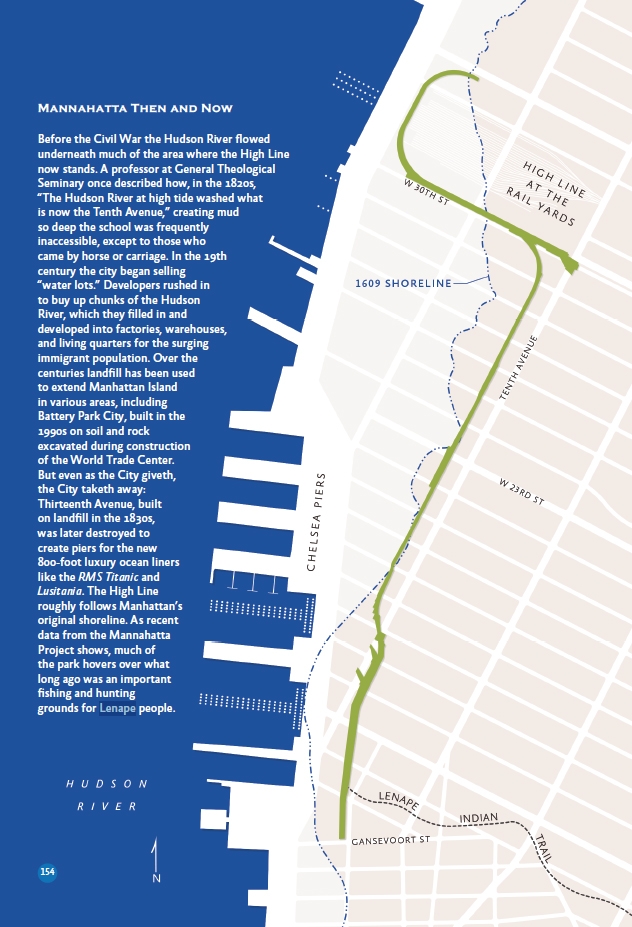
Manhattan Island's 1609 shoreline, with the Lenape trail passing under today's High Line

Manhattan Island’s 1609 shoreline, with the Lenape trail passing under today’s High Line

Of the many additions to the revised & updated version of On the High Line, one of my favorites is a new map created by Maps For Good co-founder Marty Schnure. It uses data from the Welikia Project to show the path of an historic Native American Indian trail that once cut below today’s Gansevoort Woodland in the High Line park. (Click the image to enlarge it.)

Four hundred years ago, before the first Europeans arrived, this area was a prime hunting and fishing grounds for the Lenape people. From the estuary of the Hudson River they pulled 12″ oysters, 6′ lobsters and more than 70 species of fish. On land they hunted countless species of mammals including deer and bear.

In those days, the river was a bit closer to today’s park. We’ve been expanding the borders of our island for centuries; Marty’s map shows the original 1609 shoreline, which the High Line roughly follows. Intriguingly, the line bisects the Western Rail Yards at exactly the point where the temporary path in section three of the park will begin once it opens in the Fall. This path will lead visitors through the still-wild landscape that emerged after the rail line was abandoned, and toward a glorious view of the river — all of which takes place on modern landfill.

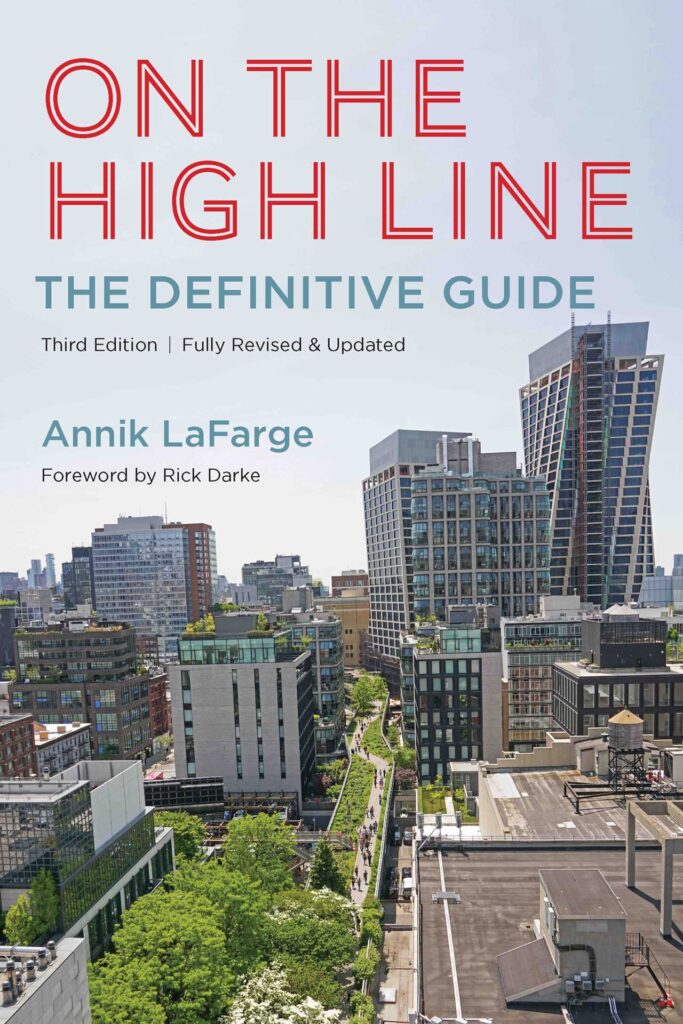
The second edition went on-sale this week, and continues to peel back the layers of landscape around the High Line, offering historical and cultural context for readers interested in the story of this fascinating place. [continue reading…]

Share
{ 0 comments }

Every Week is Bird Week on the High Line

It’s Bird Week, and the High Line is an excellent place to observe our avian friends, those who live here permanently as well as the thousands more who pass through en route to someplace else. The High Line parallels the Hudson River, one of this country’s great migration superhighways, and when the Rail Yards section opens later this year, a huge seating platform facing the river will provide one of the best bird-watching perches in the city. But throughout the park in every time of year you can discover many different species of birds. In March I joined Ben Cacace, project leader for the Cornell Lab of Ornithology’s eBird Project, on an art tour in section 3, and he identified ten species in under an hour. Ben’s checklist from our visit is here, and the High Line’s eBird Hotspots are here. (See below for more info. about eBird and a link to register so you can help build the High Line’s bird list.)

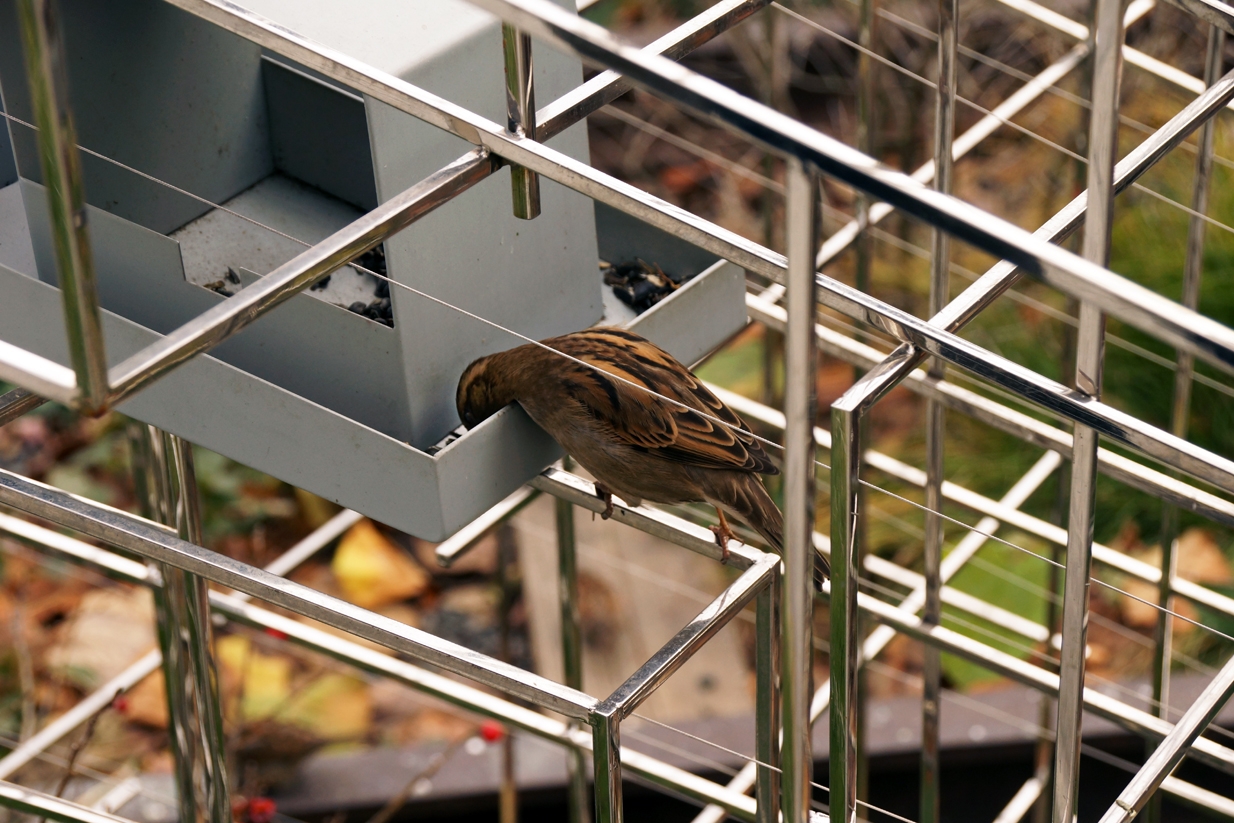
Below are a few of my favorite sitings, beginning with a hungry sparrow enjoying a meal in Sarah Sze’s magnificent 2011 sculpture installation “Still Life With Landscape (Model for a Habitat).”  (As always, click an image to enlarge it.)

Sparrow feeding in Sarah Sze's beloved sculpture installation "Still Life With Birds," December 2011

Sparrow feeding in Sarah Sze’s “Still Life With Landscape,” December 2011

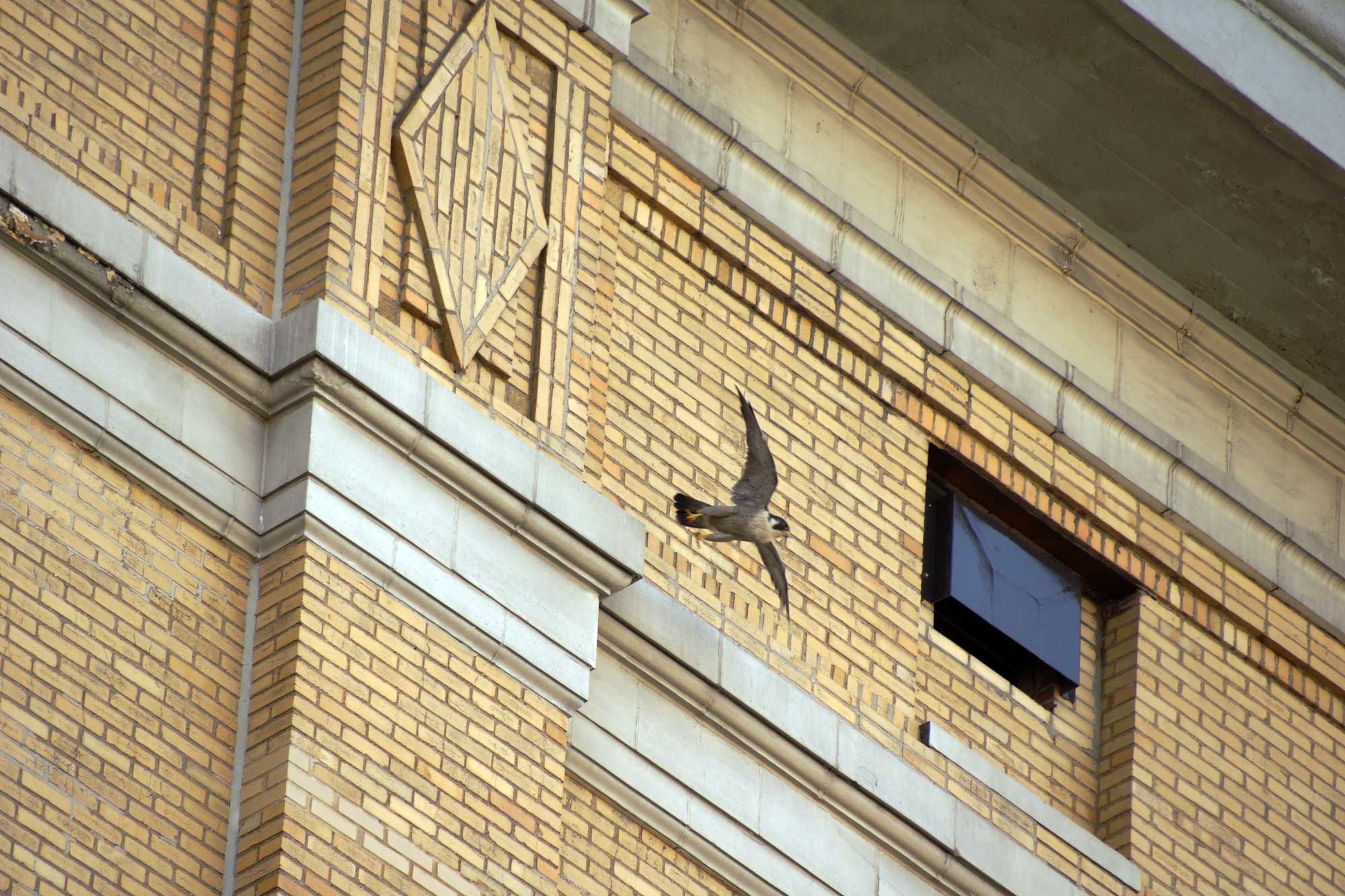
In 2012 this peregrine falcon and his mate made a temporary home under the eave of the Drug Enforcement Agency headquarters at 16th Street. For most of the month of March they could be spotted swooping above the High Line…

A peregrine falcon takes flight off the DEA headquarters, March 2012

A peregrine falcon takes flight off the DEA headquarters, March 2012

[continue reading…]

Share
{ 0 comments }