≡ Menu

Painters in the Sky

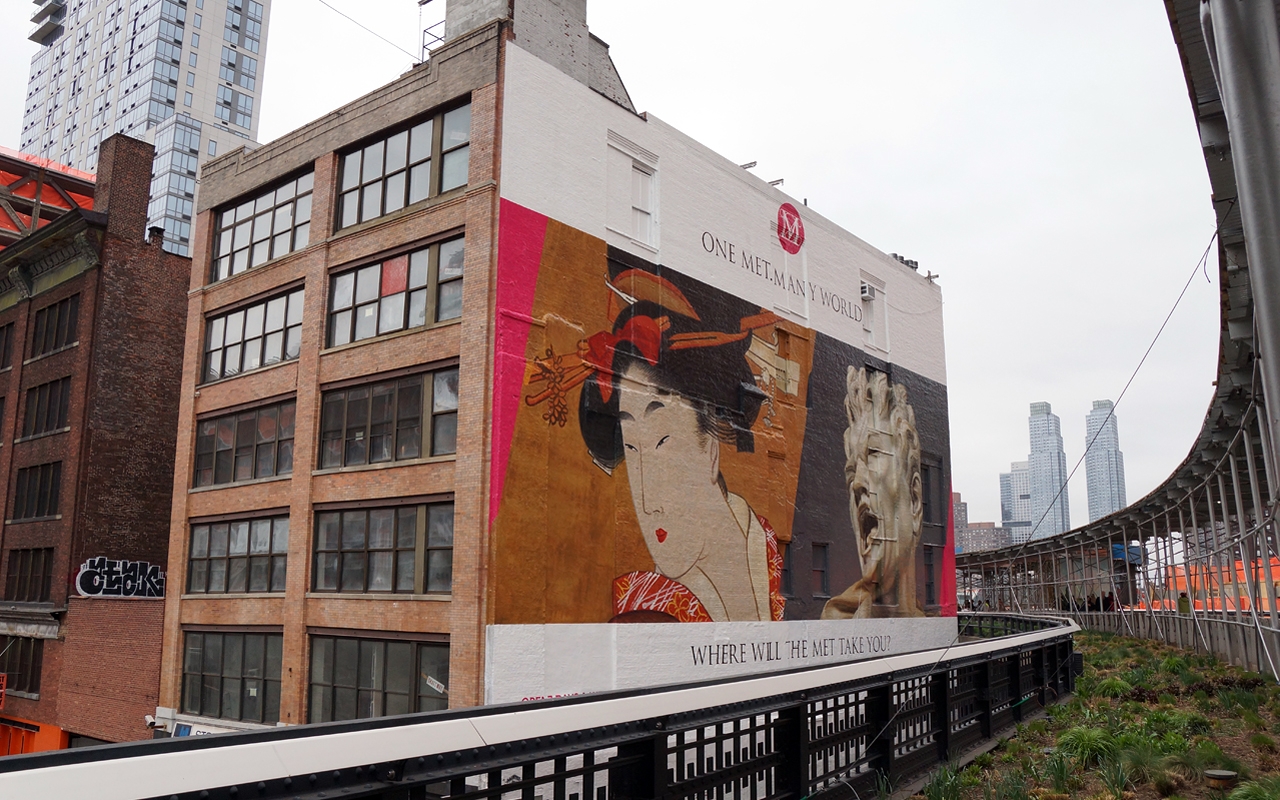
Painters from Colossal Media at 20th Street

Painters from Colossal Media above the High Line at 20th Street

An amazing creative act is taking place right now on the High Line. If ever there was a reason to leave your desk and head out to the park, this is it. But go now, because it’ll be over soon.

Painters from a company called Colossal Media are working on a scaffold at 20th Street to paint a large ad for the Metropolitan Museum of Art. I took a walk in the park yesterday, starting at 30th Street, where I immediately encountered a perfectly gorgeous mural on the side of an apartment building. This is the same wall where the artist JR did a huge pasting of Brandon Many Ribs from the Lakota Tribe as part of the Inside Out Project a year ago.

What’s so unusual about this Met ad is its richness and texture. I wanted to crawl over the railing and touch it, to see if it was real. It’s mesmerizing because it looks it like an actual painting, but it’s not hanging in a museum: it’s outdoors, painted on brick, concrete and a bit of glass (the windows of the building). You can see brushstrokes. It’s downright painterly. I stood there wondering: in this day and age, would anyone really paint an ad on a building?

Farther south I found my answer. Colossal Media — which includes its logo in the work — is painting a second piece for the Met, this time a beautiful seascape that looks like a Hokusai. They’re still at it this morning, but they’re about halfway through.

Colossal Media is an advertising company that specializes in hand-painted work. I found a short film by Malcolm Murray (watch it here on Vimeo) in which an old-timer and a few current employees talk about the unusual craft they practice. One guy gives a perfect explanation for why the effect is so startling. Regular advertisers, with their printed billboards, “can’t print what we paint,” he says. “They print in pixels, they mix colors optically, little dots. You know, blue and yellow together makes green. But we paint green, so we can make it a lot richer.”

The men speak about the apprenticeship behind the craft, a two-year process in which the young painters are commanded to watch and absorb. One describes how he wasn’t allowed to paint for two full years. Today, he aspires to become both a good painter and a good teacher.

They talk about how difficult it can be, when the wind blows hard and the entire rig sways 30 feet to one side. “It takes so much work that it’s kind of ridiculous,” one guy comments. But “It’s the way Michelangelo did the Sistine Chapel: he made patterns, used charcoal, mixed his own paint. There’s no easy way to do it, it’s just the way it is.”

The Met's Painted Billboard at 29th Street

The Met’s Painted Billboard at 29th Street, by Colossal Media

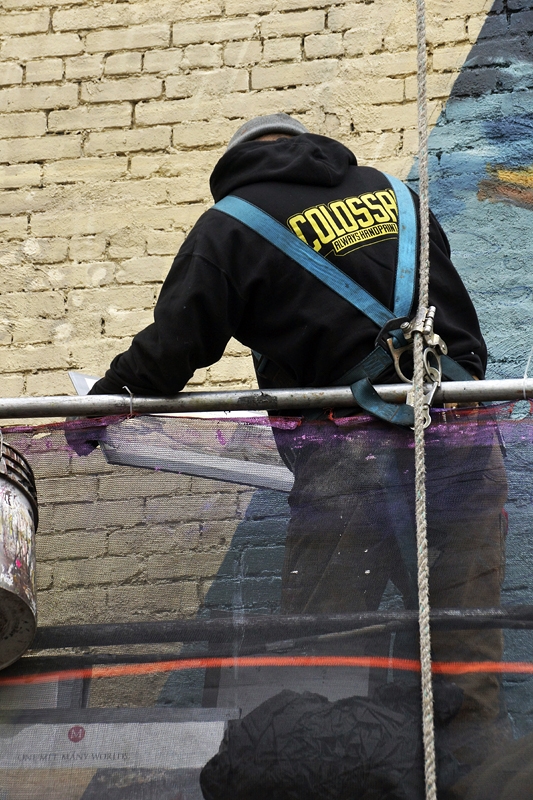
So right now you — I mean, really, right now — you have the opportunity to see this act of creation live. It’s just fascinating; they stand on the rickety scaffold, brush in one hand and an image of the work they are copying in the other. Perhaps this was a common sight in another century. Look up as you walk through the city streets and you’ll see the faded lettering of old hand-painted signs everywhere. In this neighborhood, around the High Line, you tend to see a lot of ads for printing and lumber companies, which were once prevalent here. A building on the north corner of 11th Avenue and 20th Street was recently torn down and above the rubble what suddenly appeared? An old hand-lettered sign. They are everywhere, hiding in plain sight.

Watching these men at work yesterday made me think the world would really be a better place if every advertisement were hand-painted. As I’ve said before: Run, don’t walk.


Colossal Media Painter at Work, 20th Street

Colossal Media Painter at Work, 20th Street


Share
{ 0 comments }

Rare Opportunity on the High Line!

Rip?1

The One and Only Rip Van Winkle

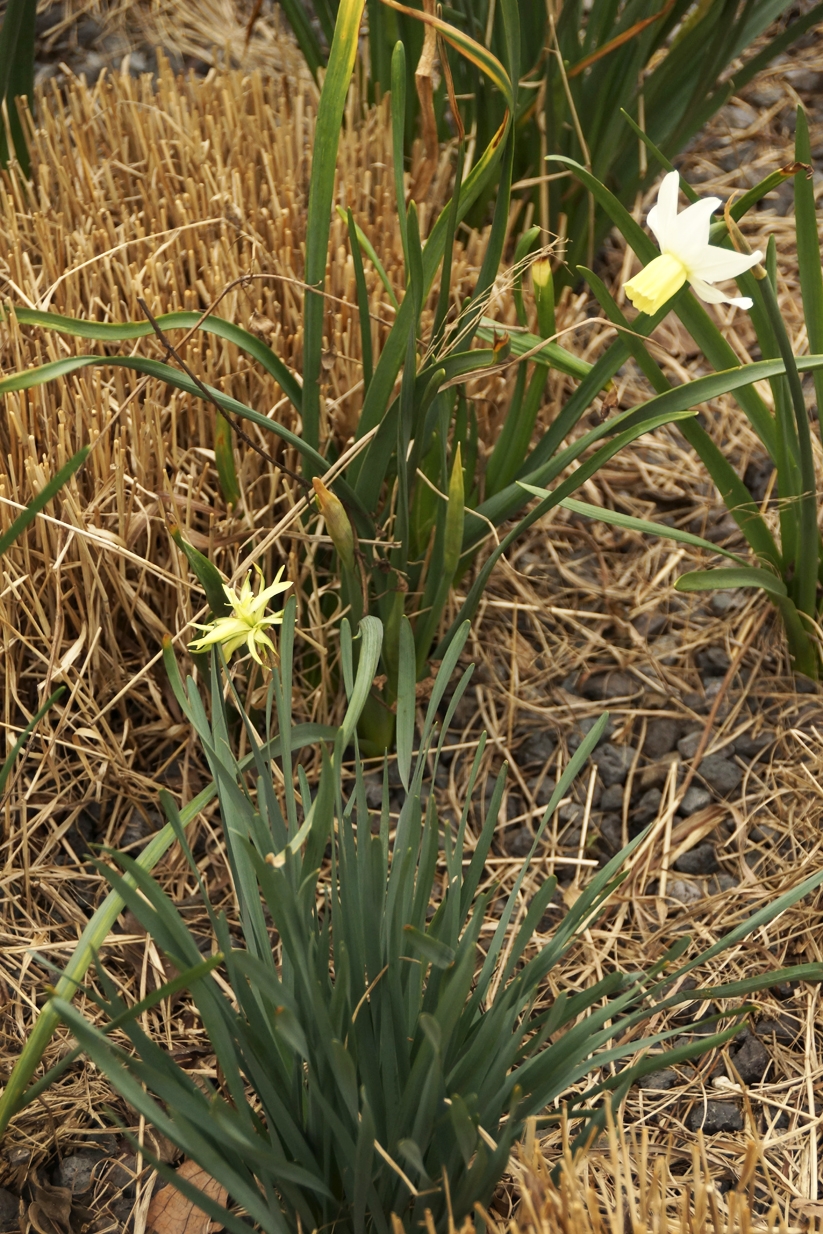
If you go to the High Line today you have the chance to see the one-and-only Narcissus ‘Rip Van Winkle’ flourishing in the Chelsea Grasslands. Yes, there are tons of daffodils up there now, but just one outlier: this lovely star-shaped flower which came uninvited to the High Line. It’s not exactly an illegal immigrant, but it has no papers; when the original plant order was placed, this daffodil was not on it. The abundant Narcissus ‘Intrigue,’ pictured alongside Rip in the photo below, was part of the original plant design, and this much-appreciated harbinger of Spring is also strutting its stuff in the Chelsea Grasslands right now.

‘Rip Van Winkle,’ however, was a volunteer.  I love this plant because in the fine tradition of the High Line it hitched a ride to get here. After the freight trains stopped running in 1980 the viaduct became a lushly diverse wild garden, filled with plants whose seeds came here from far and wide: the prairies of the Midwest; Europe; Asia; Africa.  Many were carried across the ocean and our own country by birds; others hitched a ride on railroad boxcars that eventually rumbled down Tenth Avenue with their loads of vegetables, canned goods, meat, poultry, or the U.S. Mail. The seeds tumbled out and made a home, and by the time photographer Joel Sternfeld arrived to catch the zeitgeist of the abandoned High Line, they had transformed the viaduct into a place of exquisite wild beauty. These earthy visitors created an impromptu garden atop an industrial ruin, inhabited, just like the city in which they found themselves, by a magnificently diverse group of fellow immigrants and uninvited guests.

I wrote about this flower in my book; while I was doing research I spotted it on the plant list but could never find it in the park. I asked one of the gardeners about it, and she explained that a single ‘Rip Van Winkle’ plant snuck into a flat of invited seedlings and made its surprise appearance the year the park opened in 2009. So Friends of the High Line added it to the plant list. It caught my eye not because I’m interested in daffodils but because of its name. This flower takes its name from the sleepy character created by Washington Irving, who, among his other literary flights cofounded the satirical journal Salmagundi, which coined the nickname “Gotham” for New York City. (It also poked fun at then-President Thomas Jefferson, calling him “a huge bladder of wind.”) In his famous satire of New York City, Knickerbocker’s History, Irving wrote about “Sancte Clause,” whose chimney antics were later appropriated by Chelsea author Clement Clarke Moore in “A Visit From St. Nicholas.” It was Moore who donated the land for General Theological Seminary, which sits directly across the street from the spot in the Chelsea Grasslands where Narcissus ‘Rip Van Winkle’ makes its home.

So it all comes full circle. You can read much more about all this history in my book, but it’s a beautiful day, so why not just get off your duff and go now to the High Line and see ‘Rip Van Winkle’ in person. He didn’t show up last year, and this is a tough city for a single, solitary plant, even one with a name so august.  Who knows if he’ll be back again next year.

Rip Van Winkle and friends

Rip Van Winkle and friends

Share
{ 0 comments }

A Tale of Two Gardens

Aerial-Cutback_857x800

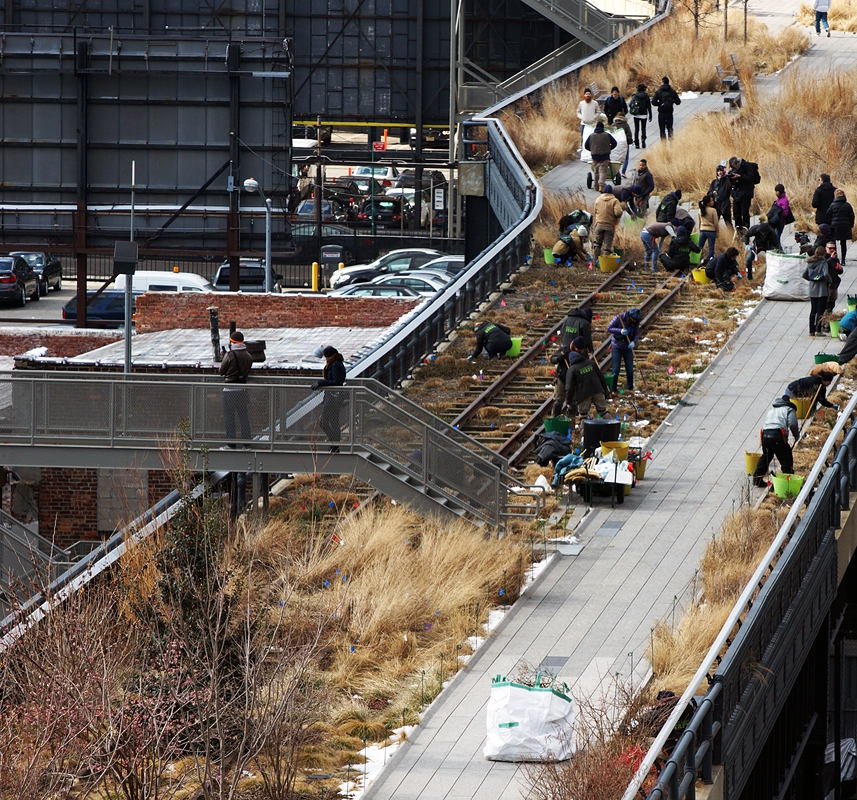
The March Cutback at the Chelsea Grasslands

NOTE: a version of this article first appeared on the blog of the American Library of Paris on 26 March, 2013.

I’m headed to Paris this week to give a talk at the American Library about the High Line. As my plane takes off, an important rite of spring will be ending in New York’s “park in the sky”: the March Cutback. This makes it a perfect time to visit the High Line’s muse and inspiration, the Promenade Plantée, the world’s first mile-long garden built on an old railroad viaduct. Like the High Line, the park in Paris – also known as the Coulée Verte – floats 30’ above the busy streets, cutting through the entire 12th arrondissement.

For all their similarities, the two parks are quite different. Unlike the Promenade Plantée and most other formal gardens, the plants on the High Line are not clipped and pruned at the onset of Fall, when cold weather arrives. Instead, they are left alone to complete the full cycle of their lives. Piet Oudolf, the Dutch horticulturist who created the High Line’s garden design, believes that plants should be interesting and beautiful to behold throughout all the stages of their growth. As he once told a reporter, “Dying in an interesting way is just as important as living.”

For the High Line, Oudolf chose plants that recall the beautiful and richly diverse wild garden that grew on the abandoned viaduct after the trains stopped running in 1980. He selected some 250 species of perennials, grasses, shrubs, vines and trees, both native and exotic, that would change in striking ways throughout the year, delighting and engaging a visitor no matter what the season.

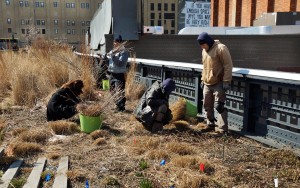
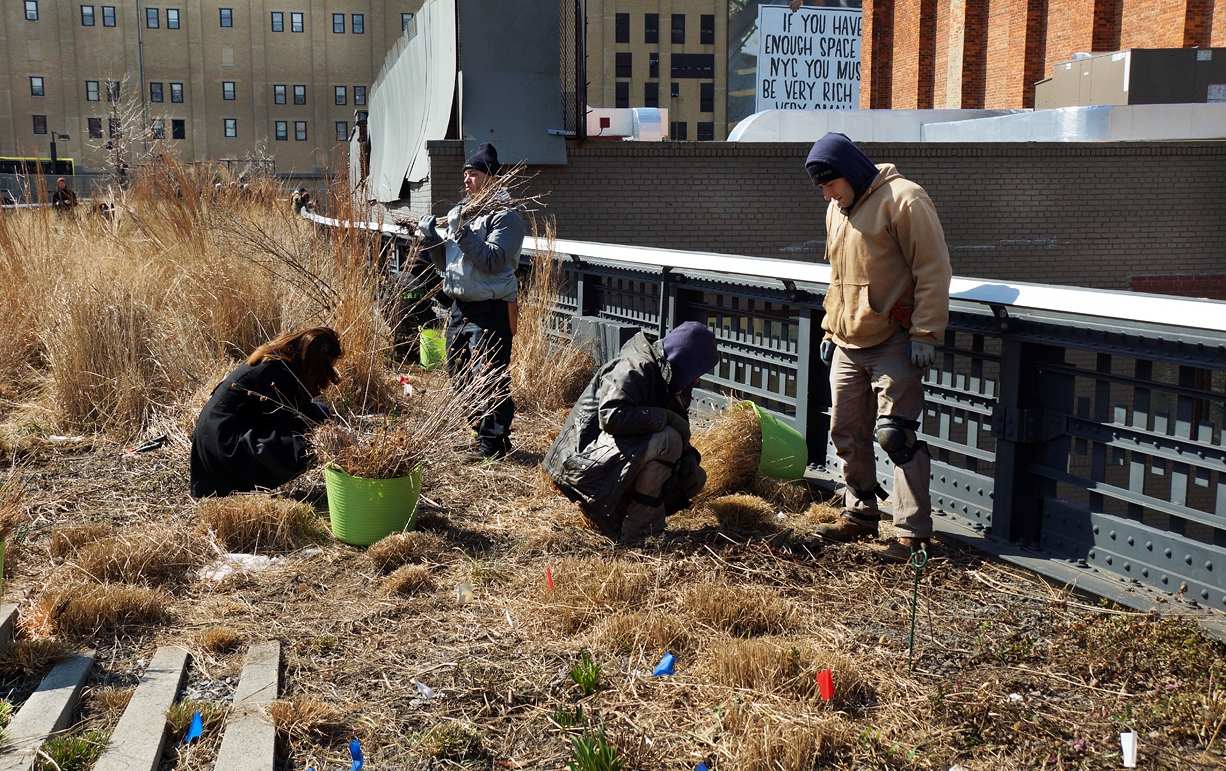
I expect to arrive in Paris with a few blisters and even some dirt beneath my fingernails. Every year, throughout the month of March, Friends of the High Line – the group that saved, built and now runs the park – enlists an army of volunteers who work elbow-to-elbow alongside the gardening staff to cut back around 100,000 plants in preparation for the new growing season. The volunteers approach the job like good postal service employees: in rain, snow, sleet, and hail (I once even worked through a thunderstorm) we clip, cut, rake, and haul, filling enormous canvas bags with cuttings that will be trucked to Staten Island where they will rest in peace in giant piles, before becoming mulch for another garden.
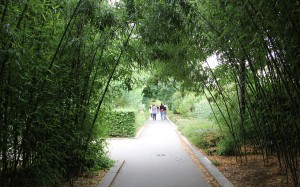
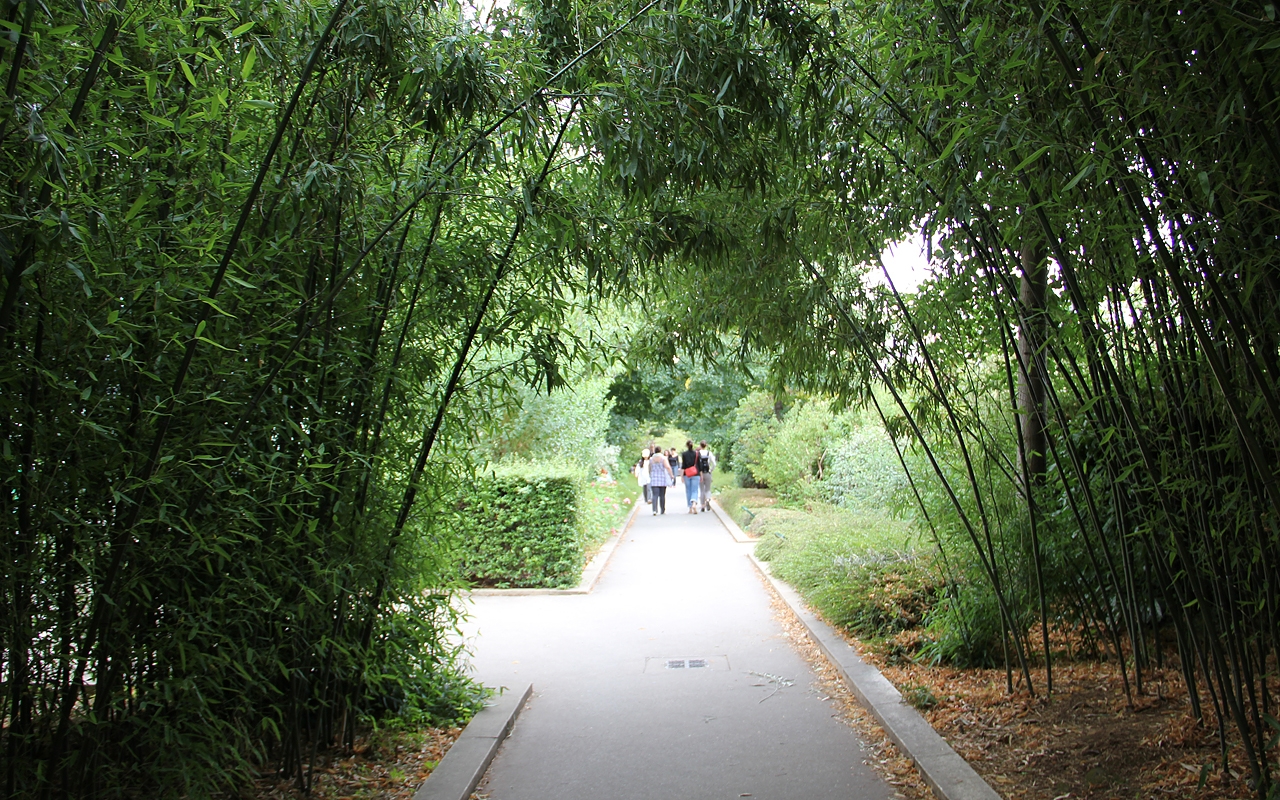
Bamboo Forest on the Promenade Plantee, photo by Lorraine Ferguson

Bamboo Forest on the Promenade Plantee, photo by Lorraine Ferguson

The founders of Friends of the High Line, Robert Hammond and Joshua David, knew the Promenade Plantée well, and greatly admired it. But they had a very different idea for the park they would create in New York. At its heart, the High Line was intended to recall the old railroad, horticulturally as well as architecturally. Not only is it filled with a great many plants that are natural pioneers along abandoned railroads and other industrial ruins, but the train tracks themselves got a starring role: they were embedded in the pedestrian pathway and garden beds, where they enunciate the gentle curves that engineers of the New York Central once line navigated back in the day when the railroad was king. Crushed stones were placed in garden beds to suggest railroad ballast, and throughout the park a visitor encounters old signal lights, loading docks, meat hooks, and other elements once integral to the railroad’s freight operation.

Paul Van Meter, a horticulturist, railroad historian, and co-founder of VIADUCTgreene in Philadelphia, notes that the stylish, highly ornamental garden types on the Promenade Plantée – its lush, bamboo forest, sheared hedges, arcades of roses, allé of trees – are by contrast “representative of French classicism, with a focus on decoration rather than function.” He also points out that the elevated garden in New York “signals an important change in American tastes which inclines toward the heavy use of perennials and wildflowers. It’s no coincidence that Robert Hammond grew up in San Antonio, Texas, not far from the Lady Bird Johnson Wildflower Center, whose 1999 grand opening in part led Americans to discover the inherent beauty of wildflowers and grasses so they would invite them into their gardens.”

As they came to “re-see the beauty of ‘native’ wildflowers,” Van Meter explains, “the post-World War II designers, like my great friend and mentor Wolfgang Oehme and more recently, of course, Piet Oudolf, gained (re)appreciation for a certain kind of controlled wildness. With that notice came availability of plants in previously unprecedented variety and sizes. And a revolution was on.”
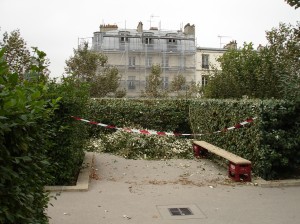
The "cutback" in Paris, photo by Melinda Zoehrer

The “cutback” in Paris, photo by Melinda Zoehrer

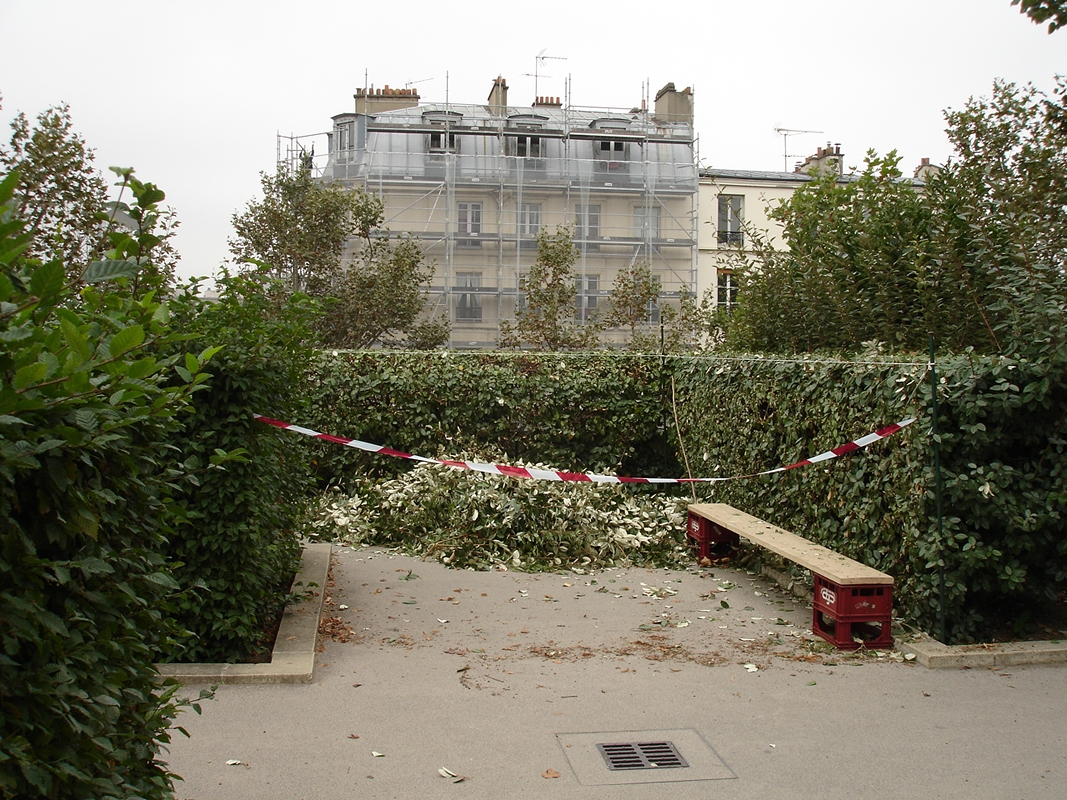
When my friend Melinda Zoehrer, a horticulturist at the University of Delaware, learned I was writing about the High Line’s Cutback in relation to the Promenade Plantée, she sent me a photo of the Parisian counterpart: a lovely — and very formal hedge — that had recently been pruned. She pointed out the string that cuts a perfect horizontal line from one end of the hedge to the other (click the photo to enlarge it). This image, alongside I photo I shot on the High Line last week (below), perfectly illustrates the difference between the classicism of the French garden and the wildness of the American one. These photographic glimpses offer a way of understanding a garden not by what grows there, but by how what grows is ultimately cut back or removed.

So: two gardens made from old railroads, each a reflection of its history and culture. For me, the great delight of these places is that they form one long, linear, observation deck, providing a stunning and original perch from which to view a much-loved city. In the 1850s, Frederick Law Olmsted and Calvert Vaux conceived their first creation, Central Park, as a grand escape from the city: a place where anyone, no matter how rich or poor, could rejoice in fresh air and beautiful scenery. Today, parks like the Promenade Plantée and the High Line do just the opposite: they console, inspire, and delight us by taking us deeper into the city, through a tunnel of roses (as in Paris) or a prairie of wild grasses (as in New York).

These gardens have had a powerfully transformative effect on the way we think about nature, urbanism, and culture. Just as the Promenade Plantée inspired the High Line, so is the High Line serving as a model for other innovative projects around the world. In London and on Manhattan’s Lower East Side planners contemplate underground parks that deploy 21st century lighting systems and could support agricultural projects like a mushroom farm. Philadelphians dream of a park in two sections that embraces the full range of an urban railroad’s historic pathway: an elevated garden bathed in natural light and a submerged series of graffiti-adorned tunnels. Work continues on the Beltline in Atlanta, a project that is so big – it runs for 22 miles – it can connect as many as 45 different communities.

Virtually every city in the world has a railroading past, and rather than bury or tear down that history, urban planners and community leaders are today seeking to identify the cultural heartbeat of their project, and bring it life as a great public space and grand connector.

The Cutback in New York and the rosebuds in Paris remind us of such renewal, and give cause for much celebration and joy.
The Cutback on the High Line
The Cutback on the High Line
Share
{ 0 comments }

Where have all the people gone?

Chelsea Grasslands

Chelsea Grasslands

Is this the same High Line that Jeremiah Moss recently decried as “Disney World on the Hudson?”

Where is everyone???

Hey, listen up: it’s drop-dead gorgeous up there this time of year, and right now– or on any drizzly day, for that matter — you can have the whole place to yourself.

I’ve never understood why so few people go out for a walk on a rainy afternoon. By 4:00 pm today it was just spitting, not nearly raining, and the newly trimmed plants — cut back by a small army of volunteers over the past few weeks — are bursting with the promise of spring.

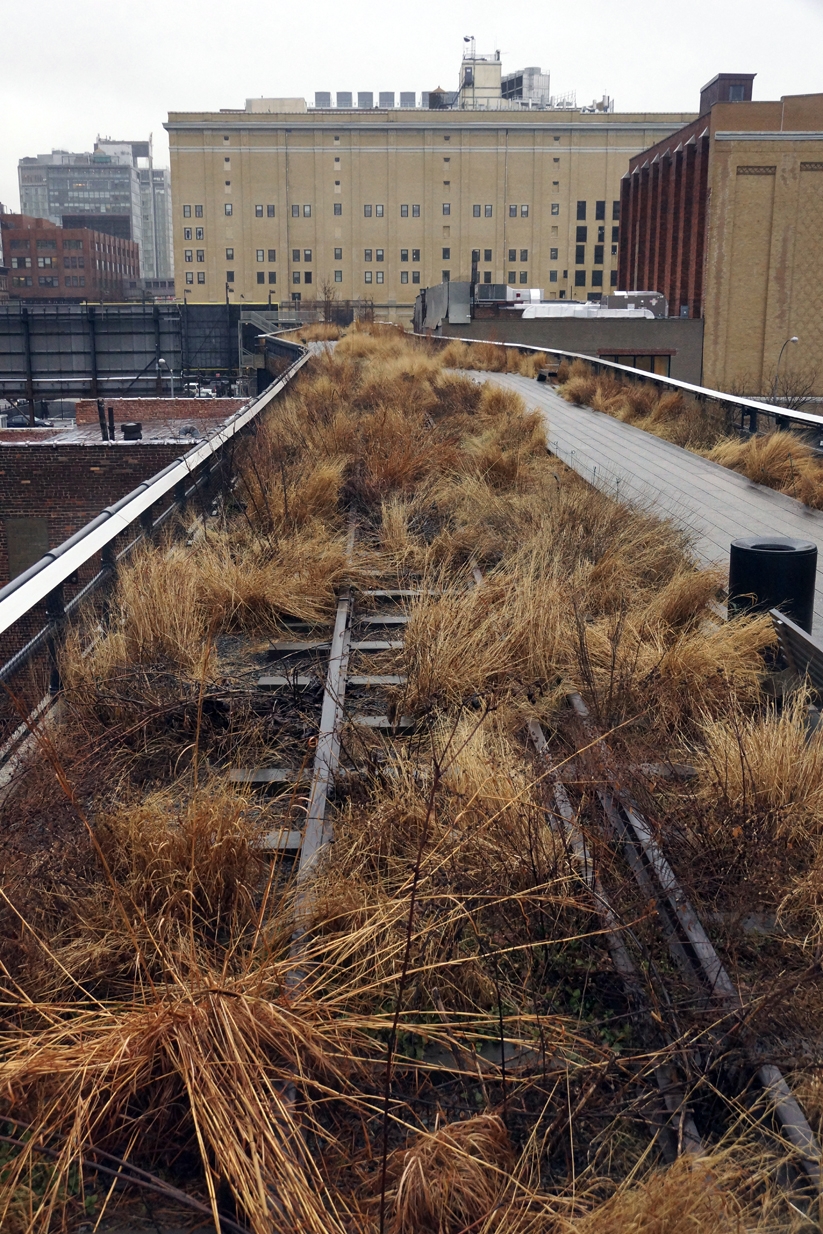
Without the long, dying grasses drooping and cascading over them, the railroad tracks are suddenly in full view; if you stand at 30th Street and look south you can see enough of them to actually get a sense of perspective projection distortion, the visual phenomenon that makes it seem as though the rails are converging. There’s not a tourist in sight to block your view. In the Chelsea Grassland, where the Cutback Army hasn’t yet massed, you can crinkle-shut your eyes and pretend you’re in a field in Nebraska.

I don’t want to hear any more complaints about how crowded the High Line is.

Perspective-projection-distortion

Wildflower Field

Share
{ 0 comments }

Pace David Naylor

I write with a heavy heart about a man I never met and knew for only six months. Word came this week that David Naylor, author, architectural historian, and expert on America’s grand picture palaces, died of a heart attack. He was just 57 years old.

Trash Backwards

David emailed me in August to ask for some publishing advice. He had read and admired a book I published at Random House about “the battle of the sexes” between Billie Jean King and Bobby Riggs, by the great sportswriter Selena Roberts. He was now determined to write about Title IX and the Women’s National Soccer Team, and held Selena’s book up as model. “I want to get something out fast,” he said. “Even though I am a Luddite of the first order, I just did an eBook in under six months.” That immediately endeared me to him. Later on he wrote: “Don’t know about yourself, but half the reason I write books is so I can learn about things previously uncharted (the other half is about the travel–certainly not about the huge heaping royalties, eh?).” He was an endlessly curious man, and also modest, funny, generous, and sweet. [continue reading…]

Share
{ 0 comments }

History in the Shadows

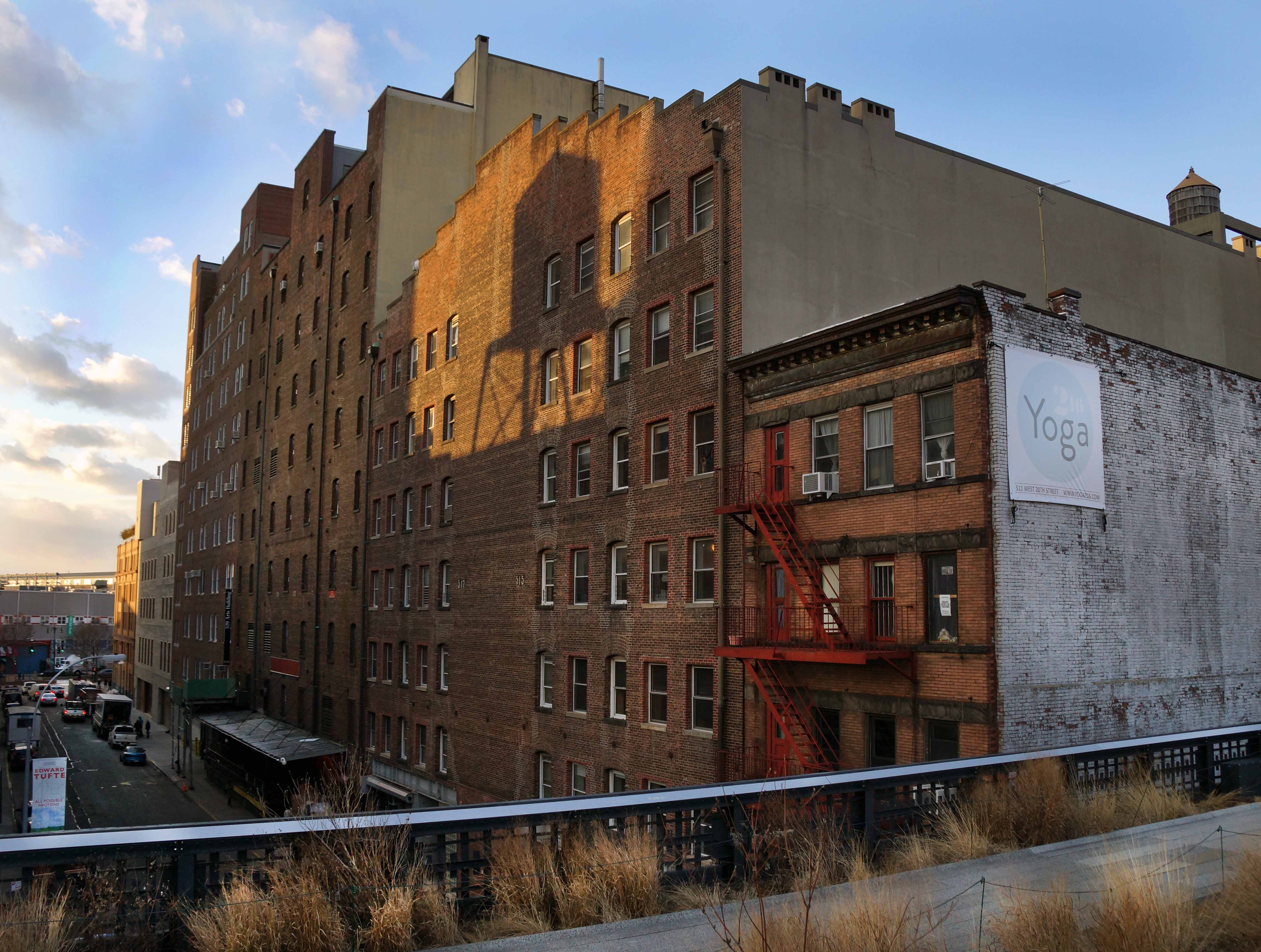
Former Baker & Williams Warehouse, with water tank

Former Baker & Williams Warehouse, with water tank

Who doesn’t love a New York City water tank? This iconic rooftop emblem is famous around the world, a standard bearer for our skyline. Recently — and from the High Line, my favorite observation deck — I’ve discovered a new way to appreciate these “silent sentries,” as the filmmaker Jane Martin calls them: in reflection.

Yesterday I took a stroll during the last half hour the park was open, and heading for the 20th Street stairs noticed this fine shadow on the old Baker & Williams warehouse. Spindly but clear, it’s a water tower that got caught in the setting sun, like a giant arachnid, and for a few minutes its skeletal outline was broadcast upon this old brick warehouse. This is a complex of buildings I’ve been photographing for years; it’s not particularly beautiful (although the water tower makes it so) but it has an unusual backstory that can be traced to the founding of New Amsterdam in the 17th century.

The first Dutch settlers on this island were entrepreneurs; they came here to do business. Their founding venture was to enable trade — primarily in beaver pelts — for the Dutch West India Company. Reports of the city’s earliest days include mention of warehouses “for storing furs and transferring them to ships.” The book Dutch New York describes the active commercial waterfront of 1664 as “rows of closely built brick, stepped, or spout-gabled townhouses and warehouses.”

Since the Industrial Revolution warehouses have been an essential part of West Chelsea, fueled by two key factors: the explosion of foreign and domestic trade on the Hudson River waterfront and passage of the Warehousing Act of 1846, which allowed private companies to warehouse goods and defer the payment of fees or taxes until products had been reshipped or picked up by the consignee. Defending that law twenty-five years later, the Storekeeper of the Port of New York noted that England’s similar arrangement “made her the mistress of the commerce of the world,” a position New Yorkers have vied for since the days of Henry Hudson.

The three brick buildings on 20th Street just west of the High Line once belonged to the Baker & Williams Company, which operated “bonded,” or duty-free, warehouses around the city as a direct benefit of the 1846 law. It’s also the site that helps explain how the Manhattan Project got its name. In the 1940s this set of buildings was used as a top-secret government facility for storing tons of processed uranium, which was being studied as part of the research effort that led to the production of the atom bomb. This was one of at least ten locations in Manhattan that participated in the atomic energy project; today it houses galleries and related businesses, and sits directly across the street from a house of worship, the Kingdom Hall of Jehovah’s Witnesses, and next door to the headquarters of Friends of the High Line. (For more, read William Broad’s fascinating article in the New York Times, “Why They Called it the Manhattan Project”)

The water tower that’s projected onto the warehouse also hails from a distant lineage and embodies a craft much more ancient than our metropolis. The great CBS newsman Charles Kuralt looked up at these structures and saw “the hoops and staves of the Middle Ages.” Everywhere in New York, it seems, are the shadows of history.

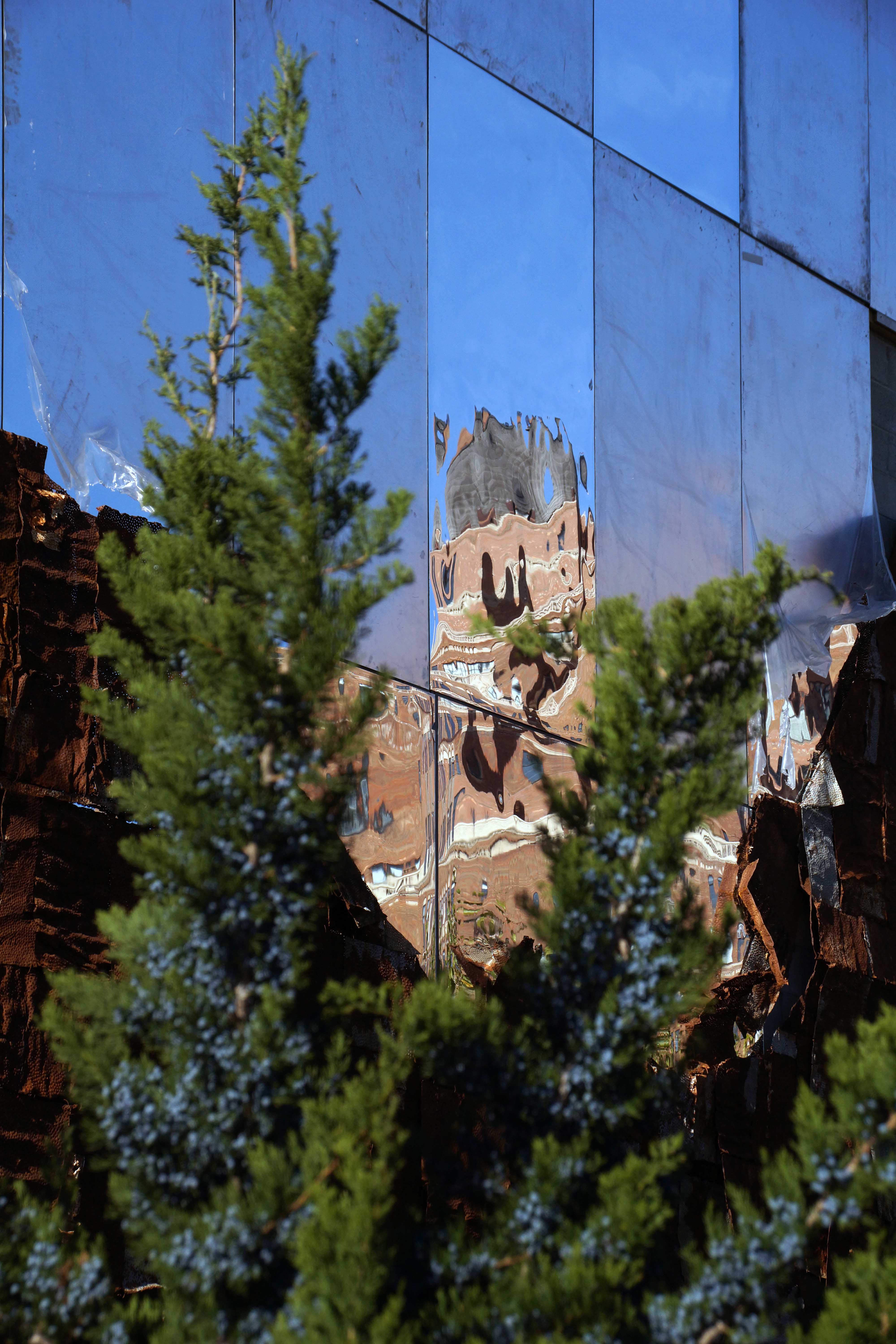
Below is another water tank in reflection, but this time from a thoroughly modern installation: the El Anatsui sculpture “Broken Bridge II,” that’s mounted on a building facade at 22nd Street. The tank it reveals is one of my favorites in the city; look a bit north and to the east and you’ll see it on  the roof of the London Terrace Apartments on 23rd Street. That building also has a great backstory, but I’ll leave it for another day. (Or, you can read about it in my book, available for sale on the official website of Friends of the High Line!)

El Anatsui, "Broken Bridge II" + Water Tower

El Anatsui, “Broken Bridge II” + Water Tower

Share
{ 0 comments }