≡ Menu

Pace, Pete Seeger

DSC07413

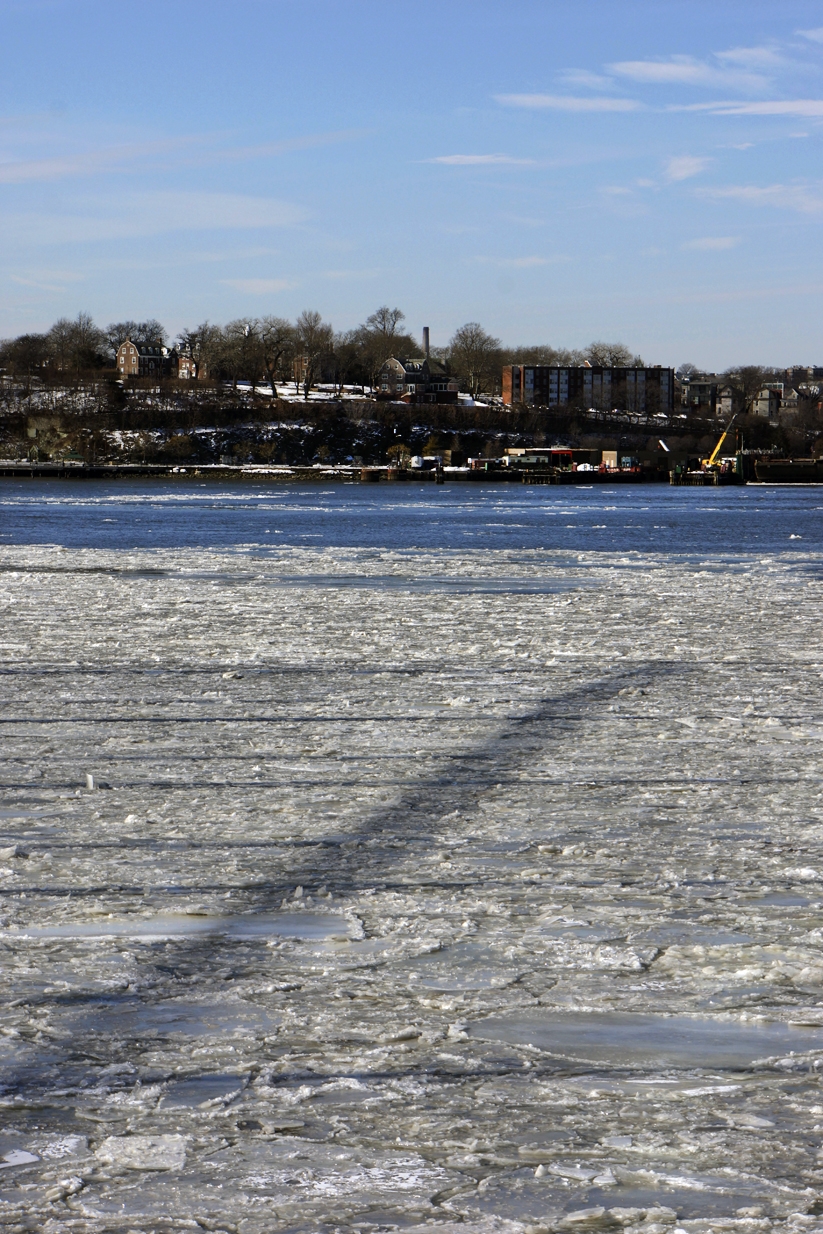
Even on a day as sad as this, the Hudson River — your river, my river — rolls on.

We are all forever grateful.

It avails not, time nor place—distance avails not,
I am with you, you men and women of a generation, or ever so many generations
    hence,
Just as you feel when you look on the river and sky, so I felt,
Just as any of you is one of a living crowd, I was one of a crowd,
Just as you are refresh’d by the gladness of the river and the bright flow, I was
    refresh’d,
Just as you stand and lean on the rail, yet hurry with the swift current, I stood
    yet was hurried,
Just as you look on the numberless masts of ships and the thick-stemm’d pipes
    of steamboats, I look’d.

— Walt Whitman, “Crossing Brooklyn Ferry”

Share
{ 0 comments }

Frozen Park in the Sky

DSC07254

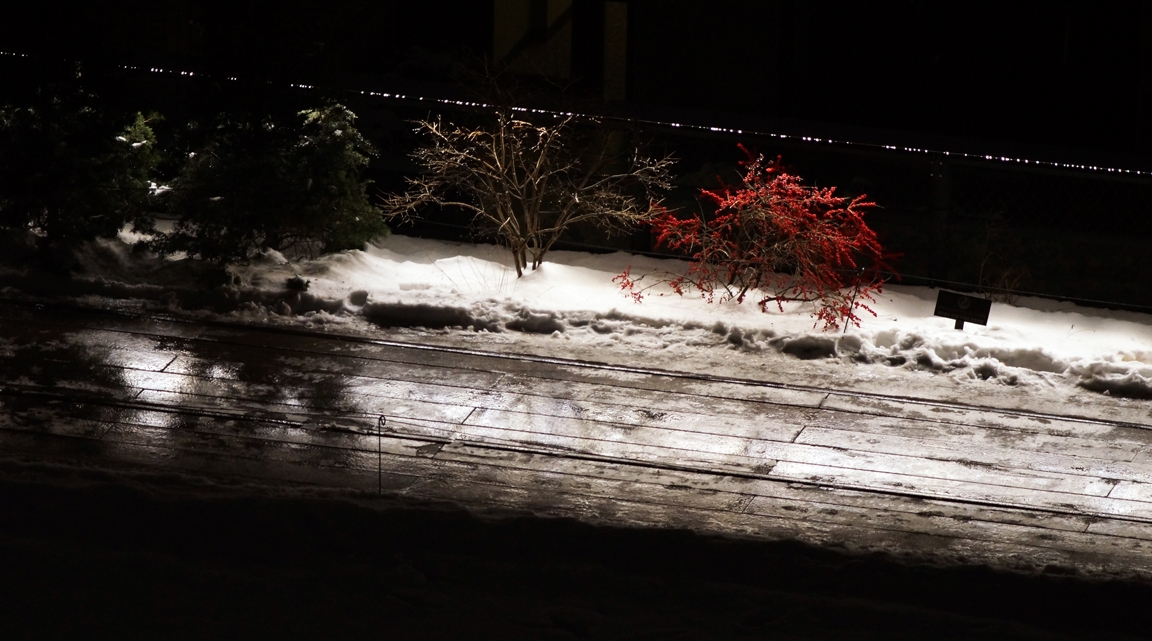
This photo doesn’t show how bone-chillingly cold it was on the High Line today. It doesn’t show the million-mile-per-hour wind or the stinging sensation of thousands of snowflakes dive-bombing your eyeballs. There were just a few hardy souls in the park today, but they were stalwarts for sure.

That woman in the photo took off her gloves after she passed underneath the Standard Hotel to take a photograph of Pier 54. Her fingers are probably still numb, but I bet the shot was worth it.

Hey, if you’re one of those whingers who’s always complaining about how crowded the High Line is, get off your duff! A small army of volunteers will be assembling early tomorrow morning to clear the snow, and it’ll be jaw-droppingly beautiful up there by the time you arrive. And bone-chillingly cold.

Bring your camera!

Share
{ 0 comments }

Join a City Parks Alliance Project as Data Collector

The project manager for City Parks Alliance, a terrific group that studies and advocates for urban parks, contacted me about an interesting opportunity — and a paid position — to work with CPA and the RAND Corporation as part of an important study about the connection between urban parks and public health. They’re looking for data analysts, and the job description is below. Details are below; note that the deadline for applying is February 17, 2014.

Data Collector for National Study of Neighborhood Parks

PROJECT OVERVIEW: 

The City Parks Alliance (CPA) in conjunction with the RAND Corporation is conducting a four-­‐year study to determine the correlation between urban parks management and policies, and physical activity. This will be the first national observational, longitudinal study of neighborhood parks to observe park use in order to shape public policy on health promotion. The primary aims of the study are to identify and disseminate best practices.

JOB DESCRIPTION:

CPA seeks 4 temporary, part-­‐time data collectors to observe and record physical activity data in 20 city parks in New York City, NY. Data collection will occur in parks during the Spring 2014 for 3 non-­‐ contiguous hours/day for 4 days per park. Data collectors must be available in the morning, afternoon, and early evening during all days of the week (including Saturdays and Sundays) to conduct observations. Primary responsibilities will be to observe and record park activity as well as contextual conditions, interview park staff, and entering information into a provided handheld computer tablet.

REQUIREMENTS:

•   Must be available to participate in webinar training in February 20th.

•   Must be available to attend an all expense-­‐paid training session March 13th-­‐15th in Dallas, TX.

•   Must have access to wireless Internet (e.g. at home, coffee shop)

•   Must be familiar with Google Maps.

•   Must have a flexible schedule to accommodate the data collection schedule.

•   Must provide own reliable transportation to park locations.

•   Must enjoy and be physically able to work outdoors, including walking and standing for long periods of time.

•   Must be extremely punctual and highly attentive to details.


ADDITIONAL QUALIFICATIONS:

•   Team oriented and comfortable working in pairs or in small groups.

•   Comfortable engaging with the public as a part of the data collection team.

•   Experience collecting field research data.

COMPENSATION:

•   This is a paid position and more details will be provided upon hiring.

HOW TO APPLY:

Please send resume and cover letter describing relevant work experience to:

nsnp@cityparksalliance.org.

DEADLINE:  February 17, 2014 


Share
{ 0 comments }

More Reflections on the High Line

DSC07083

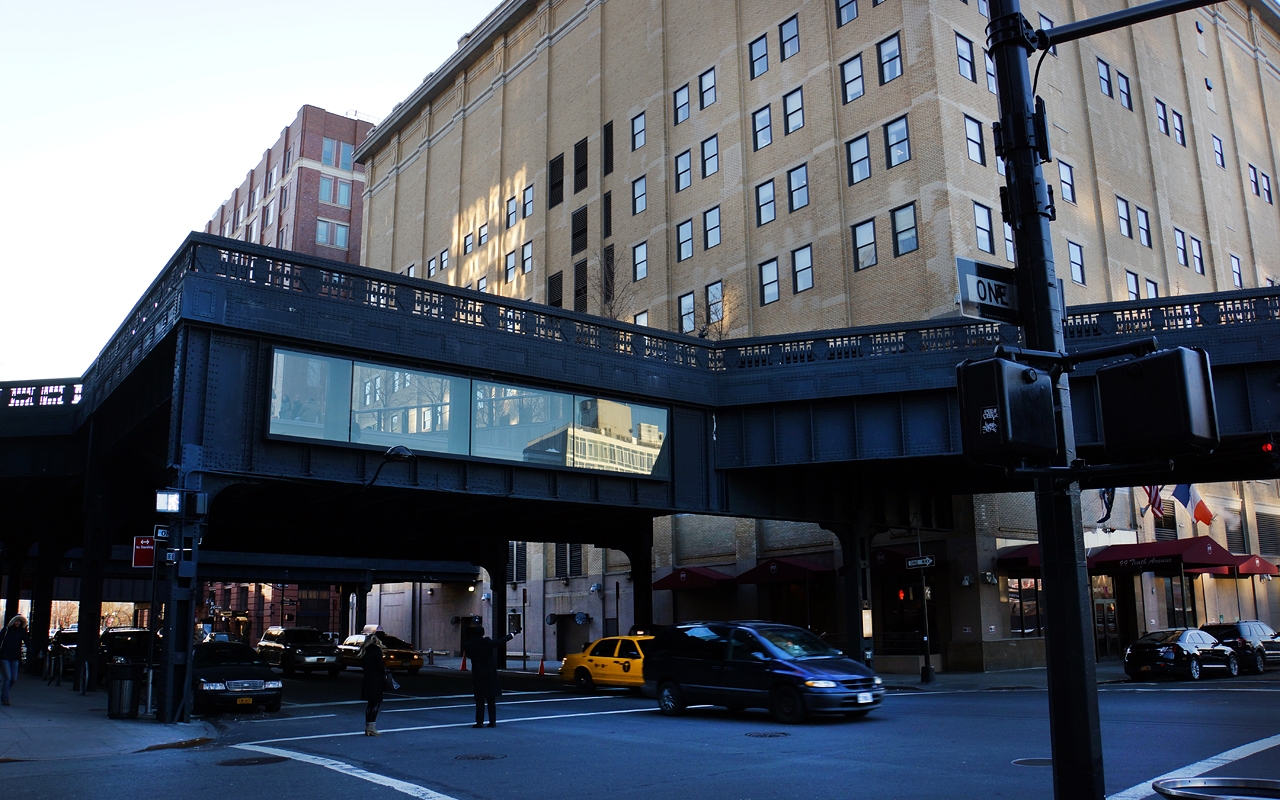
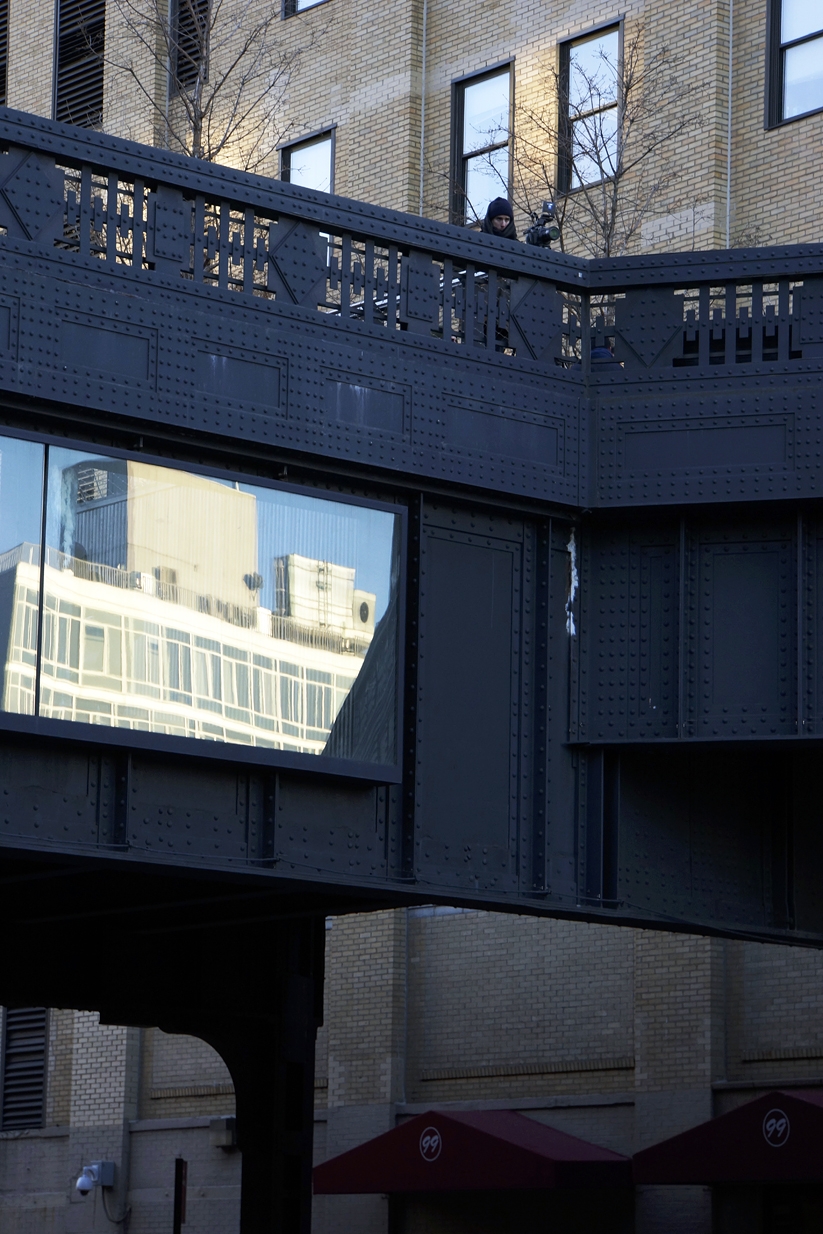
I’ve stopped marveling at the fact that every time I visit the High Line I notice something new; it’s just the reality of this place, and one of its many charms.  But here’s a new view that surprised me yesterday, something I never noticed before: the building across the street from the Tenth Avenue Square, on 17th street, is reflected in the giant window there. This is a street view; it’s a tricky, unpredictable intersection that requires concentration not on the High Line but on the traffic (cars, skateboarders, cyclists, trucks, doormen hailing cabs, scooters, jaywalking pedestrians, dogs, baby carriages; but no more freight trains).  I only noticed it because I was looking up at the guy in the balaclava who was taking a stop-time series of images of the new High Line billboard (click the image to see him more closely).

DSC07086

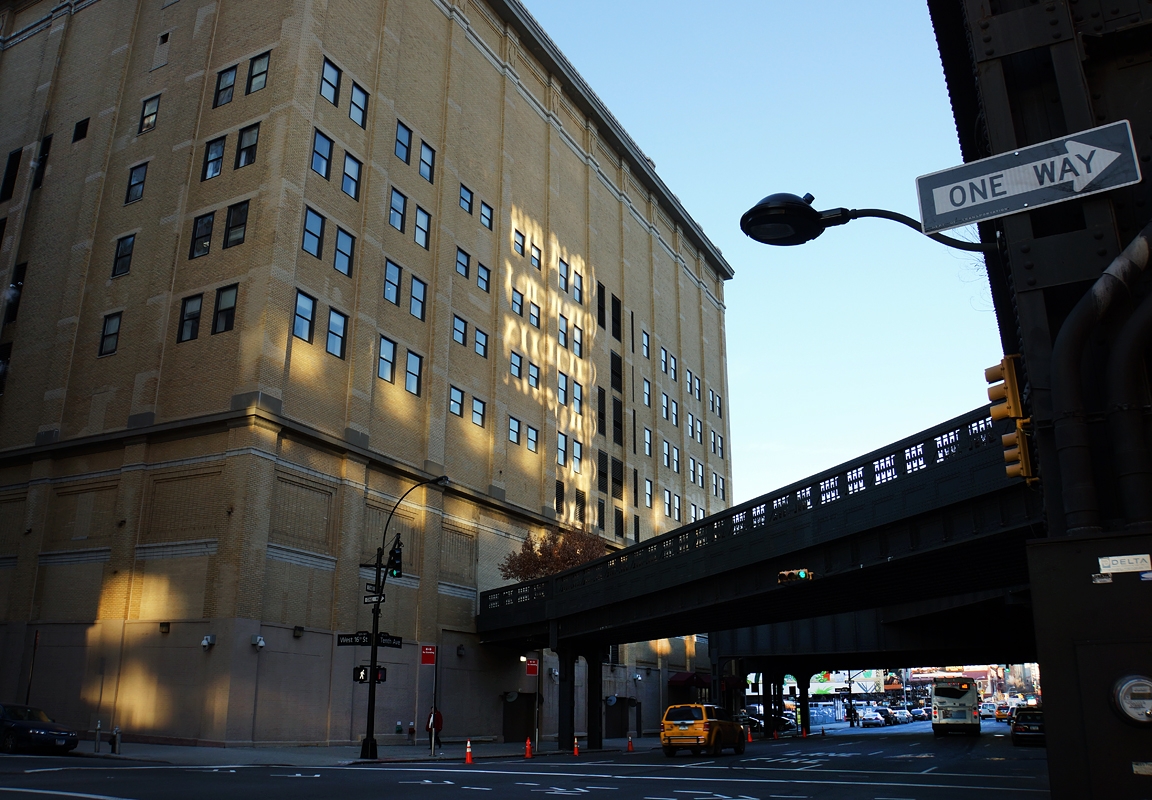
In the late afternoon, many buildings around the High Line — and particularly the DEA headquarters, shown above and below — reflect a lovely diamond pattern from the setting sun. Nowadays the glassy buildings like the IAC Headquarters and the Jean Nouvel apartment building tend to get the most dramatic reflections, but the old warehouses uniquely display this unusual light patterning.

Just another example of how the park and its surroundings continually engage with each other.

DSC07072

Share
{ 0 comments }

The Slow Park

DSC02311

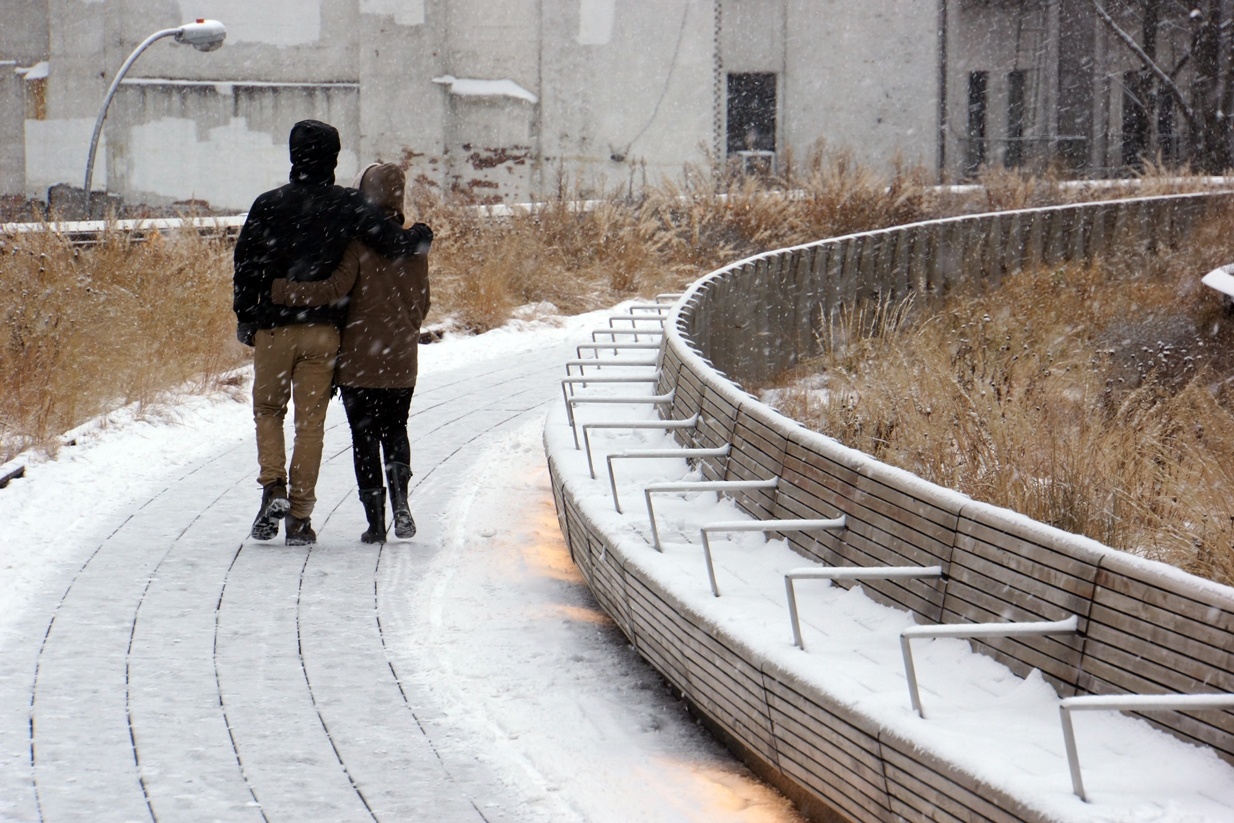
The High Line once again has the “disappearing railroad blues,” having closed to visitors earlier this morning because a sheet of ice descended on New York City in the wake of last week’s snow storm.

The High Line is our Slow Park. For visitors, it exerts an almost gravitational force, slowing their pace and opening up vistas for observation and enjoyment. You often see people walking hand-in-hand, an old-fashioned activity that’s difficult in the narrow, crowded, fast-moving streets below.

It’s also the Slow Park in another sense: it takes a long time to clear it of snow and ice. Friends of the High Line designed and built the park with a commitment to ideas about sustainability and greenness, and that sensibility permeates virtually every aspect of the place, from the gardens to the food program. It also means they use no chemicals to speed the process of snow removal. Everything is cleared the old-fashioned way, by hand or just by time: the number of hours it takes for the air to warm and the ice to melt.

The streets of New York City are an appalling mess today, and it’s not just the snow and the ice: it’s the dismal chemical stew that results from endless amounts of de-icing products. Why are we so addicted to these awful chemicals and the noisy, fume-spewing machines that building staffs use in concert with them, to rapidly clear the snow and ice? Because we are in a hurry to have our streets back, to move quickly again, without impediment. When I was a kid, back in the olden days, we shoveled everything — snow, ice and slush — by hand, through the entire cycle of a snowstorm. When we were done we tossed a bit of old-fashioned rock salt onto the sidewalk and resolved to walk slowly for a few days, until things returned to normal. Today, in our rapacious quest to make up for lost time and move ever faster, we consign our city streets — and, down the line, our rivers and harbor — to a slurry of black, poisonous goo.

So when the High Line reopens — maybe tomorrow, maybe the next day — take a slow walk in a miraculous place, and tip your hat (if it’s not too cold) to the army of gardeners, staff, and volunteers who, along with Father Time, will get the park open just as soon as possible.

LaFarge_Snow+radial-bench

Share
{ 0 comments }

Merry Christmas, Rail Fans!

I got an early Christmas present today from Paul vanMeter, rail fan extraordinaire and co-founder of Philadelphia’s VIADUCTgreene project: an introduction to the work of Howard Fogg, a Brooklyn-born artist and the Norman Rockwell of America’s railroad. He was also a fighter pilot during World War II, and over the course of a long career made hundreds of paintings of trains and locomotives that appeared on magazine covers, jigsaws, playing cards, calendars, and more. Below is Fogg’s 1957 painting “Christmas Mail, 1907,” from the marvelous postcard collection of Mark DiVecchio. According to vanMeter, the fireman who’s leaning out from his cab waving to the station agent is George Higgins of McKees Rocks, who later was killed in an accident. The elegant fellow on the platform holding his Christmas packages is Col. James M. Schoonmaker, one of the founders of the P&LE Railroad back in 1879.

There are more than 60 images on DiVecchio’s site, and I can’t think of a better way to enjoy your eggnog than scrolling through the entire collection. Friends in the Hudson Valley will enjoy paintings of the New York Central Railroad steaming past Bear Mountain and other favorite sites.

"Christmas Mail, 1907" by Howard Fogg, from the collection of Mark DiVecchio

“Christmas Mail, 1907” by Howard Fogg, from the collection of Mark DiVecchio

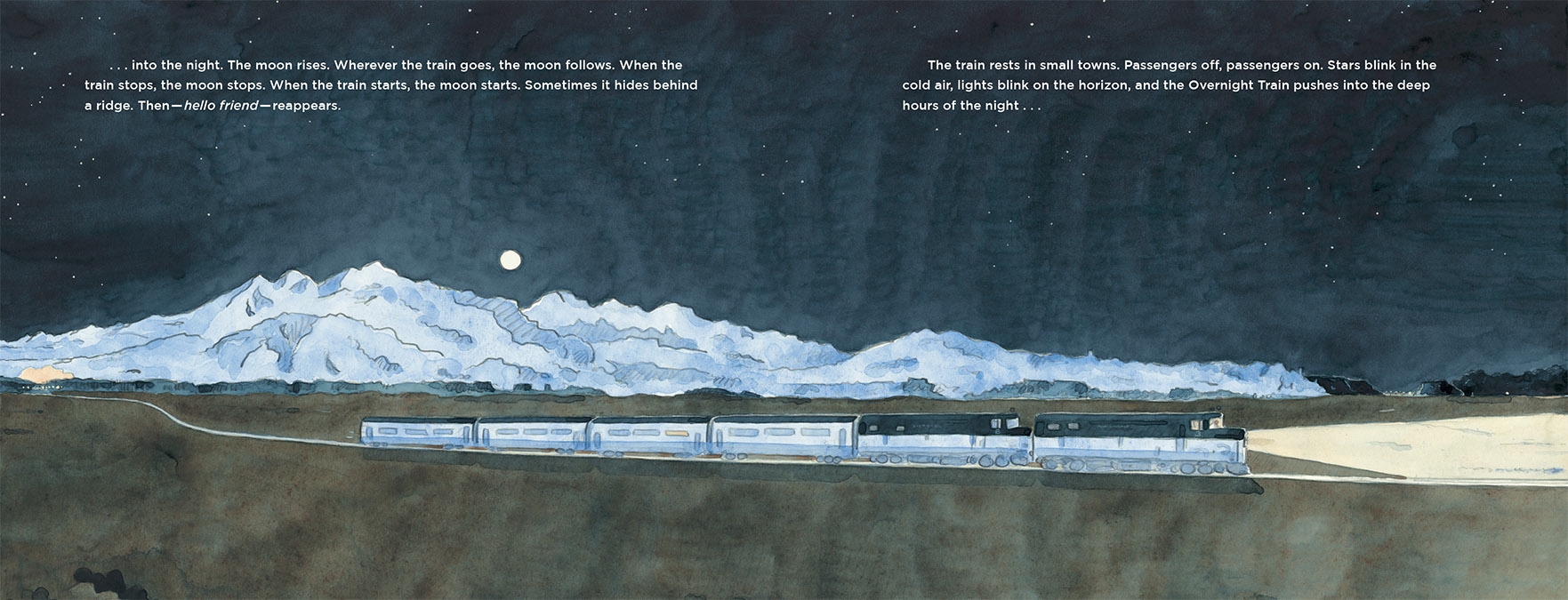
For a more contemporary, romantic elegy to America’s railroad I have a short pleasure to recommend: Elisha Cooper’s marvelous new illustrated children’s book Train. Cooper follows a series of different trains as they criss-cross the country: a commuter train on its regional run; a passenger train rolling along past houses, farms and fields; a freight train that makes its way across the Great Plains, going “So slow it’s hard to tell it’s moving,” and an overnight train that carries two young sisters who are happily bunked together in the sleeping car.  The book closes with a high speed train that races across the pages into a City of the Future. Along the way we meet the characters, human and animal, that inhabit the great rail lines of America. Cooper kindly provided my favorite image of the train in moonlight (click the image to enlarge & read the text):

The Night Train, from Elisha Cooper's book Train

The Night Train, from Elisha Cooper’s book Train

But to truly immerse yourself in the railroading zeitgeist you need a soundtrack, and there’s no better song than Steve Goodman’s City of New Orleans, sung by Woody Guthrie, Pete Seeger, and friends. The clip below begins with Woody telling the great story of how Goodman pestered him to listen to the song in a Chicago bar, with the aid of a nice cold beer. The rest is history.

And for something more festively seasonal, here’s one of Paul vanMeter’s favorites. Listen for a bit, and turn up your speakers for the arrival of Tran 42, “The Pelican,” at Rural Retreat, VA, heading east on Christmas Eve from New Orleans to Washington, DC the same year that Fogg painted “Christmas Mail.” Enjoy, and merry Christmas.


Share
{ 0 comments }