by Annik LaFarge
on December 19, 2013
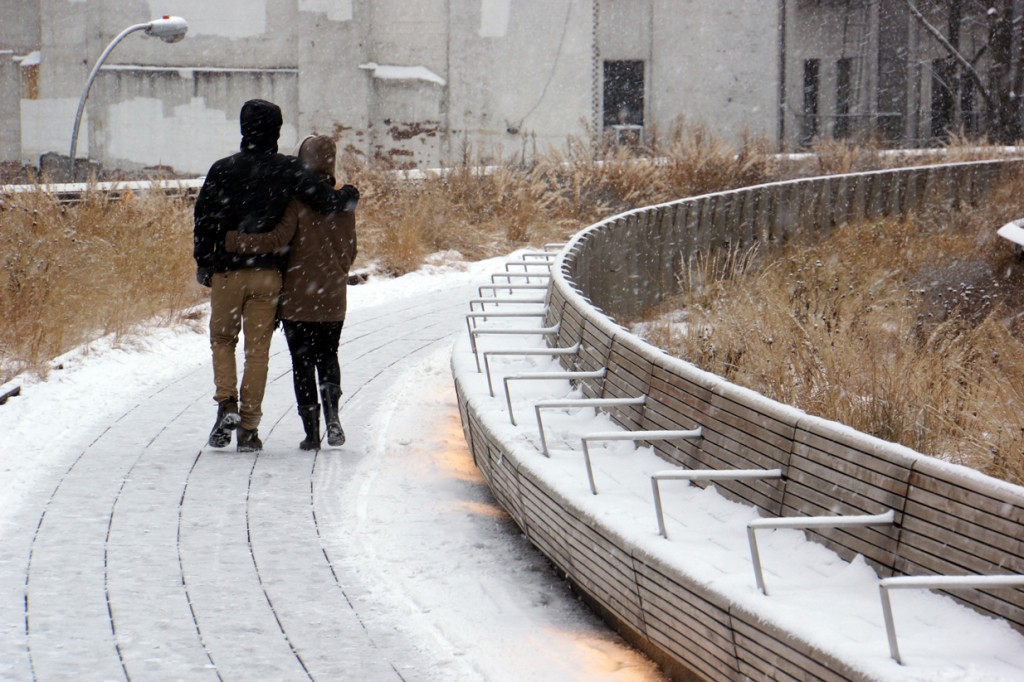
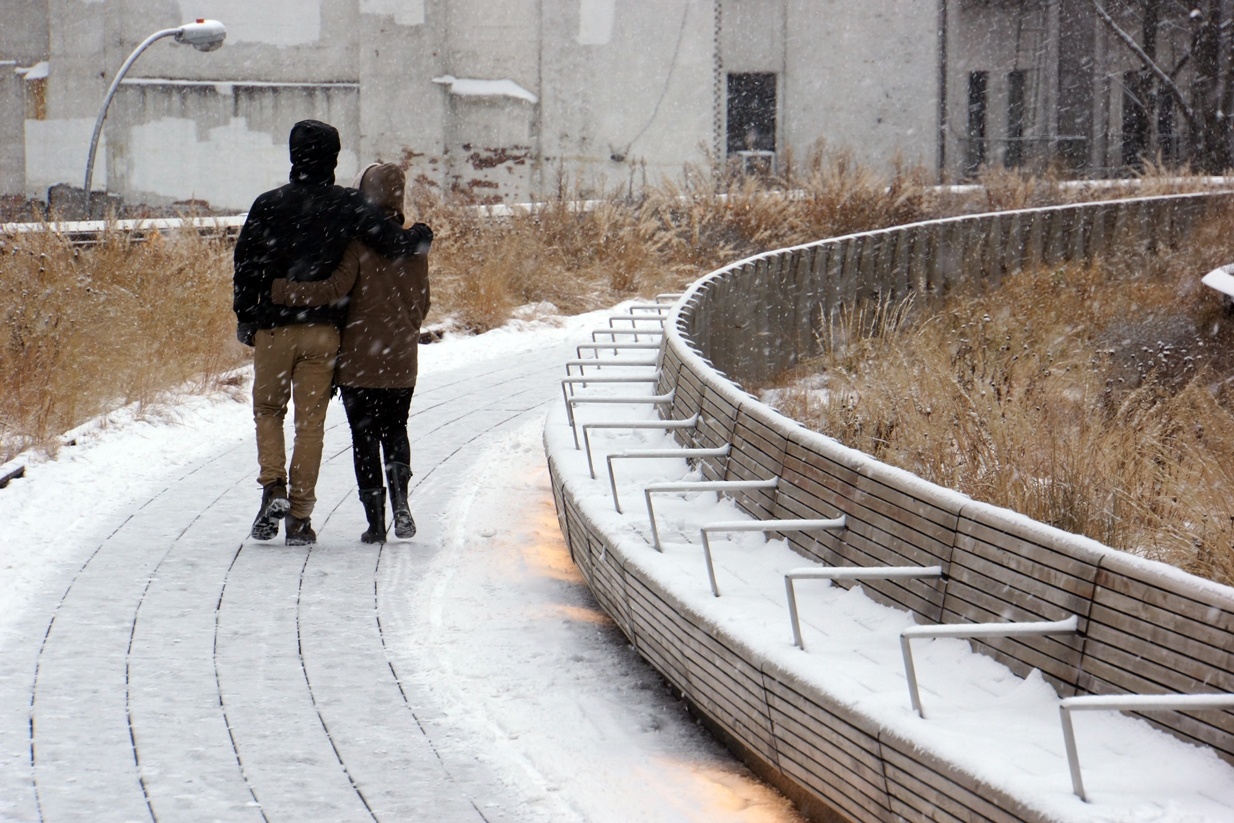
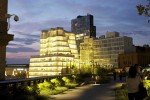
The “radial bench” is one of my favorite features on the High Line. A long — it extends for a full city block, between 29th – 30th Streets — sinuous bench, it always reminds me of the law of nature pronounced by the great urban writer and scholar of open spaces William “Holly” Whyte: “People tend to sit where there are places to sit.” The designers of the High Line took Whyte’s commandment — make the place sittable — to heart, and throughout the park visitors find what he would call “an amiable miscellany” of places to perch: “peel-up” benches, stadium seats, deck-style lounges, a lawn, French bistro chairs. In section three at the Rail Yards, currently under construction, there are various new iterations of the peel-up bench to look forward to, including a see-saw.
This week’s snowstorm was an event made for promenading, not sitting, but regular visitors will rejoice in the fact that the construction shed that covered the entire bench for a year has finally come down. Now you can sit with your coffee, your newspaper or your sweetheart (or all three!) and enjoy the light and views that make this such a great spot.
{ }
by Annik LaFarge
on December 15, 2013
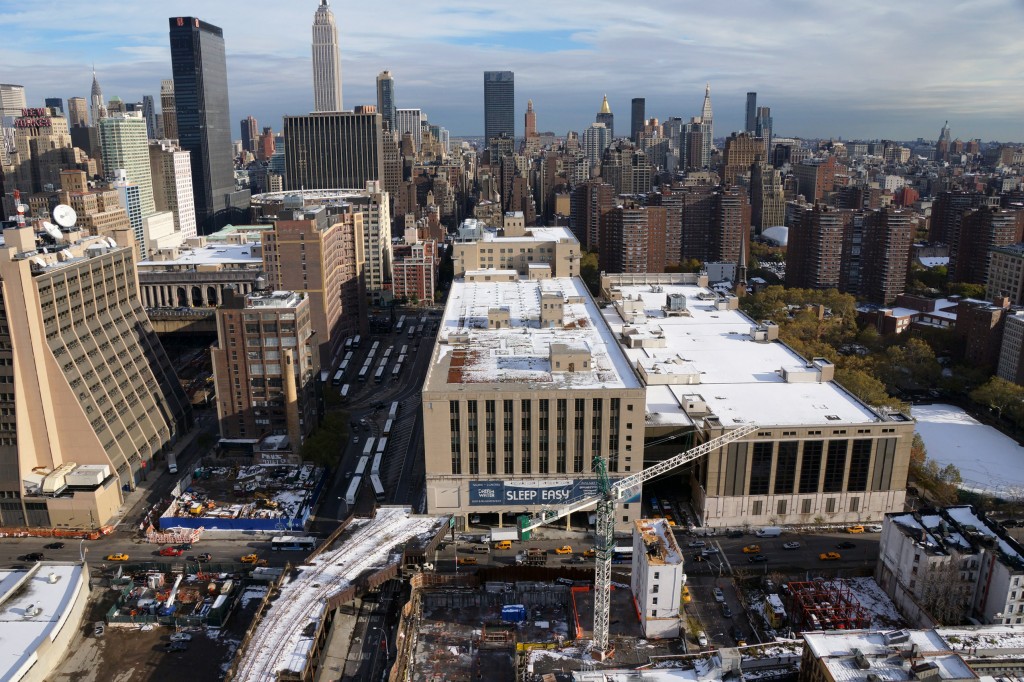
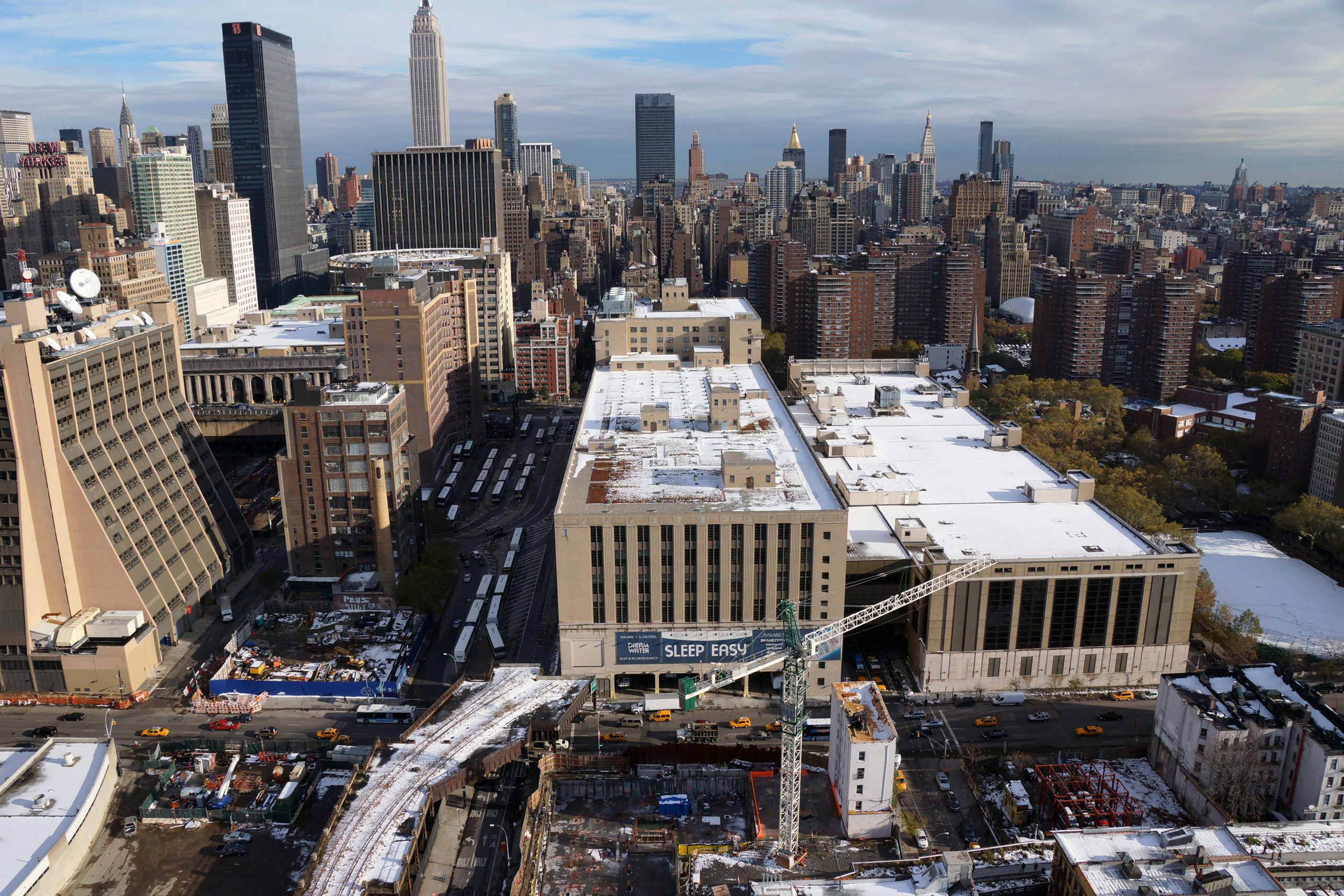
Morgan General Mail Facility, from the Ohm apartment building, November 2012
This third piece on High Line architecture focuses on the Morgan General Mail Facility on Tenth Avenue between 28th and 30th Streets. Of the buildings I’ve covered so far in this series (the Westyard Distribution Center next door and the former R.C. Williams warehouse a few blocks south) the Morgan has the oldest and richest back-story. Spanning three centuries, from the 1860s to the second decade of the 21st century, this massive structure and the land it sits on offer up many threads in the history and culture of New York City.
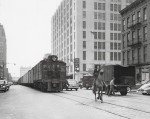
The photo above, taken from the roof of the Ohm apartment building on Eleventh Avenue, reveals much of modern story. Completed in 1933, the Morgan was built with funds and labor from the New Deal’s WPA program. It was designed to connect with the High Line and create a seamless path for the more than 8,000 mail trains that crossed the country each year on an intricate network of rail lines before ultimately proceeding south alongside the Hudson River on tracks of the New York Central Railroad into Manhattan. The last 30 feet or so of their journey took them across Tenth Avenue on a specially constructed spur that led directly into the postal facility. My photo was taken hours after the first snowfall of 2012, and you can easily see the rails on the abandoned spur and the bricked-up siding where the trains once entered the building. The photo below is from the West Side Improvement Brochure and shows the Morgan in the year it was built. Look closely and you can see a locomotive motoring through the siding (as always, click a photo to enlarge it). [continue reading…]
{ }
by Annik LaFarge
on December 6, 2013
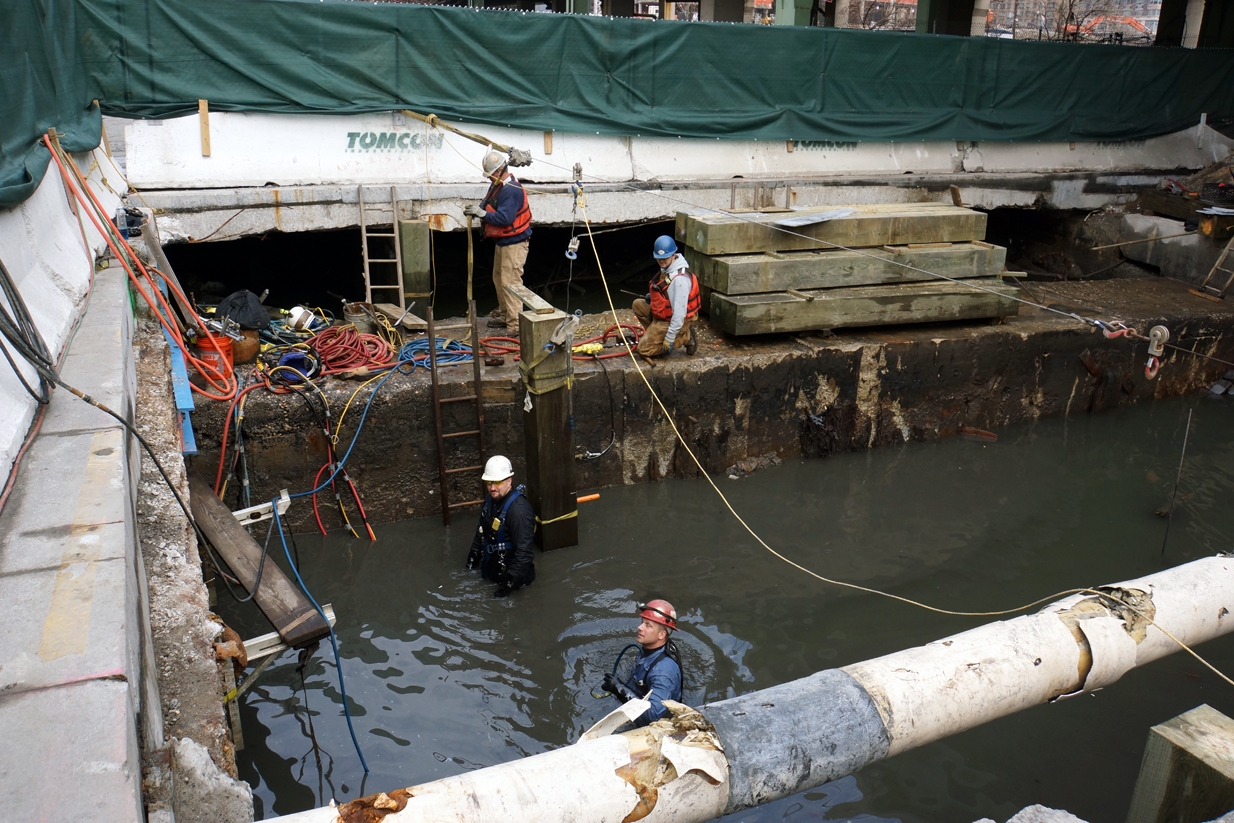
These guys are swimming on land. Or, more precisely, on landfill.
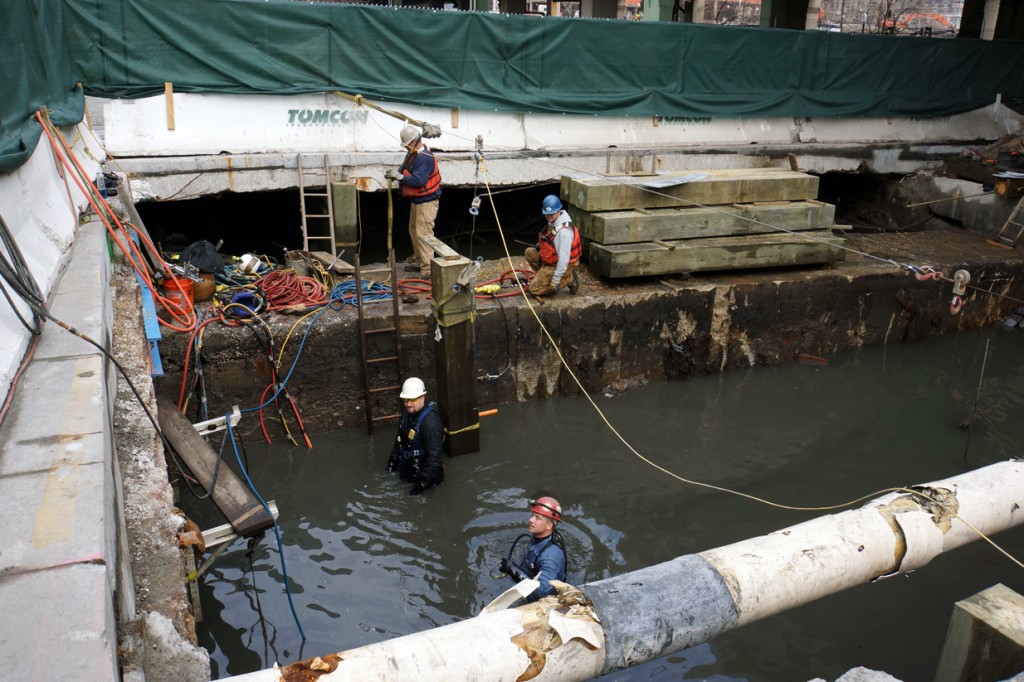
Men working in the Hudson River/59th Street
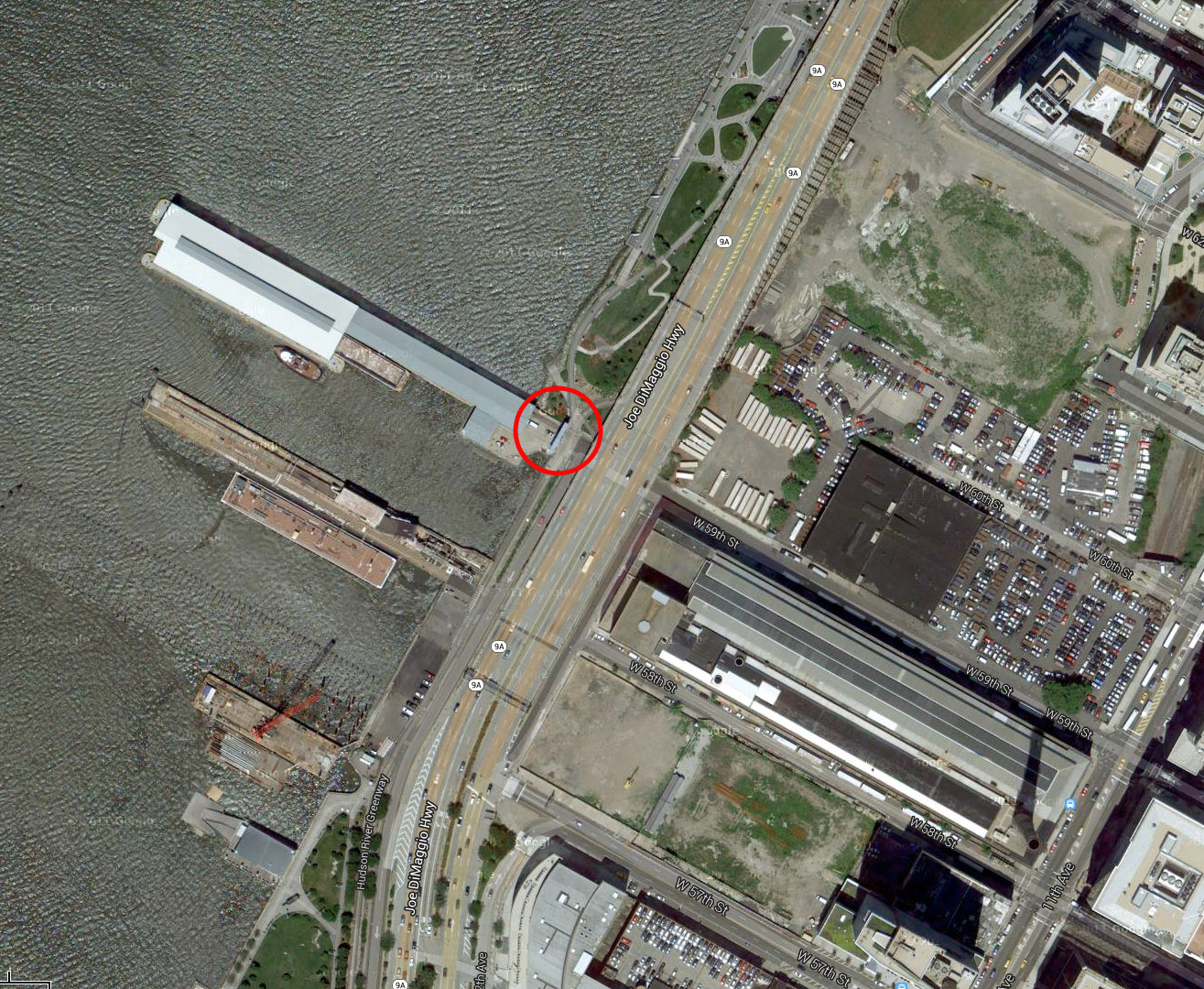
And, on an unseasonably warm December day, they seemed to be enjoying themselves as they went about their business repairing giant piles that help support a roadway that’s shared (and not always so nicely) by joggers, bikers, bladers, pedestrians, baby strollers, cars and giant garbage trucks on West 59th Street. Let me illustrate this spot a bit more clearly:
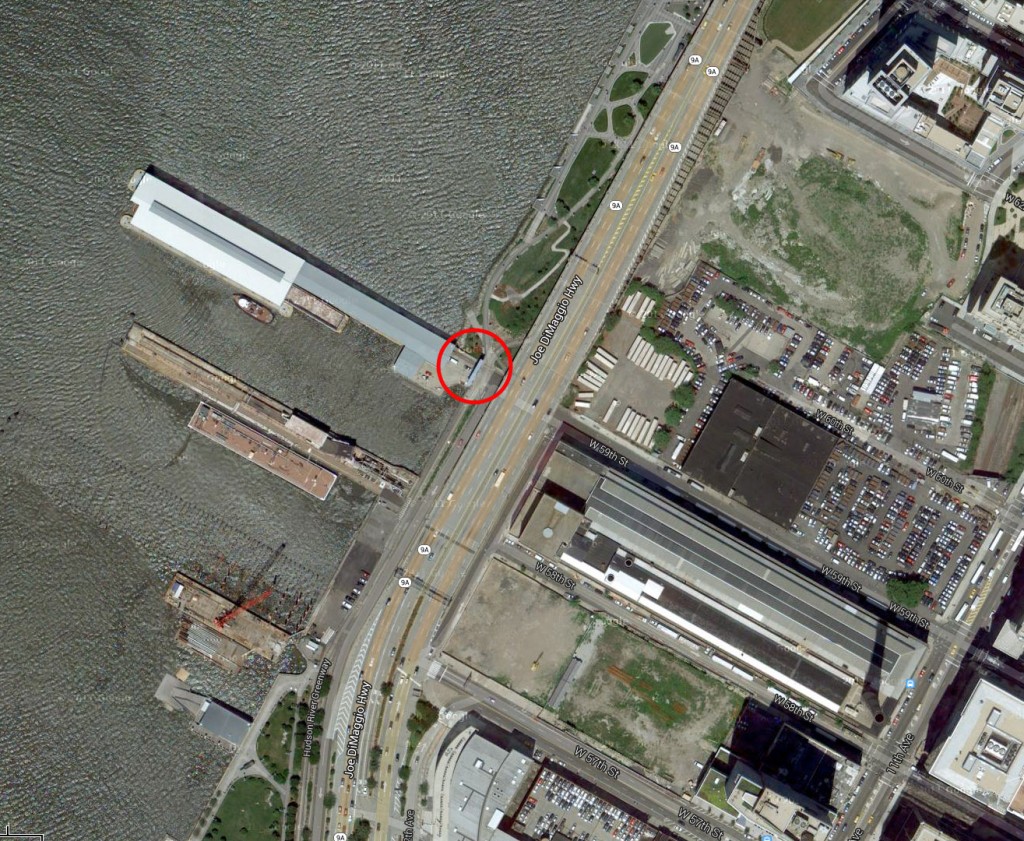
West 59th Street, courtesy Google Maps
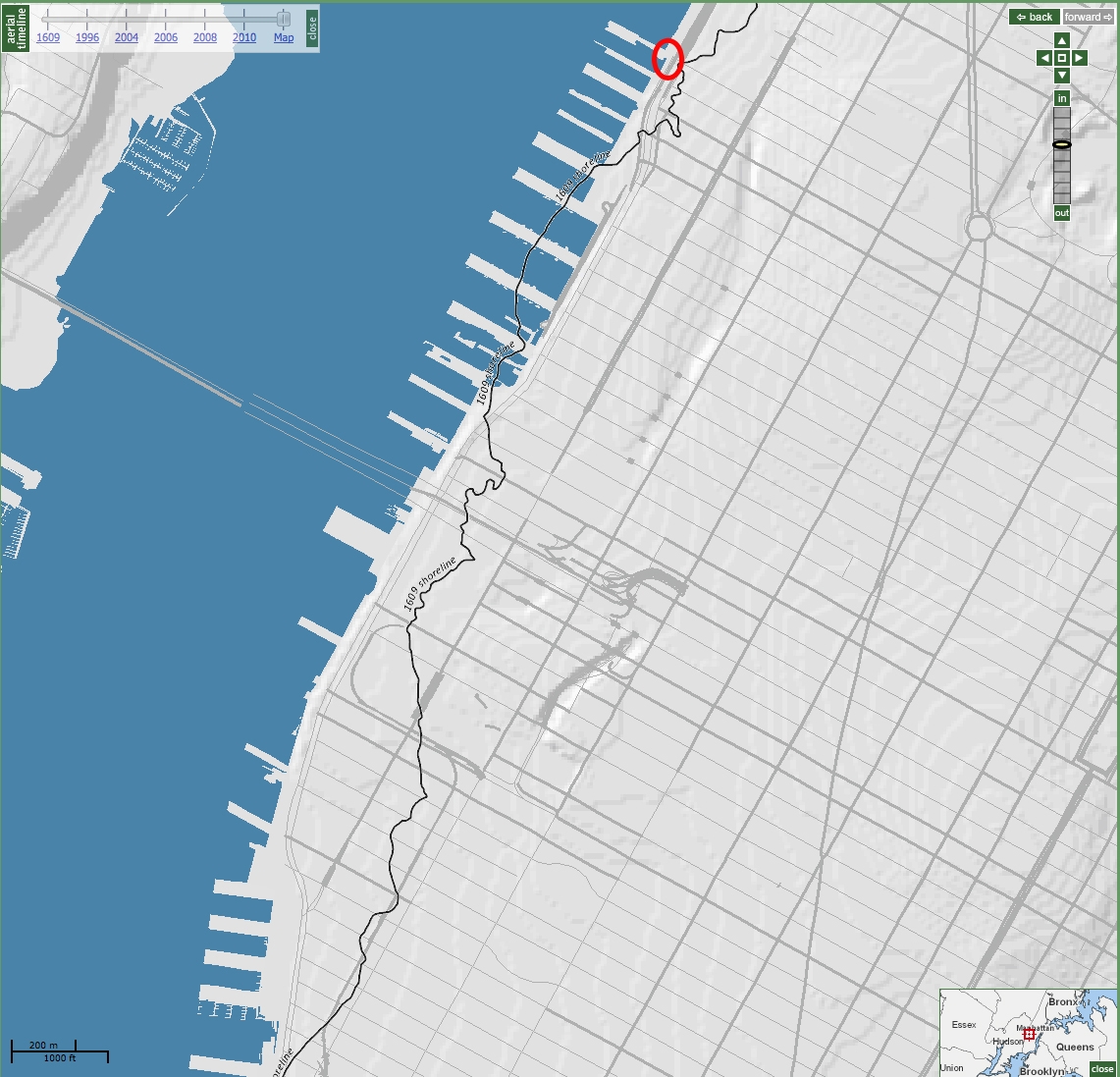
I was riding my bike downtown when I stopped to see what was going on. After being told about the pile repair, I remarked that we humans are re-asserting our claim to this patch of “land” once occupied by the Hudson River. One of the workers replied that the Hudson River was actually the one doing the reclaiming. It was, after all, part of its watery domain before we came along and started filling in the edge of our prosperous island. Have another look at the same spot, courtesy of Oasis, the mapping organization that works in cooperation with the Center for Urban Research at CUNY to provide the richest source of community maps for New York City (as always, click an image to enlarge it):
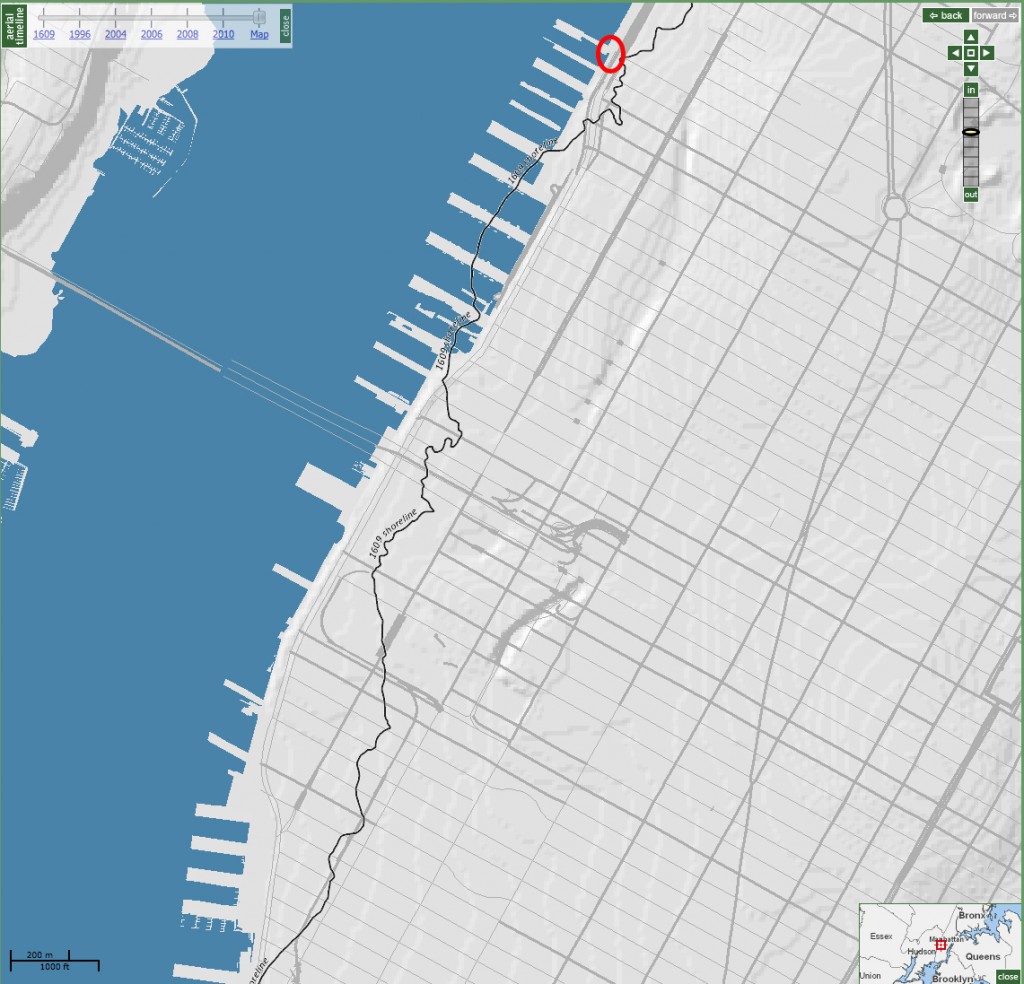
Manhattan Island with the 1609 shoreline. Courtesy of Oasis & the Mannahatta Project.
[continue reading…]
{ }
by Annik LaFarge
on December 4, 2013
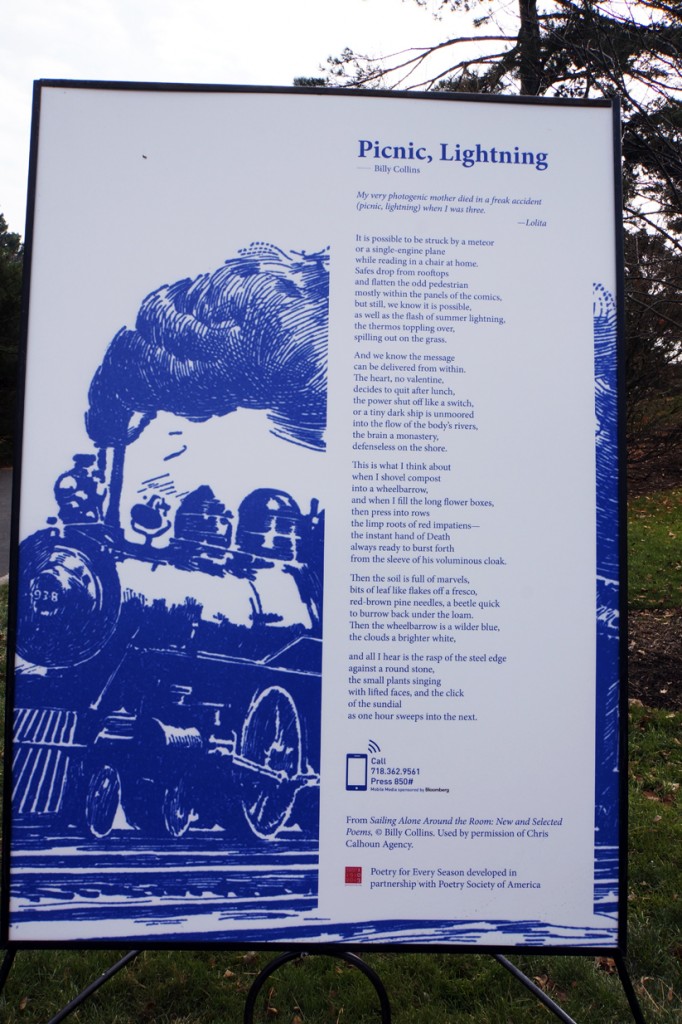
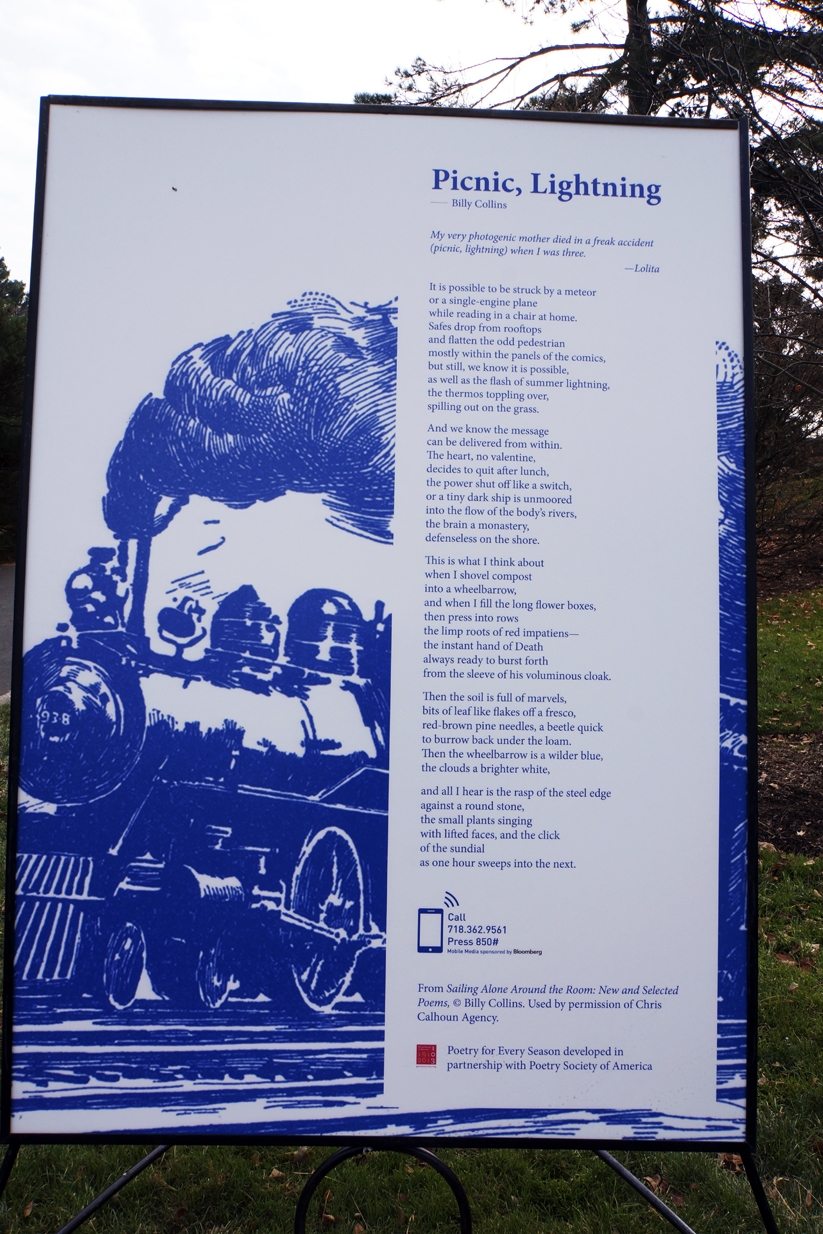
Billy Collins Poem at the New York Botanical Garden
“It is possible to be struck by a meteor
or a single-engine plane
while reading in a chair at home….”
Those are the opening lines of Billy Collins’ poem “Picnic, Lightning,” part of an exhibition of public literature at the New York Botanical Garden. Throughout the garden this holiday season one finds Collins’ evocative poems, printed on large signs that also include an etching of a locomotive from New York Central & Hudson River Railroad, bellowing smoke as it chuffs along. I went there yesterday to see the famous holiday train show and the new Native Plant Garden, which opened in May. Trains and gardens: my favorite combination. With a heavy heart after Sunday’s devastating derailment on the Hudson Line, the visit was comforting in surprising ways.
Last week I wrote about the El Anatsui’s magical artwork on the High Line, Broken Bridge II, a site-specific piece that inspired not just because it was beautiful but because it so perfectly belonged in — and to — its landscape. In the Bronx today there is literature in the garden, and it brightens and informs everything you see around you. Another poem on the winding path, “Winter Syntax,” equates the mechanics of language — its units of grammar and sound — to the elements found in nature: “Bare branches in winter are a form of writing….Every lake is a vowel, every island a noun.” [continue reading…]
{ }
by Annik LaFarge
on November 19, 2013
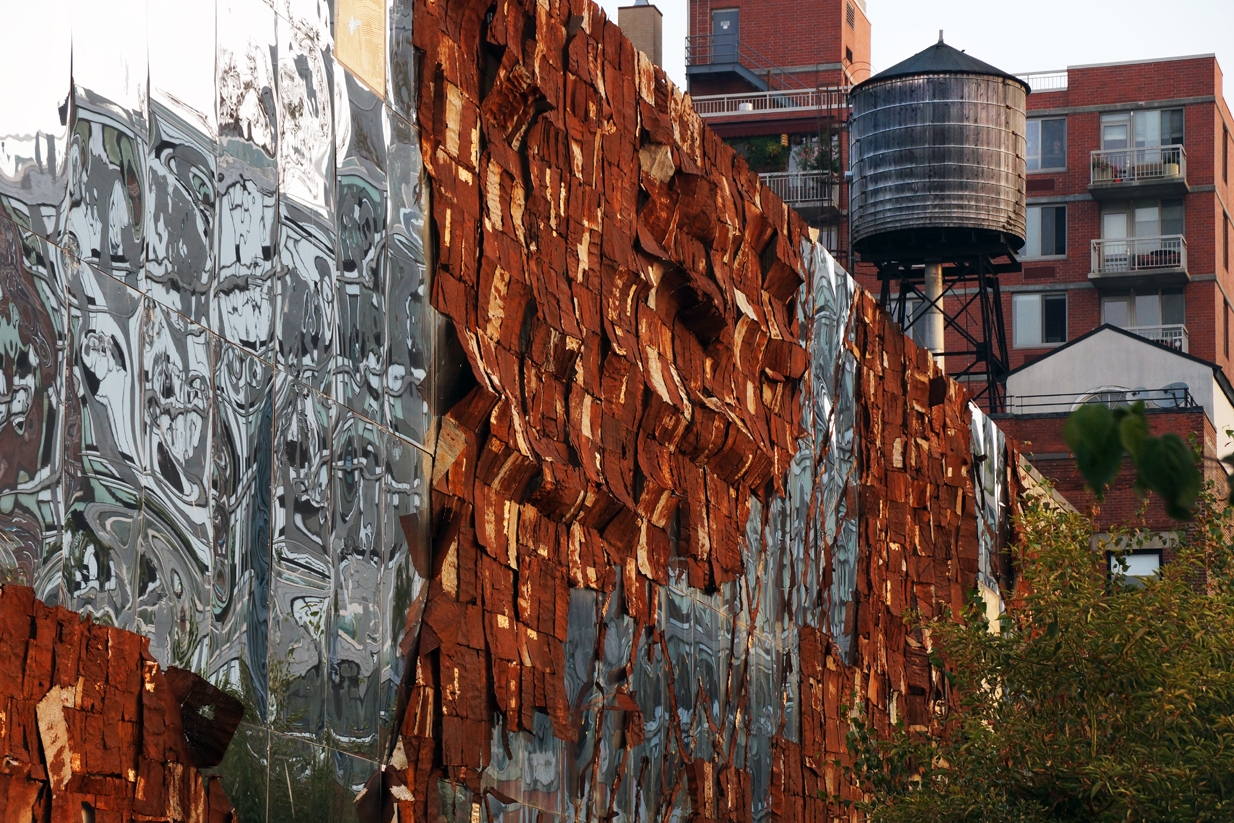
El Anatsui’s “Broken Bridge II” reflecting the West Chelsea landscape and the High Line
Last week, men in helmets attached to climbing ropes rappelled up and down the east wall of 510 West 22nd Street, once a parking garage owned by Time Warner Cable and, for the past year, temporary home to the magisterial artwork Broken Bridge II by West African artist El Anatsui. Of all the many superb works that Friends of the High Line has installed in and around the park, this one — among the first curated by the new head of High Line Art, Cecilia Alemani — has become my favorite.
I’ve lamented the loss of inspiring artworks many times on this blog — most especially Stephen Vitiello’s unforgettable sound piece, A Bell for Every Minute, and Sarah Sze’s architectural magnet for wildlife, Still Life With Landscape (Model for a Habitat) — but this one was different. In part that’s because Broken Bridge II was such a perfectly site-specific piece, and it so brilliantly inhabited and reflected — simultaneously — the landscape it occupied for twelve months. El Anatsui’s tapestry of pressed, rusting tin and mirrored panels fit in perfectly with the steel and glass buildings that are going up all around the High Line, but its mirrors also caught the 19th century water towers around it, those “silent sentries” that define the New York City landscape. [continue reading…]
{ }
by Annik LaFarge
on October 15, 2013
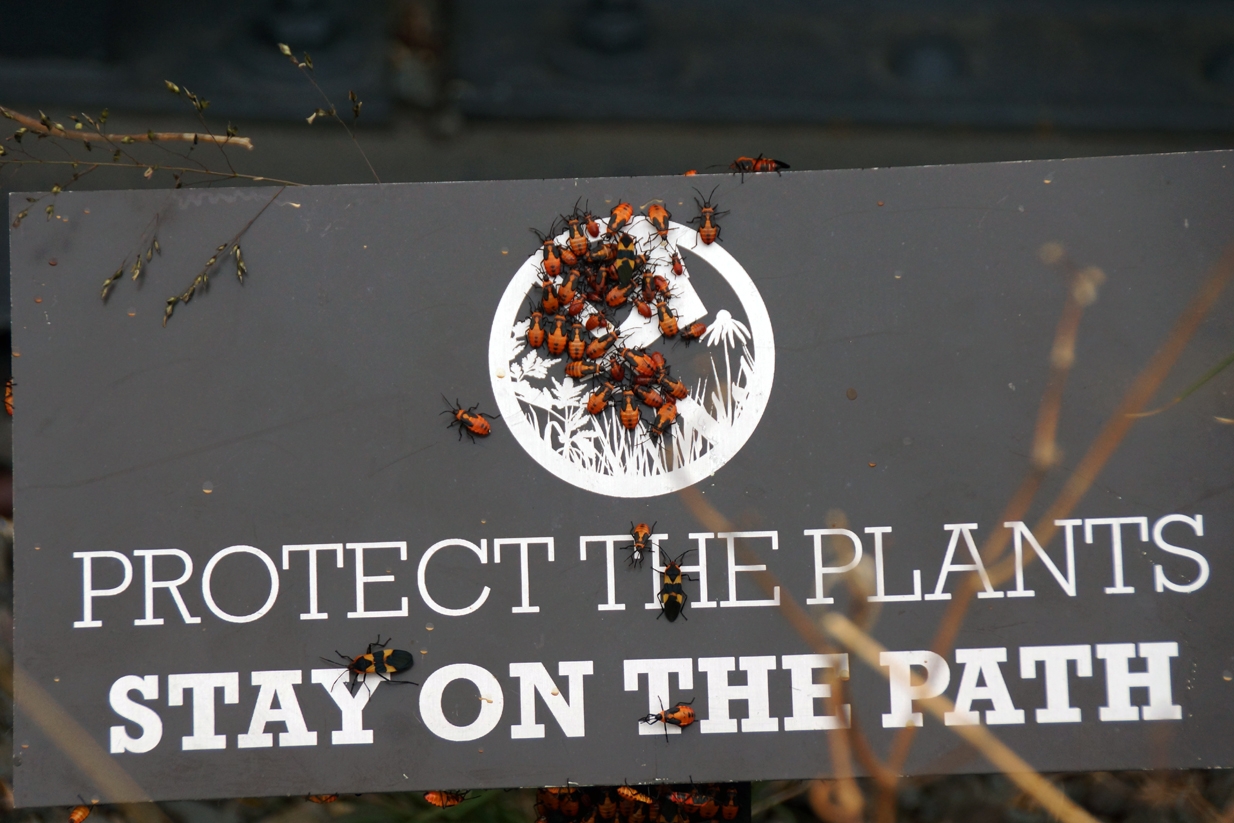
Milkweed Bugs: Legal trespassers in the garden beds
These signs are for tourists, not bugs. So yes, if you are a milkweed bug you are welcome to cross over into the High Line’s garden beds. If not, well, you know where you belong.
{ }