by Annik LaFarge
on September 5, 2012
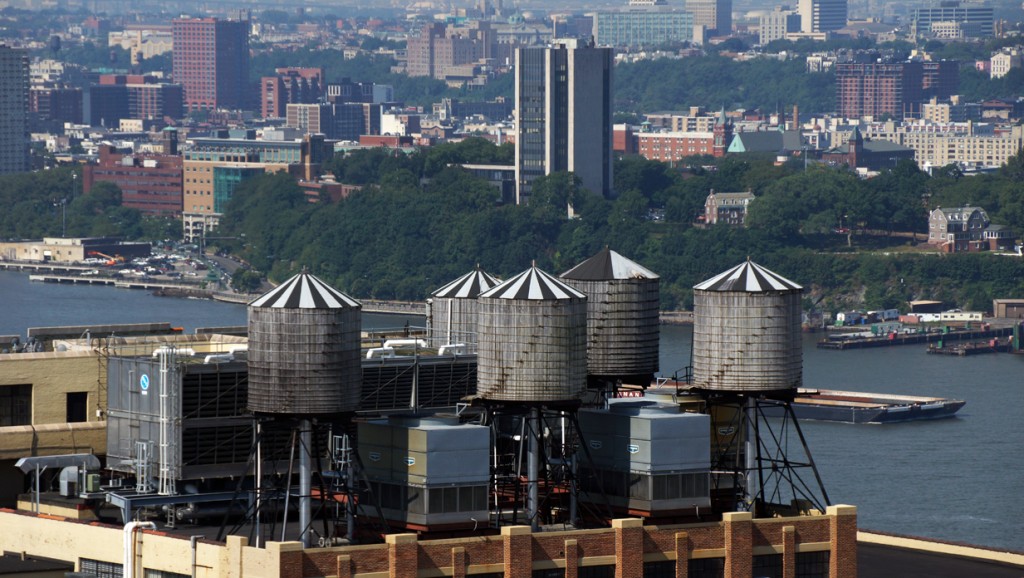
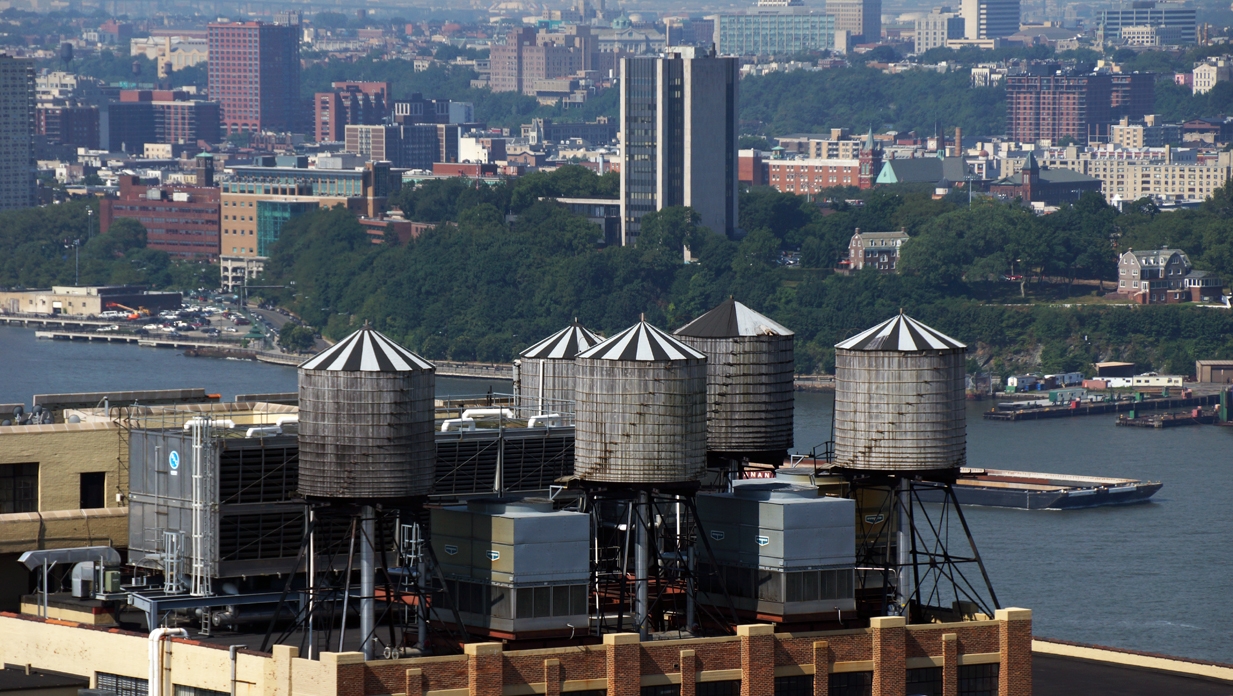
The “zebra” water towers atop the Starrett-Lehigh Building
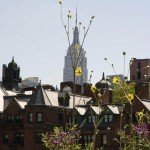
Readers of this blog know that I love New York’s water towers. One of the most-read posts in the archive is a piece about Charles Kuralt, the great CBS newsman who also adored the “hoops and staves of the Middle Ages” that define our city skyline.
Next spring a new public art project will pay tribute to our water towers, sponsored by a group called Word Above the Street, a non-profit that uses art to advocate for social justice and sustainability. The idea for the water tower project followed a 2007 trip to Ethiopia by filmmaker Mary Jordan, who realized that one of the severest problems in Africa is that water might be abundant but “it was never in the right place.” The people of Ethiopia lacked containers — buckets, bottles — to transport the water from its source to their homes. She returned determined to launch a campaign about the scarcity of water, and in time, the Water Tank Project was conceived.
For six weeks in Spring 2013 hundreds of water towers all over New York City will be transformed by established and emerging figures in art, music and science. A contingent of students from the city’s public schools will also be involved. [continue reading…]
{ }
by Annik LaFarge
on August 25, 2012
For years I’ve followed Jeremiah’s Vanishing New York, the blog that takes “a bitterly nostalgic look at a city in the process of going extinct,” with admiration and interest. I’ve linked to it from this blog (and still do) along with various other sites that cover New York from a unique perspective. As a lifelong New Yorker I share Moss’s grief and anger at the lost neighborhoods I grew up and have lived in. I too have experienced the sense of entitlement that drives his writing, a feeling that so long as I am here, in this patch of Manhattan, it ought to stay as I know and love it.
Moss’ jeremiad in the Times on Wednesday, “Disney World on the Hudson,” brought back memories of the long-lost mom & pops of my youth: the French bakery around the corner, the children’s clothing shop where I worked as delivery girl through high school, the wonderful bookstore across the street. All are gone today, replaced with high-end fashion boutiques and chain stores. Instinctively I found myself agreeing with Moss’ sentiment, lurching into nostalgia. But his article, published under the pseudonym he regularly writes behind, missed several important points, and the more I thought about it the more troubled I became. And throughout the day, every five minutes or so, the article kept re-arriving in my inbox, sent by some friend or colleague with a subject line like “Harsh” or “Wow.” One person wrote: “Where does this come from?” [continue reading…]
{ }
by Annik LaFarge
on June 17, 2012

Jordan, A-Rod & Jay Shapiro. Photo courtesy Sarabeth Levine
Today would have been Jay Shapiro’s 65th birthday, a day in 1947 that also fell on Father’s Day. Jay was a remarkable man and our veterinarian for many years. He was irreplaceable, and all over New York there are animals and humans who continue to grieve his passing. In tribute, Jay’s sister Sarabeth Levine posted this great photo (above) of Jay and his son Jordan on her website. Between two is their cat, A-Rod.
You can read my tribute to Jay, first published in Bark magazine, here on Livin’ The High Line. Jay was a man apart: an extraordinary father, doctor, brother, son, friend. Not a day goes by that we don’t think of him.
Paw to heart, eyes to heaven. We miss you so.
{ }
by Annik LaFarge
on June 14, 2012
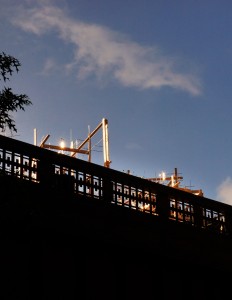
Still Life With Landscape in packing crate, from 22nd Street
Sarah Sze’s marvelous and hugely popular Still Life With Landscape (Model for a Habitat) has moved from the spot it occupied for the past year (near 20th Street), but it hasn’t left the High Line yet. And in fact this piece continues to dazzle, even as it sits in packing mode in a temporary holding place just above 22nd Street. This is surely the mark of a true work of art: no matter where it sits, it draws us in and gives us the pleasure of its company.
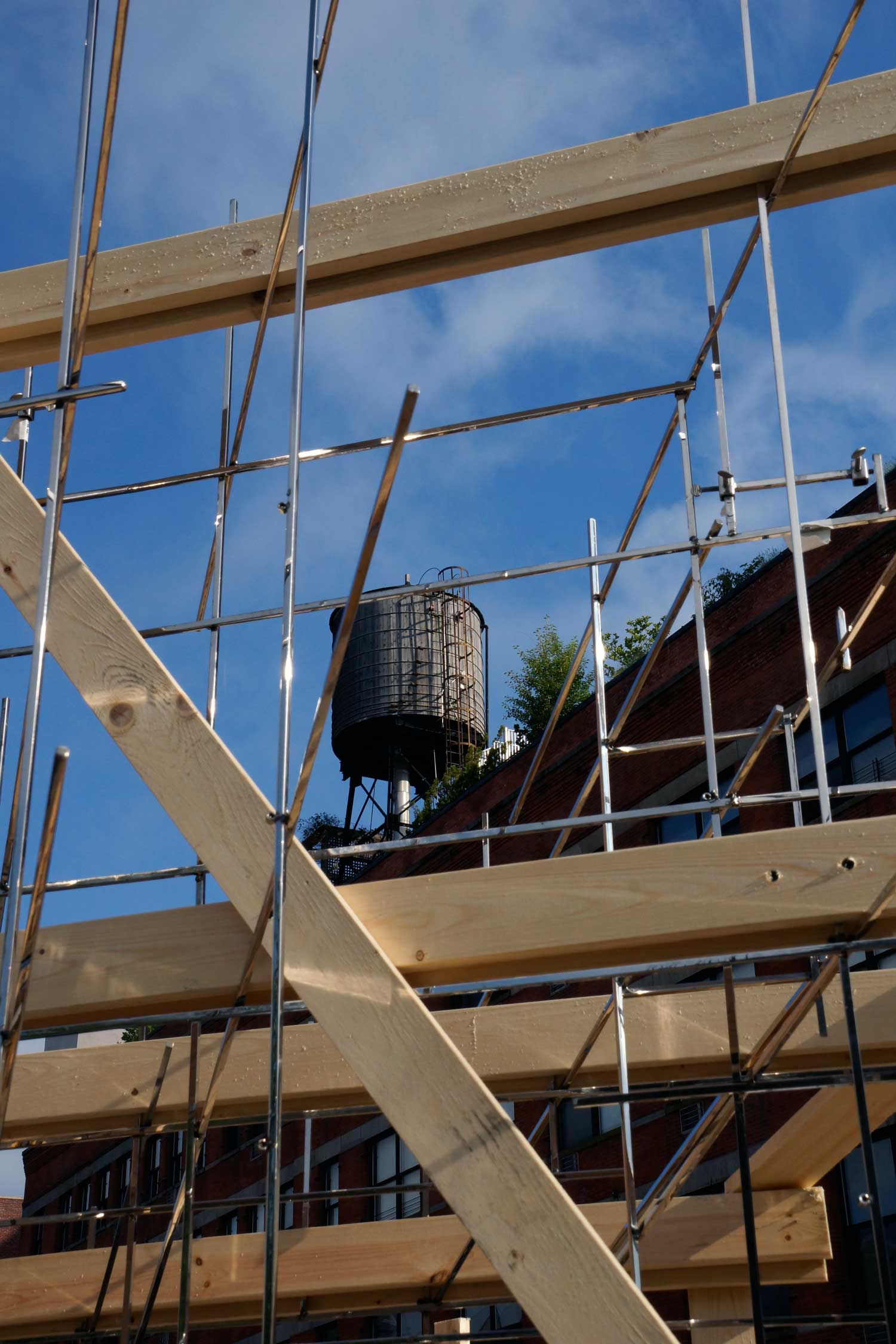
Today, Still Life With Landscape offered a new framing device for the water towers atop the Spears Building. Always beautiful, these towers are now downright sculptural, framed by Sze’s steel lines. Early this morning light glinted off the metal, and the sculpture — now in many pieces — invited the viewer to peek and peer from every angle possible.
Check it out quickly, because this piece is leaving soon for good. But how nice to get a second look before it goes.
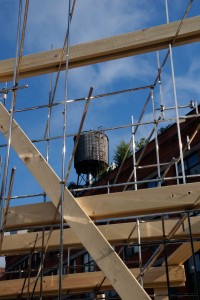
Water tower on the Spears Building
{ }
by Annik LaFarge
on June 4, 2012
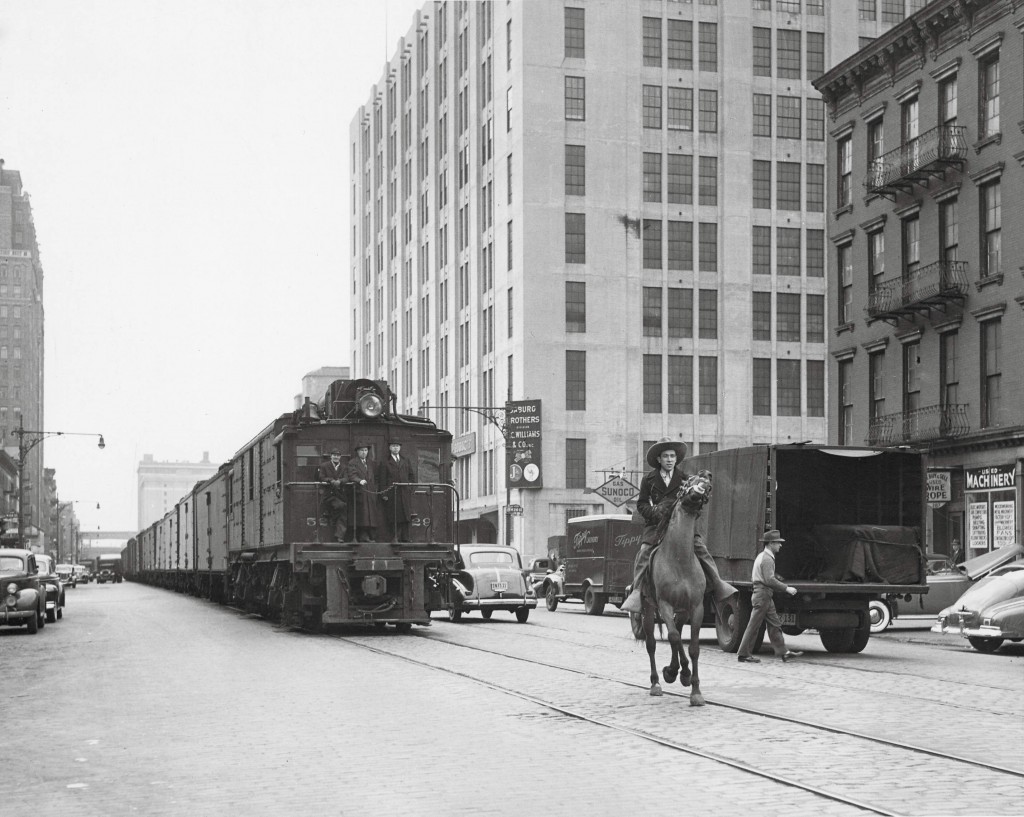
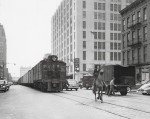
West Side Cowboy riding north on Tenth — aka “Death” — Avenue. At right: warehouse of R.C. Williams wholesale grocer, first client of the High Line and today the Avenues School. Photo courtesy Kalmbach Publishing Co.
On June 8 the High Line turned three years old, and in celebration I’ve put together a special tribute to the “West Side Cowboy” that includes rare video footage shot in the 1930s. The tribute page and video are here. For the full, updated story of the West Side Cowboy’s final ride, including some rare photos, click here.
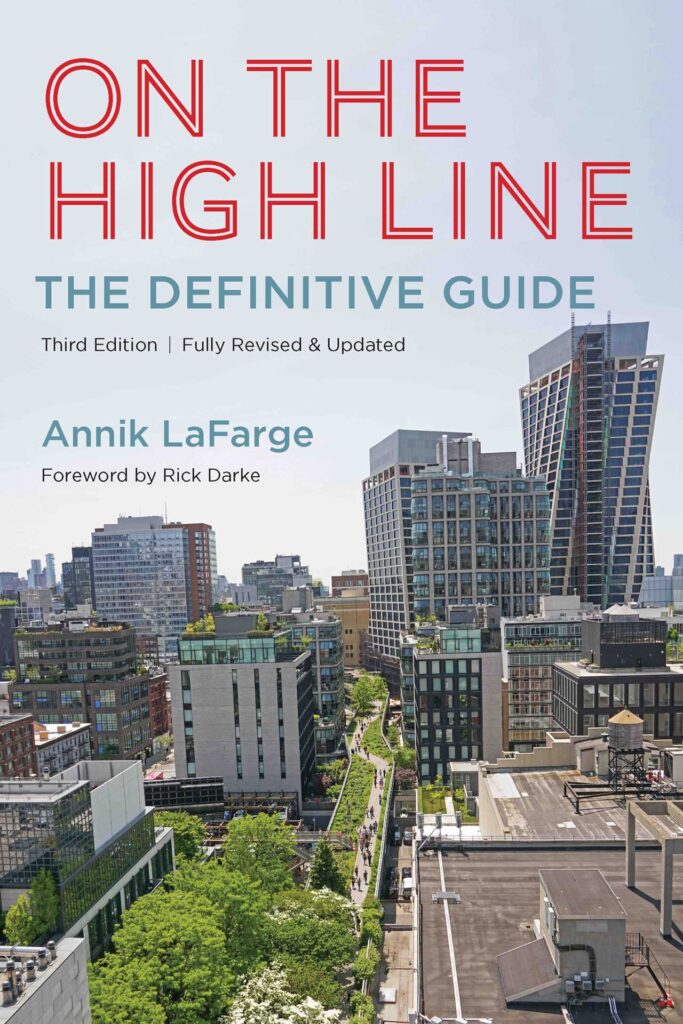
The High Line is a place of countless stories from New York’s past (I’ve just written an entire book about it….) but none is more captivating than the man on horseback who was required, by an 1850s city ordinance, to ride ahead of every locomotive and warn pedestrians of oncoming trains. In the course of researching my book I discovered a few minutes of rare video footage that was shot in the 1930s and shows a New York Central locomotive and a long string of boxcars steaming down Tenth — aka “Death” — Avenue, led by the West Side Cowboy. Click here to see the video and read more about the history of the Cowboy. I’ve also included a passage from Mario Puzo’s novel The Fortunate Pilgrim and a description of the Cowboy that appeared in a 1933 edition of the London Terrace Tatler, official newsletter of the brand new apartment complex on 23rd – 24th Streets.
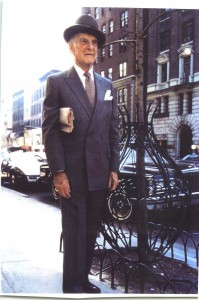
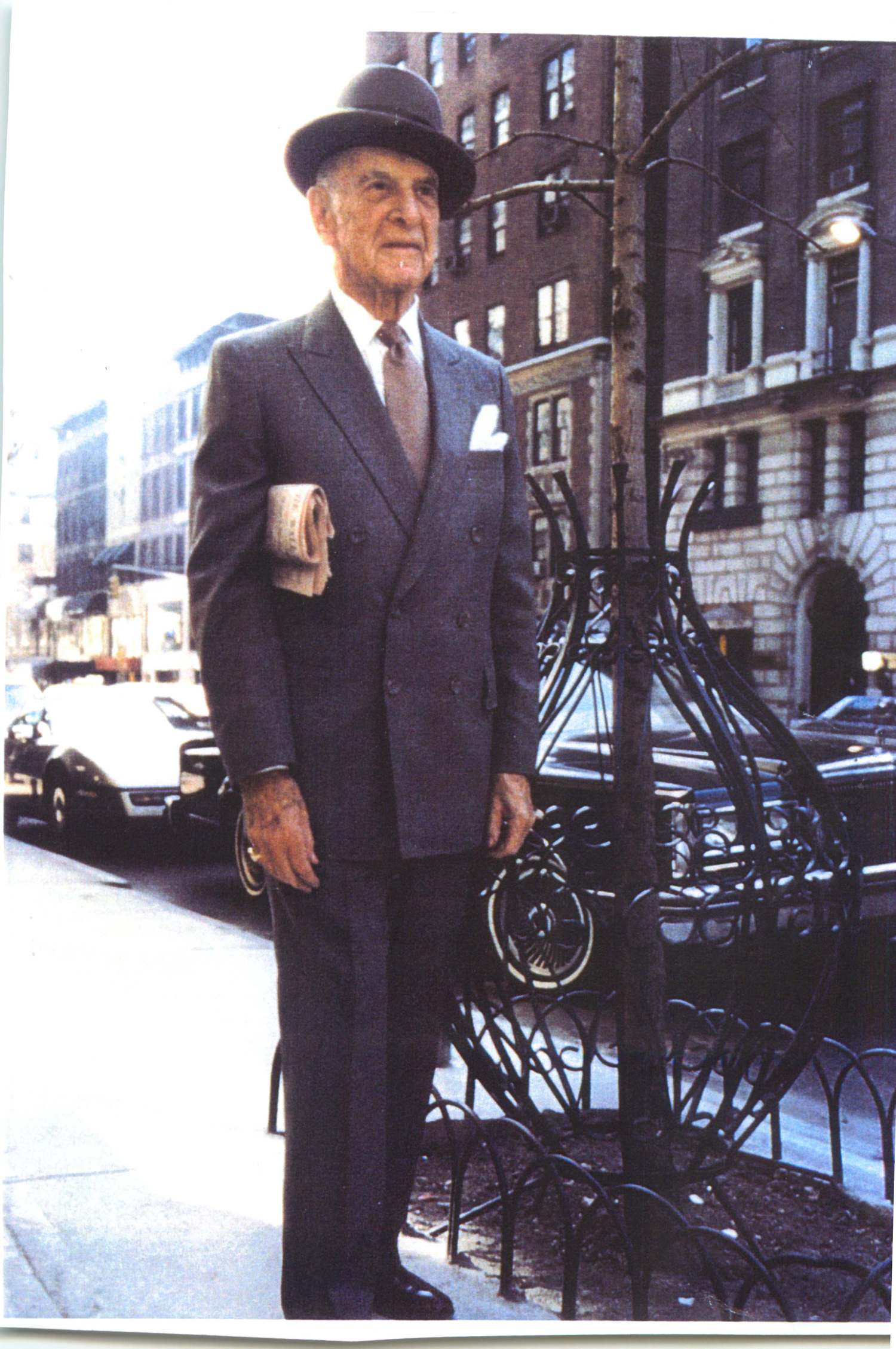
Steven Hirsch in 1986. Photo courtesy Rosston Family
I first learned about the cowboy from Steven Hirsch, my brother-in-law’s grandfather. Gramps, as everyone called him, died in 2000 at 105, and was one of the most lively fellows in town. He used to take me to the King Cole Bar at the St. Regis Hotel and ply me with Manhattans. Once, he told me about trains running down Tenth Avenue, led by a man on horseback “who waved a red flag by day and a red lantern by night.” By the time we were drinking together Gramps was already a centenarian, and I frankly thought he was conflating some old Western movie with real life. It was just too incredible to believe. But many years later I learned about the High Line, and the key figure at the heart of the railroad’s story was none other than a real-life urban cowboy.
Gramps had died by then, but I’ll always remember his vivid account of being a young boy on the streets of Manhattan’s West Side, dodging trains and horses and living to tell about it over cocktails a hundred years later.
Here’s to you, Gramps, and to the High Line. I wish you could see it now.
Click here to watch the video and read more about the West Side Cowboy.
{ }
by Annik LaFarge
on May 29, 2012
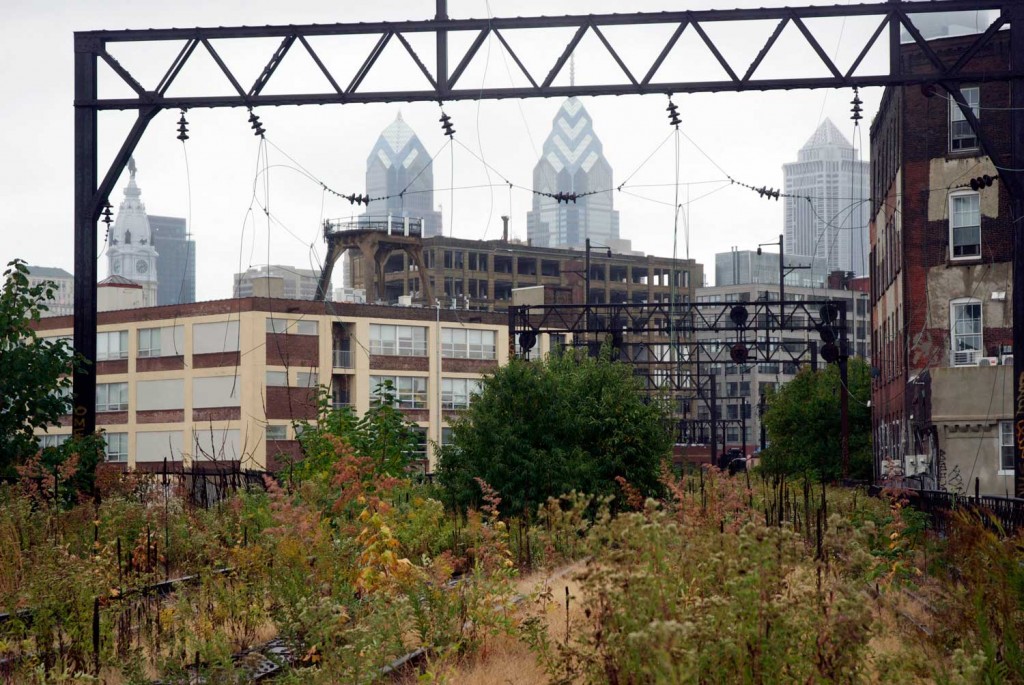
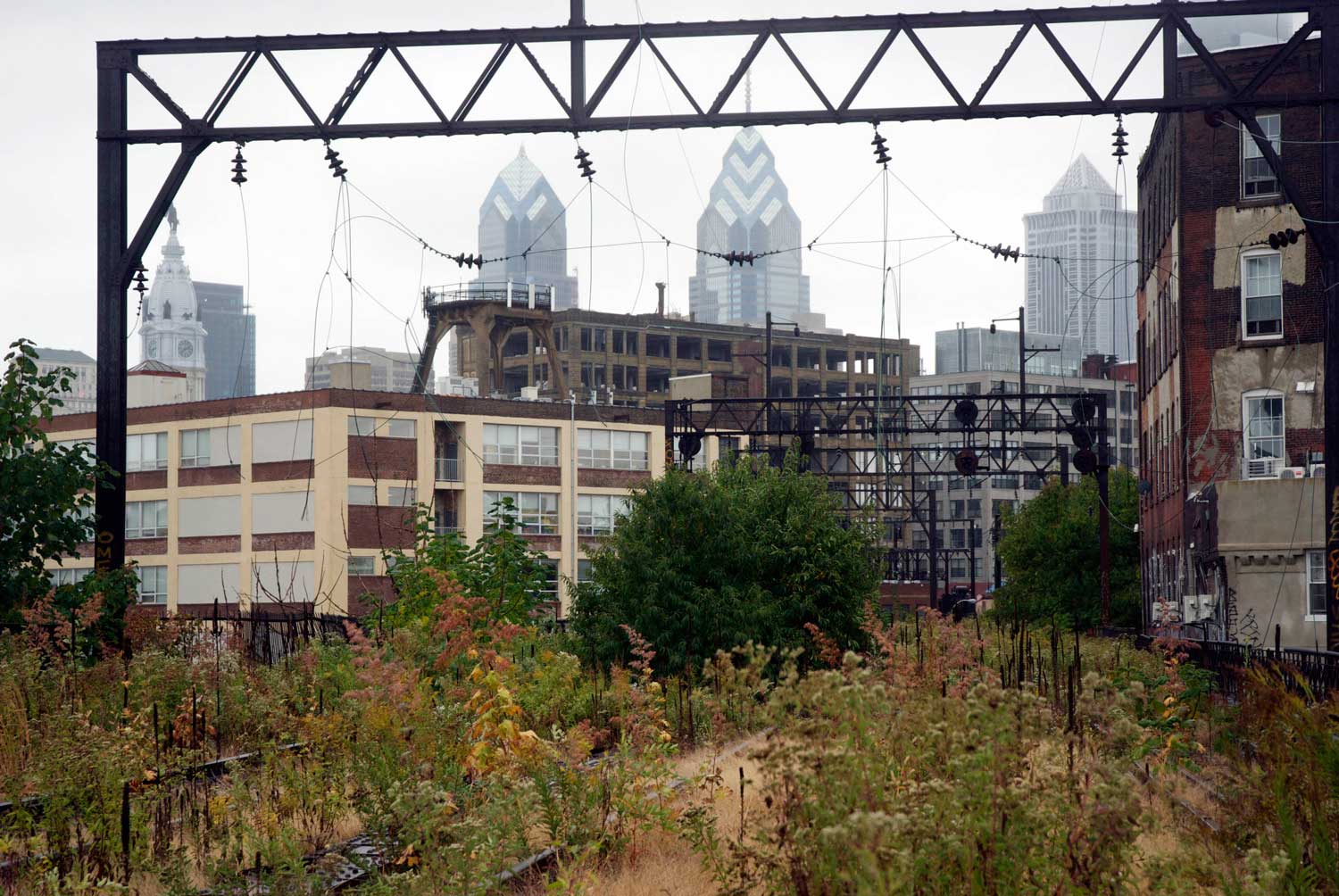
Philadelphia Skyline from the Reading Viaduct
Paul VanMeter, co-founder of VIADUCTgreene in Philadelphia, has written, with Leah Murphy, a fascinating article on “Placemaking” in the online journal Philadelphia Social Innovations. It begins: “Great, vital Places — capitalization intended — are imperative for cultivating creative and cultural life,” and goes on to explore what gives a building — or a former battlefield, a street, a park — its own particular, unique sense of place. They describe the responsibility that the transformers of place — citizen groups, urban planners — have to the community, arguing that “It’s up to the imaginations of placemakers to recognize the need for reprogramming our City’s treasures, retrofitting them to accommodate contemporary uses that will serve both to reinvent places and preserve their histories.” For them, a successful Place — one that merits a capital “P” — “has a distinctive identity and an integral connection to its physical, sociocultural and historical context.” The old and the new exist together, and enrich us all the more for their dual power.
Lately on this blog I’ve been writing about “Urban Greenway” projects around country that are transforming century-old corridors of industrial infrastructure into unique public arenas. Bridges and trestles once designed to carry trolleys, automobiles, freight, passenger, and mail trains, have been re-imagined, then recreated, into open spaces that serve a new community purpose. All of these places can be appreciated in two ways at once: as a metaphoric platform for teaching a community something of its history, and as a literal one for promenading — quite pleasantly, as it turns out — through our complex, modern cities. Of all the works-in-progress that I’m aware of, the one in Philadelphia is the most exciting, and a prime reason is that the people behind it — at VIADUCTgreene and the Reading Viaduct Project — have a deep understanding of this particular Place. That understanding informs everything they do.
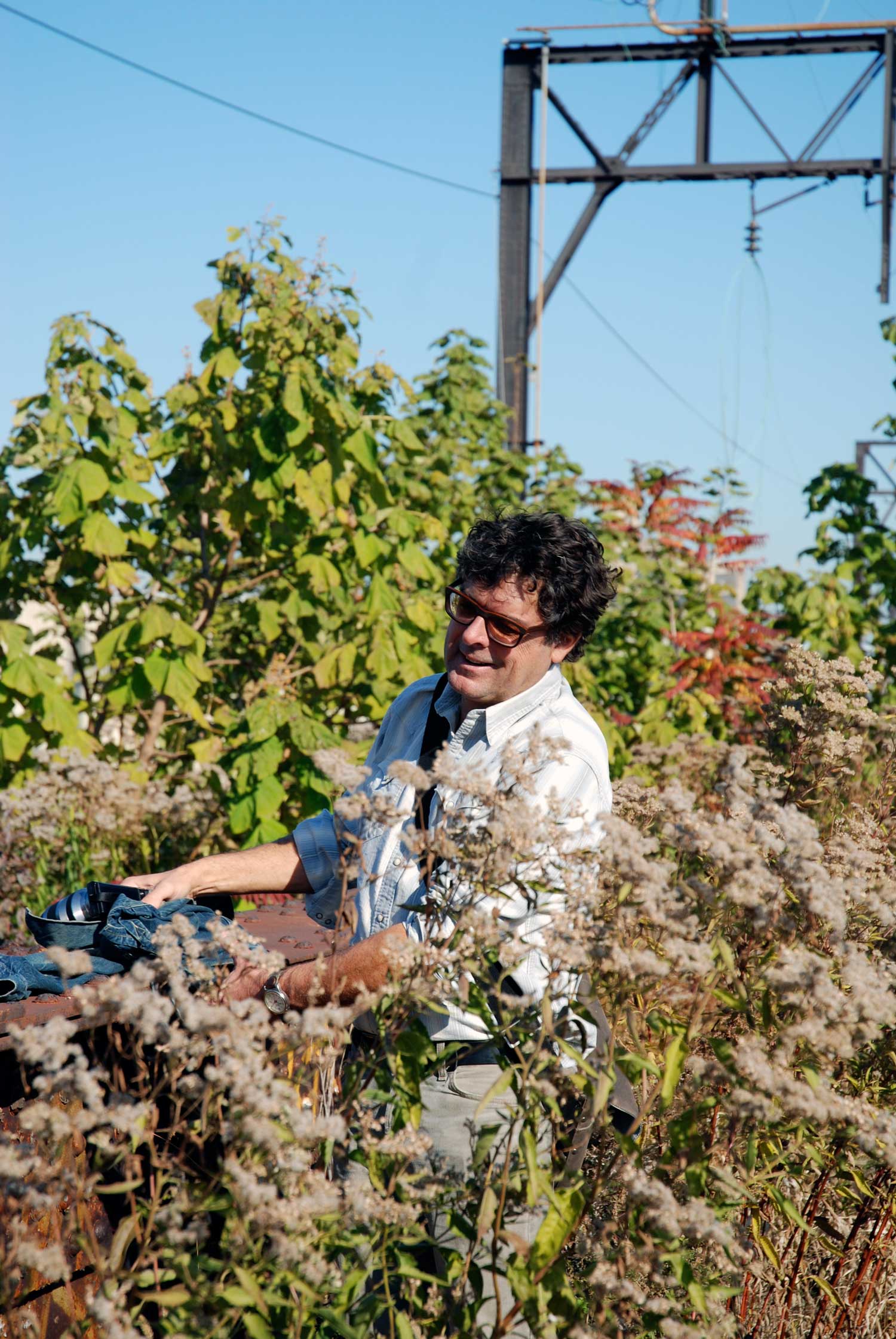
Paul VanMeter
Over the past year I’ve made two visits to the old Reading Railroad’s elevated viaduct, both times led by Paul and his infectious enthusiasm for the Place (capitalization intended…). Paul never conducts a tour without an iPad, because just as important as the sights one can see now — former warehouses and industrial buildings, the Philly skyline (including William Penn himself, looking down on the city from a pedestal) — is the history of the railroad and the neighborhoods it once traversed. On the iPad are photos of sites we pass on our tour, from the historic Reading Terminal Market and the old Baldwin Locomotive Works to neighborhood streets in the Callowhill district 100 years ago. “See over there,” he points, “and now here,” swiping the iPad so it shows a black & white photo of a familiar but long-ago scene. We begin to understand the layers of place that surround us. Once the VIADUCTgreene project is a reality its three miles of underground tunnels and elevated park will enable visitors to traverse some 55 busy city blocks without crossing a single street. The city of Philadelphia will have a new stage for natives and tourists alike to stand upon and absorb its great history. [continue reading…]
{ }